
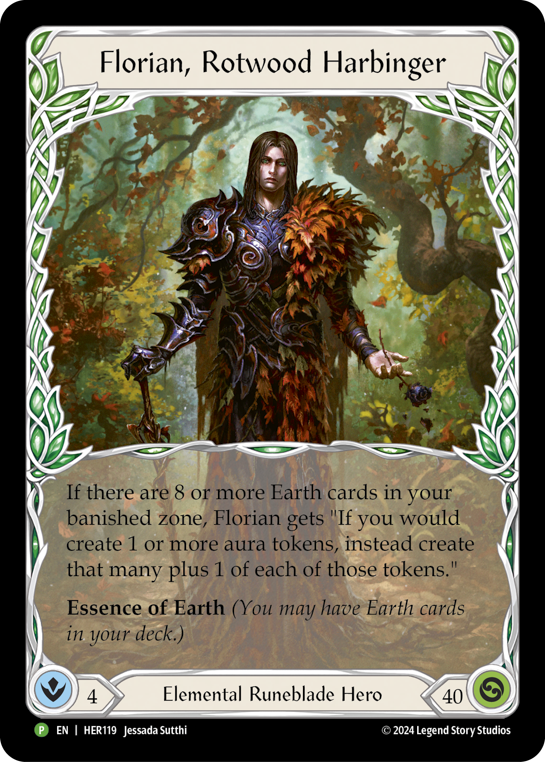
Few heroes in Flesh and Blood offer the sheer versatility of Florian, Rotwood Harbinger. Whether you want to grind opponents into dust with hyper-efficient value plays, or stack a critical mass of runechants before unleashing an orbital bombardment, Florian delivers. At his peak in early 2025, he swept competitive events with a value train that few decks could match. The Earth and Runeblade card pools gave him tools for every situation, and his late game was nearly unrivaled.
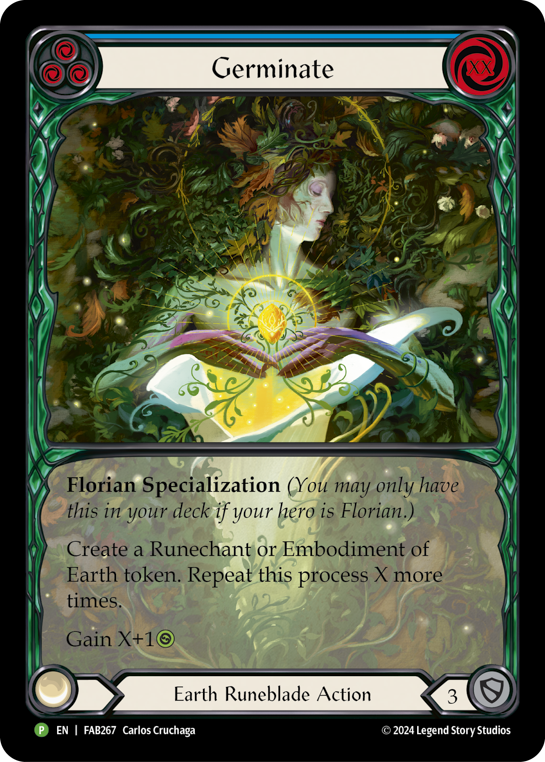
Then came the hammer: Germinate was banned.
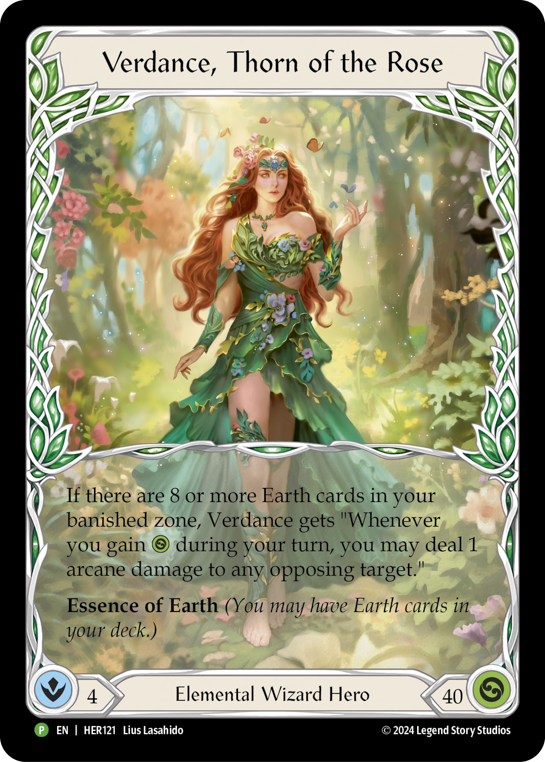
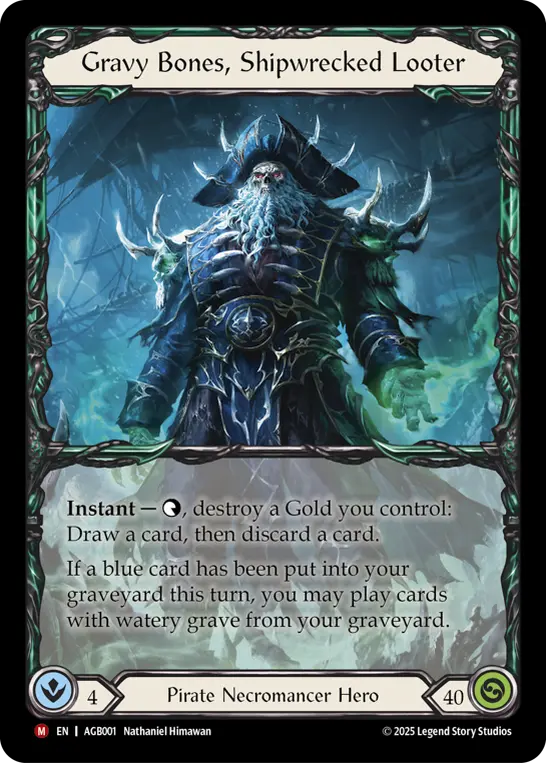
Then, another complication: High Seas released Gravy Bones, a natural predator to Florian, with a stronger late game, better value, and plenty of allies to stretch Florian's resources thin. This, in turn, raised the standing of both Cindra and Verdance, and Florian is generally very unhappy to see either.
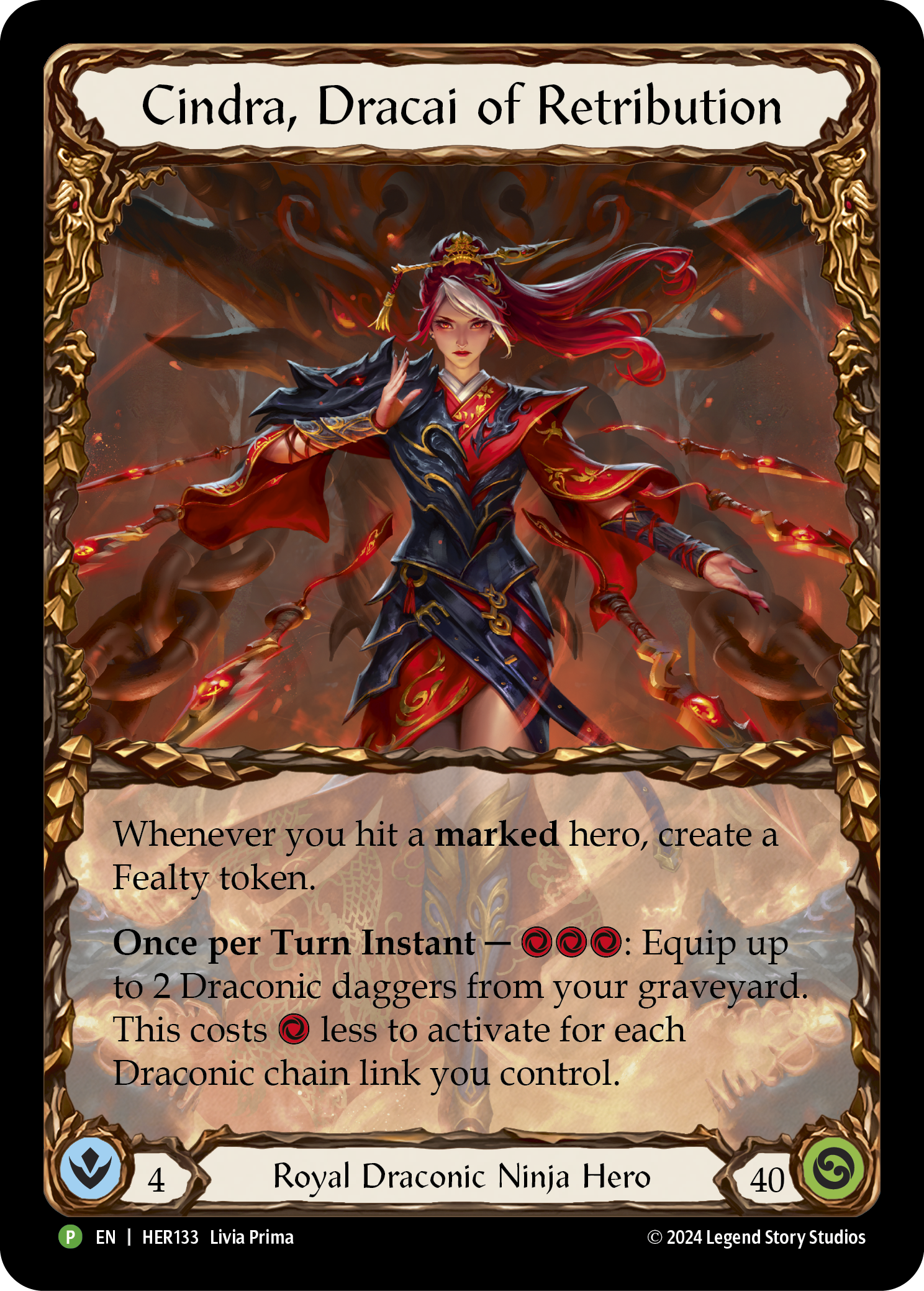
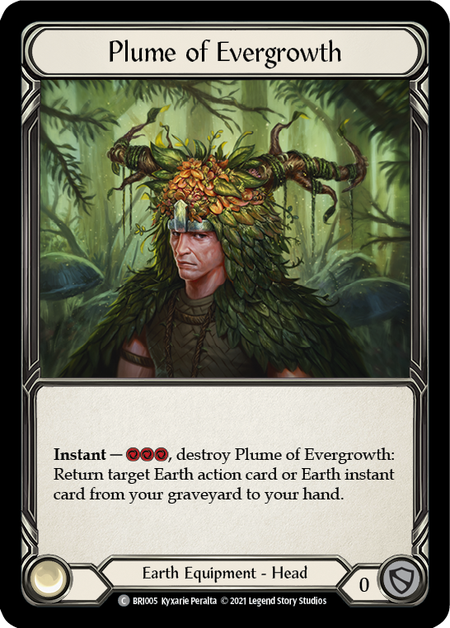
To cap it off, LSS cycled back to the Earth talent to ban Plume of Evergrowth, catching Florian in the collateral damage of a ban targeted at Verdance.
Top-level representation of Florian cratered. Yet at many events in the lower tiers, Florian persists, and there are no signs of his popularity decomposing anytime soon.
With three tough matchups ruling Rathe, can Florian still compete in 2025's hostile metagame? Or has he been relegated to the realm of beloved heroes who are merely strictly-worse versions of a real contender? This article examines two distinct approaches to Florian, their matchup spreads against the top decks, and whether the right tech choices, skill, and dedication can overcome unfavorable odds to make Florian a competitive choice once more.
Hurtle or Turtle?
To understand Florian's current position, we first need to establish what each build is trying to accomplish. Let's review the two main builds of Florian that we've seen at events this year: Midrange and Stack.
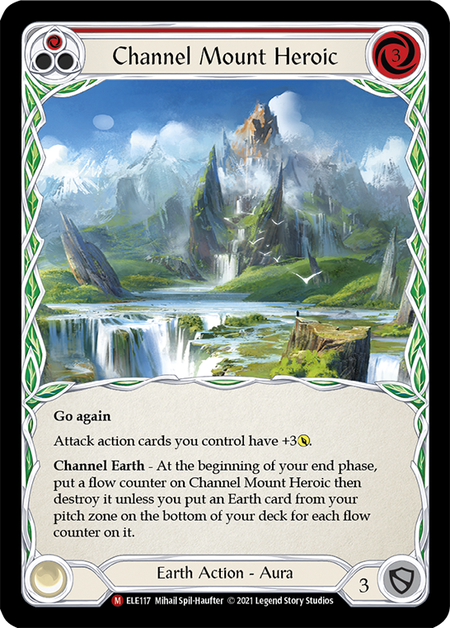
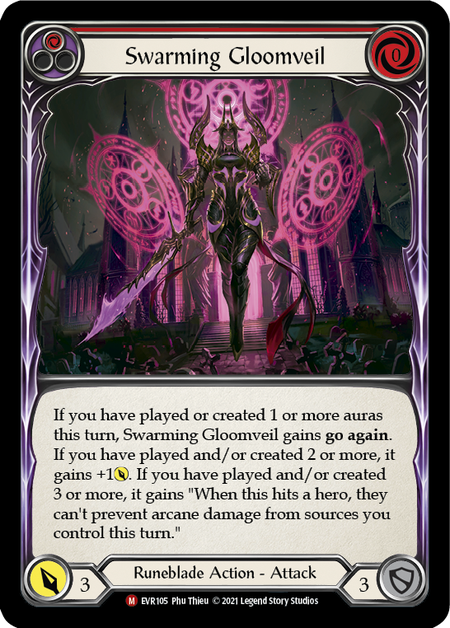
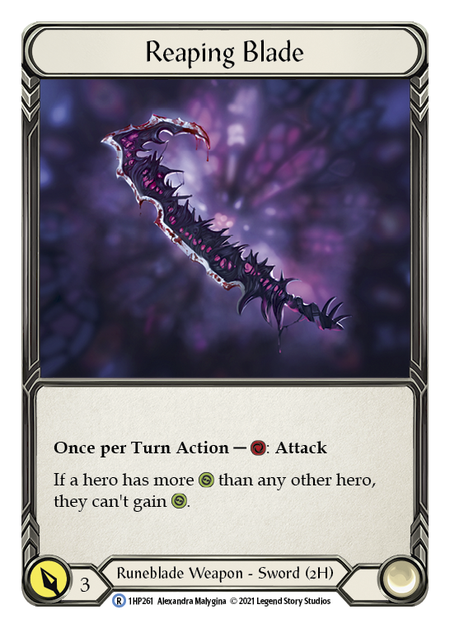
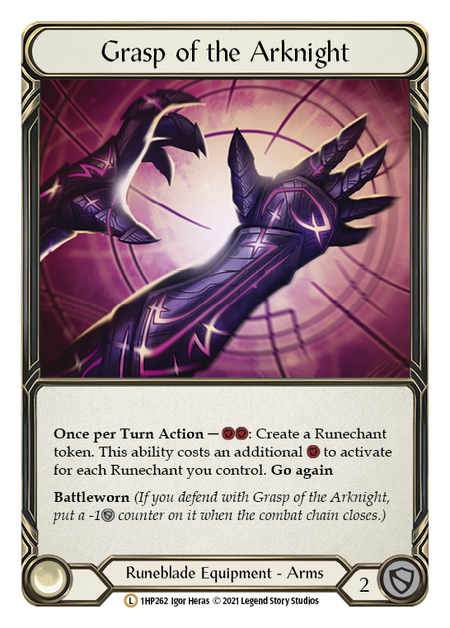
Midrange Florian is by far the most common build since his release. This version of Florian prioritizes hyper-efficient gameplay, leveraging power cards such as Channel Mount Heroic (and/or Channel the Millennium Tree), Felling of the Crown, Plow Under, Swarming Gloomveil, and Runerager Swarm to send a continuous stream of physical damage, hopefully empowered by Channel Mount Heroic, while generating runechants en masse using Florian's ability combined with Grasp of the Arknight and other runechant generators. When you don't have a power card to send, or you're continuously blocking with 3 cards from hand each turn, you can still send a 1-card 5 (that doesn’t remove a card from your deck) by pitching a blue Grasp of the Arknight to create 2 runechants, and then attacking for 3 with Reaping Blade.

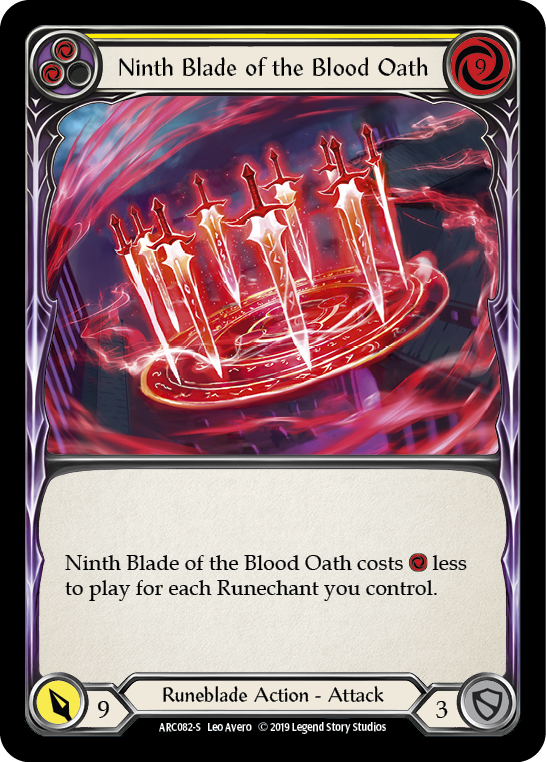
Stack Florian, meanwhile, is a very different build that has seen some competitive viability this year. This build of Florian is occasionally called "OTK" (One Turn Kill) but that's a misnomer, as you rarely actually OTK anyone. Instead, this build relies on stacking several runechants at once using cards like Read the Runes, Reduce to Runechant, and the recently un-banned Germinate, then sending the large stack using a discounted Ninth Blade of the Blood Oath, or another power attack such as Felling of the Crown or Plow Under. The goal is to present a large amount of arcane and physical damage simultaneously, ideally shattering the opponent's life total and defenses for a quick clean-up kill on the next turn, if not killing them outright.
Midrange Florian: Strengths, Weaknesses, and Gameplan
This version of Florian can pivot between offensive, go-semi-wide strategies and defensive, grindy strategies with ease: almost every card in the deck blocks 3, Germinate is a fantastic closer/stabilizer, and Everbloom // Life allows you to recycle Germinates and other power cards (including other copies of Everbloom // Life) to adapt to any end-game situation. Channel Mount Heroic (CMH) is the current Earth aura of choice, but Channel the Millennium Tree (CMT) is sometimes played as well, substituted in for Channel Mount Heroic, or played alongside, depending on meta conditions. CMT is great in the mirror, and in any matchups that tend to be grindy/fatigue-focused, while CMH allows for massive spike turns if the go-again attack actions line up, allowing Midrange Florian to race most decks on these turns!


Midrange Florian excels in the value game. You pressure the opponent early, you have strong power cards to demand cards from the opponent’s hand and arsenal, and every blue is a 1-card 5 late game. You gain life, recur power cards, and send split damage every turn. Very few decks can match the flexibility of Midrange Florian throughout a game, making it a versatile choice for any metagame.
Where Midrange Florian falters is against decks that have better inevitability than he does, board state decks that can stretch his limited go-again too thin, and decks whose sheer speed is more than Florian can handle.
In this meta, unfortunately, that means that Midrange Florian is in a rough spot, as Cindra, Verdance, and Gravy are all happy to see a Florian, and those three decks are dominating the meta.
Stack Florian: Strengths, Weaknesses, and Gameplan
With Stack Florian, your matchup spread is quite interesting - you have game into every deck, albeit a few very unfavored matchups in Prism and Kano. My personal experience is that Stack is better into Cindra and Verdance than Midrange, when teched appropriately, and I feel it’s similar into Gravy.
This variant originally used Scepter of Pain and Channel the Millennium Tree (CMT) to generate runechants while threatening arcane damage that required Arcane Barrier: 4 to prevent. When Scepter was banned, many believed Stack was dead. In reality, the deck rarely used Scepter except as a last resort or when CMT turns lined up. I preferred Dread Scythe for split damage and a guaranteed way to send my stack, or Rotwood Reaper (in the board, occasionally) to answer Prism's angels. The irony of all this is that Scepter's mere threat was often more valuable than the card itself, as opponents would waste equipment slots on excessive Arcane Barrier while I ran an attacking weapon instead.
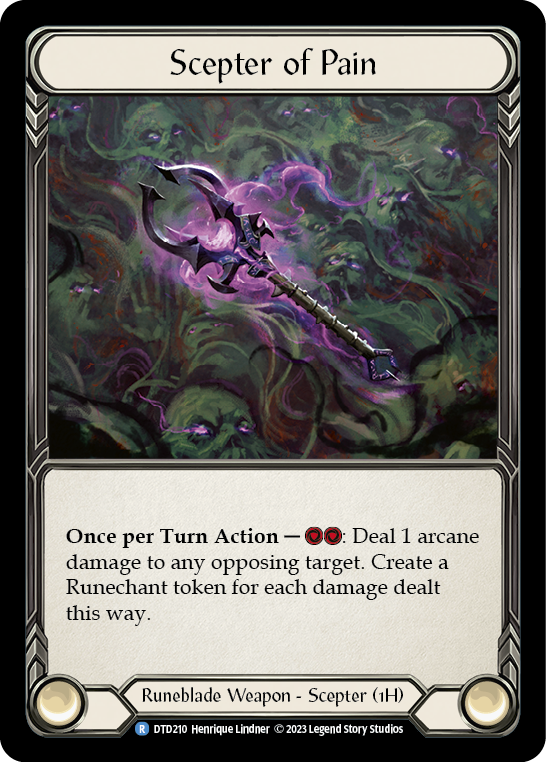
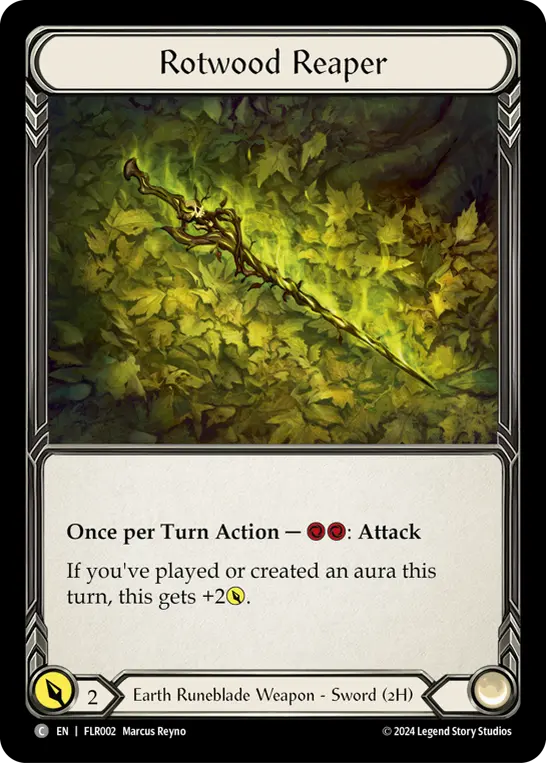
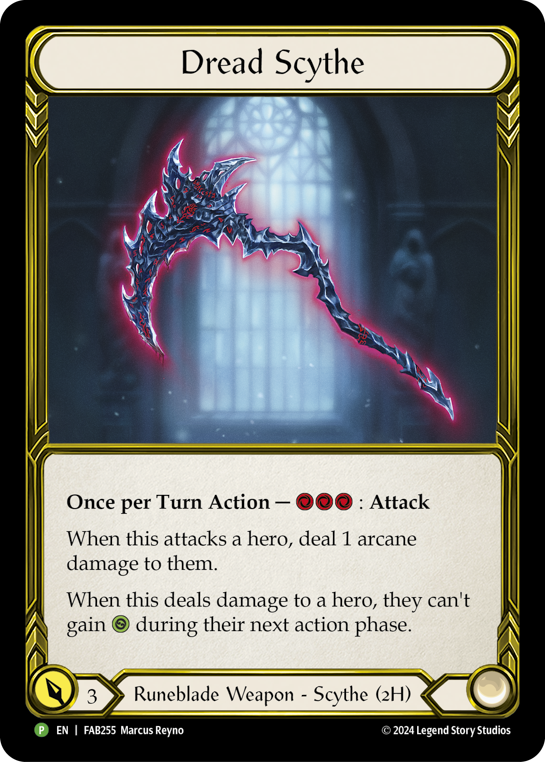
Even before the Scepter ban, I had dropped CMT entirely to focus on more relevant stacking cards as most opponents were bringing AB2 to AB4, and it was always clunky even when it did line up, as it required 3 cards to actually impact the board on the turn you play it: an Earth blue to play it, CMT itself, and two resources to send Scepter. CMT also doesn't belong in modern Stack builds. Since you're rarely sending arcane damage, CMT becomes an Earth block 3 and little else. While there's some merit to pairing it with Dread Scythe against Verdance to prevent her from AB'ing the entire Scythe ping and then comboing, I'd rather use those slots to neuter her combo directly and then close out the game.
I’ve tuned my list over the past year to focus on the Cindra and Verdance matchups, and I’m truly only worried about running into a Gravy Bones, Prism, or Kano at events now, and even those are winnable with some solid luck. With my tuning and practice on this list, I’ve taken it to respectable results this year: a 5-2 (bubbled) at Battle Hardened: Minneapolis 2025, two quarterfinals of Pro Quests, and semifinals of a third Pro Quest.
Important Florian Strategy Tips
Regardless of what version you choose to play, there are some key strategy tips that apply to both variants of Florian.
Your general blocking pattern for Midrange Florian is going to be blocking with three cards, and then arsenaling a power card/disruption piece such as Felling of the Crown, Plow Under, or Germinate, or (midrange only) using the last card in hand (if it’s a blue) to activate Grasp of the Arknight and send Reaping Blade. With Florian online, that’s a 1-card 5 (two runechants and three physical damage from Reaping Blade). You are also frequently looking to block with two cards instead, if your last two cards are a disruption piece and a card to pitch for that disruption piece. For Stack Florian, you always want your play on your turn to be either gaining life, building runechants, decomposing to get online, or sending a stack.
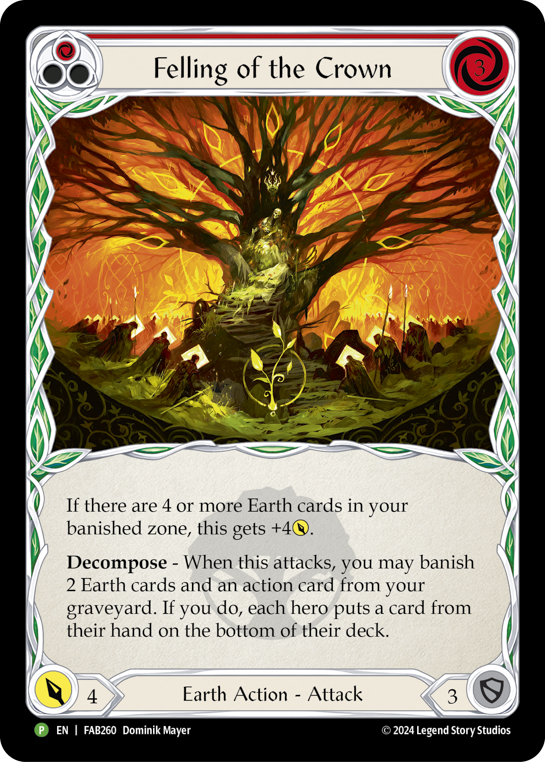
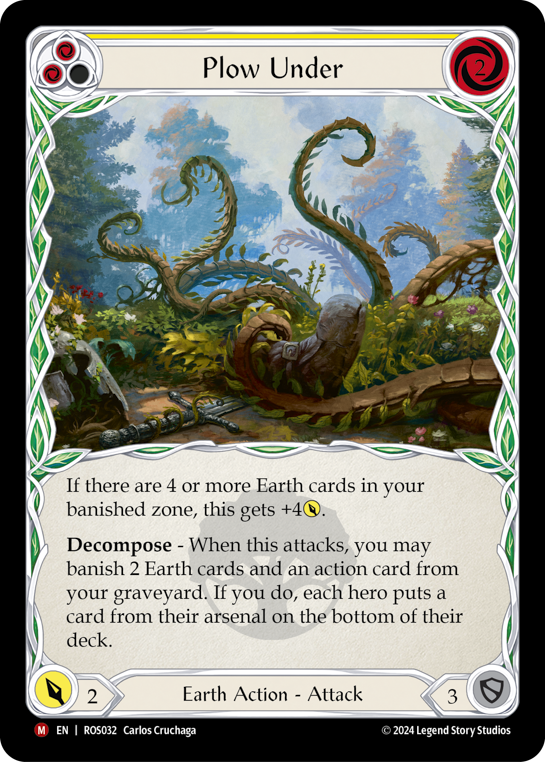
Additionally, with Florian (and any decomposing hero!), you’ll want to manage your Earth cards in graveyard to fuel decompose effects later; if you don’t block with enough Earth cards early, you won’t be able to power up your Felling of the Crowns, Rootbound Carapaces, Plow Unders, Cadaverous Tillings, and so on.
You’ll also need to manage your life total throughout the game. Strategically taking damage so that you can keep cards in hand to send back disruption (or more damage) is an important skill in Flesh and Blood, and Florian is no different. With Midrange Florian (which plays Reaping Blade), you’ll also want to keep an eye on your life total when you either have a Germinate ready to go, or you know one is coming up from your pitch stack, or because you’ve churned through most of your deck and haven’t seen one yet. In either case, you may want to take damage that you normally wouldn’t, as you’ll need your life total to be even with (or below) your opponent’s life total in order to gain life off of Germinate.
There is more nuance to this, but there are even niche scenarios where you may not want to gain life, and those are important to recognize as well; I have defeated Florians while playing Fatigue Jarl because they let themselves get low enough to gain life, played a Germinate for a large amount, and then died to my Poison the Well I had parked in arsenal for several turns waiting for this exact play. If they had just created the mass of runechants and stacked them a bit, I would have likely lost that game. This also comes up with Verdance often, as they cannot use their Healing Potion combo against you while their life total is higher than yours!
Navigating the Flames, Forest, and Sea
Now let’s examine how each version of Florian approaches the three decks defining the current metagame: Cindra, Verdance, and Gravy Bones. Understanding these matchups is critical to performing well at any level with either version of the deck, so we should take some time to dive into them.

As Midrange Florian
Cindra sends three to four attacks (minimum) every turn, and Florian is far better at blocking one or two tall attacks than several small attacks. This means that Cindra can chew almost every card out of Florian’s hand every turn if he wants to prevent a Mask of Momentum or Mask of the Pouncing Lynx trigger. Florian’s power comes from his consistency in either sending damage, disruption, or both, but that power relies on the opponent caring about those things, and Cindra just doesn’t care most of the time.
Most Cindras will be very careful with arsenaling against a Florian, to avoid blowouts due to a well-timed Command and Conquer or Plow Under, leaving Florian’s only real disruption being a Felling of the Crown. If the Florian cannot send all three Fellings very quickly, they likely are going to fall too far behind to win.
Along with being able to generally ignore or avoid Florian’s disruption, Cindra is all too happy to take almost all threatened damage, as she will send back more while also threatening to draw cards. In summary, Cindra is strong into Florian because Florian has to block to stop Cindra from getting Mask trigger value, while also being unable to threaten the same numbers as Cindra off of smaller hands.
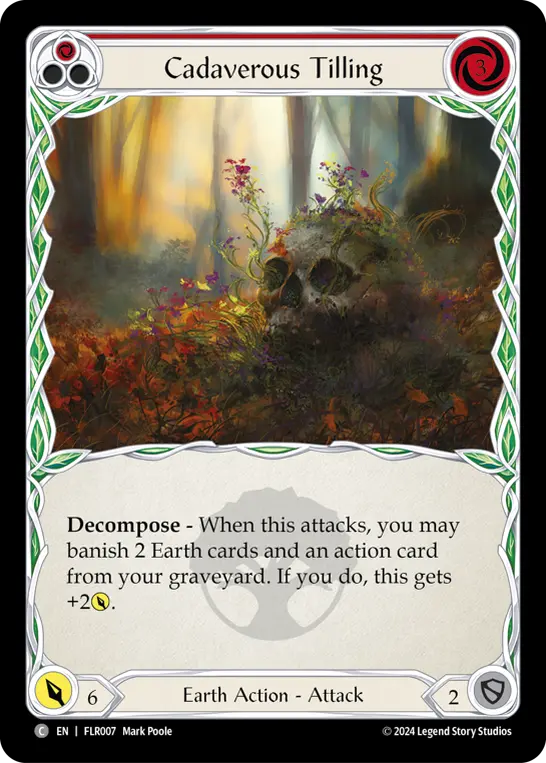
In order to defeat this potent attacker with Midrange Florian, you’re looking to send ultra-efficient attacks while simultaneously blocking well enough to deny their Mask (either mask) triggers. You will want your power attacks (Felling of the Crown, Plow Under) at their max value on their first usage, so you want to block with as many Earth cards as you can early, and get online as fast as possible. Prioritize attacks such as Cadaverous Tilling (red), as it threatens significant damage while also decomposing for you. Cadaverous Tilling is a 2-card 8 on your first decompose, making it a miniature-Felling that sets up your Fellings and Plow Unders to be full value on their first usage after Cadaverous Tilling. If you see a Felling of the Crown or Plow Under very early in the game (before you can reasonably get it online while sending it), go ahead and block with it. You want maximum value out of every attack, and a 4-power Felling is usually worse than just blocking with it to fill your yard for decompose fodder later.
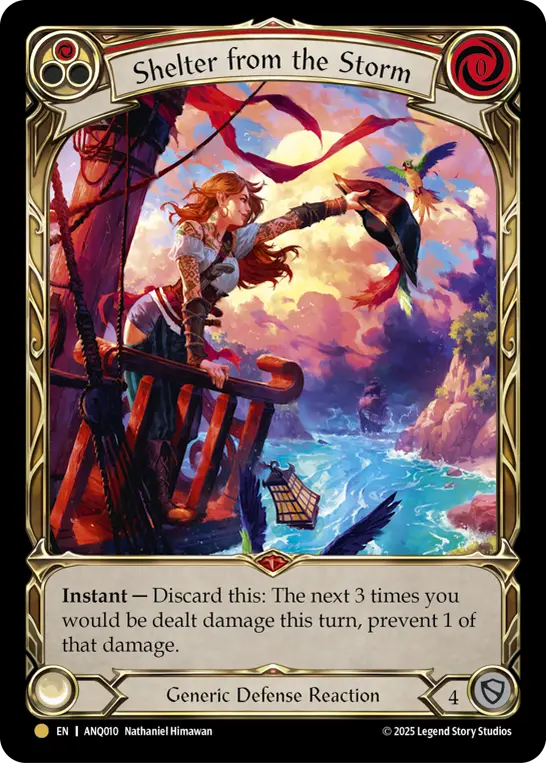
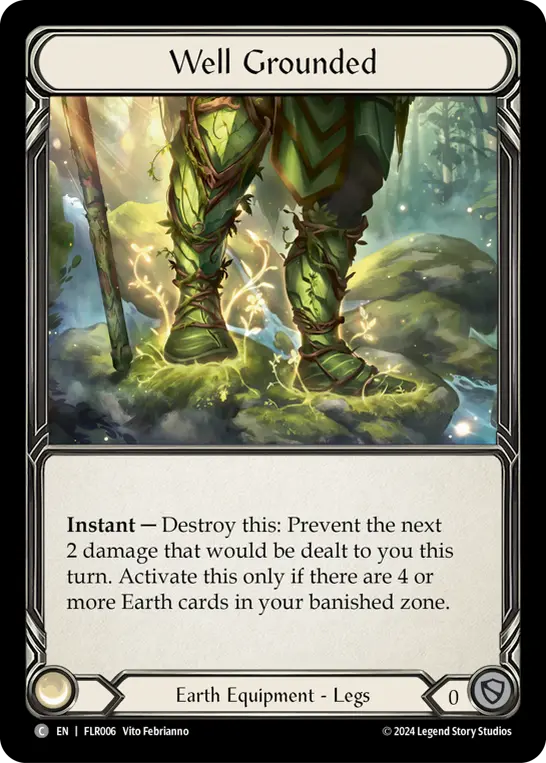
Additionally, keep your equipment as long as you can! Well Grounded always threatens denial of their Flick Knives damage, and once it’s gone, Cindra only really needs to worry about Shelter from the Storm preventing her Flick damage for the rest of the game. Your equipment should basically only ever be used to block/prevent damage when you need to keep cards in hand to send a power card such as Felling of the Crown, Plow Under, or a high-value Germinate while online.
Finally, watch for opportunities to brick their turns! Cindra is a highly consistent deck, but they are occasionally forced to pitch reds into their daggers to attack; if you notice this and can use Shelter from the Storm to stop their Flick Knives trigger and prevent some damage, it may entirely ruin their turn and buy you nearly a full turn cycle of freedom to attack, Germinate, or whatever you need to do to keep yourself in the game.
As Stack Florian
In this list, I’ve found significant success in purely fatiguing Cindra. I rarely even attack into Cindra, unless they have a non-functional hand that gives me the space to send a Felling of the Crown. Otherwise, I use cards such as Haunting Rendition, Well-Grounded, and Shelter from the Storm to prevent Flick Knives damage and deny Mask triggers, while generating a critical mass of runechants.
If I can send the runechants with enough physical damage to threaten lethal, I’ll do so, but the main gameplan is to completely block out almost every card Cindra puts down (breaking the normal Cindra blocking pattern!) and protect my life total as much as possible. Cards such as Sigil of Solace and Life (from both Thistle Bloom and Everbloom) give me a small life buffer as well, making it even more difficult for Cindra to close out the game.


A key card in this matchup is Fiddler's Green (red), a versatile defensive card that can be used as a pseudo 4-block, or can be used to gain life. With Stack Florian, we are going to break the general rule of blocking against Cindra when she's running Mask of Momentum. In most other decks, if Cindra has a four-card hand, you'll want to block on any two chain links that are convenient to prevent a Mask draw. If she has a five-card hand (four in hand plus arsenal), you'll usually, but not always, want to block on chain links three and four. In this deck, though, we want to block or prevent damage on almost every chain link! This card is a major reason why this deck can compete with Cindra. When used optimally, it gives us an extra nine life into Cindra, which is incredibly powerful as we are going to make the game go long, and they will get many more Flick Knives activations against us than they would into most other decks.
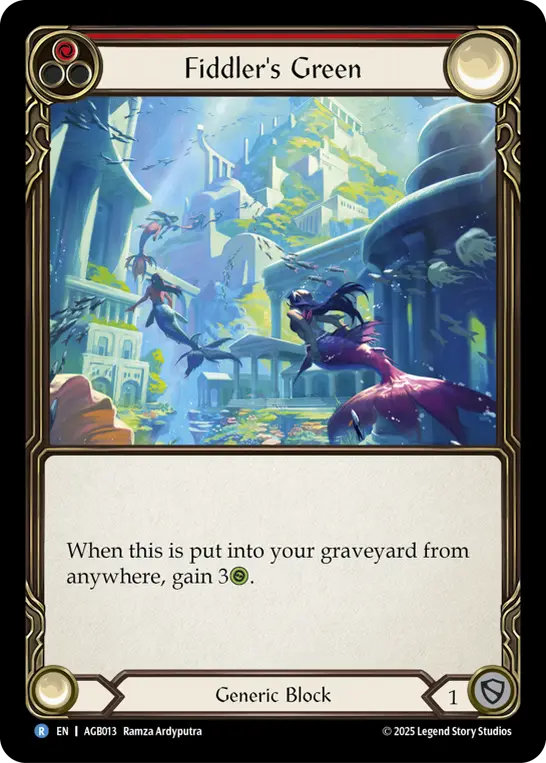
If Cindra attacks five times in a turn (two Kunai, three attacks), I'll generally aim to only let a single point of damage through from the attacks, and the single point of damage from Flick Knives if I can't prevent it, or need to hold the prevention for something else. Because we are willing to block Kunais, it's extremely important to know what Cindra is planning on their turn, as that determines whether or not we block a Kunai with a Fiddler's Green. If we are able to block a Kunai cleanly with Fiddler's Green, and block out the rest of the turn (or nearly all of it), then we gain life on that turn cycle, which is a massive swing in our favor, as our opponent spent almost 7% of their deck on the attack, and lost progress in their effort to kill us before they run out of cards!
Alternatively, if we anticipate some dangerous on hits coming up (maybe we know about an Ancestral Empowerment, Breaking Point, or an Art of the Dragon: Scale due to their Ravenous Rabble last turn), you can save the Fiddler's Green for a later chain link and use it to cover up the Ancestral Empowerment by blocking one extra on a critical attack, or combine it with another card to stop AotD: Scale from destroying a key piece of equipment.
Finally, Fiddler's Green can also be used as a delayed 4-block if we need it to; you can block a 0-for-4 go again with it, take the 3 damage, and then when the chain link closes, you'll gain 3 life. Be very careful with this, as using Fiddler's Green in this way doesn't gain us life, it lets them damage us (threatening Mask triggers), and Cindra almost never closes the chain until the end of her turn, so if we don't have enough life to survive the entire chain, we die before we gain any life.
Side Note: Remember that last point for Oscilio as well, as Oscilio almost never closes the chain on his big combo turn! Fiddler's is risky into Oscilio for this reason, but also very powerful.
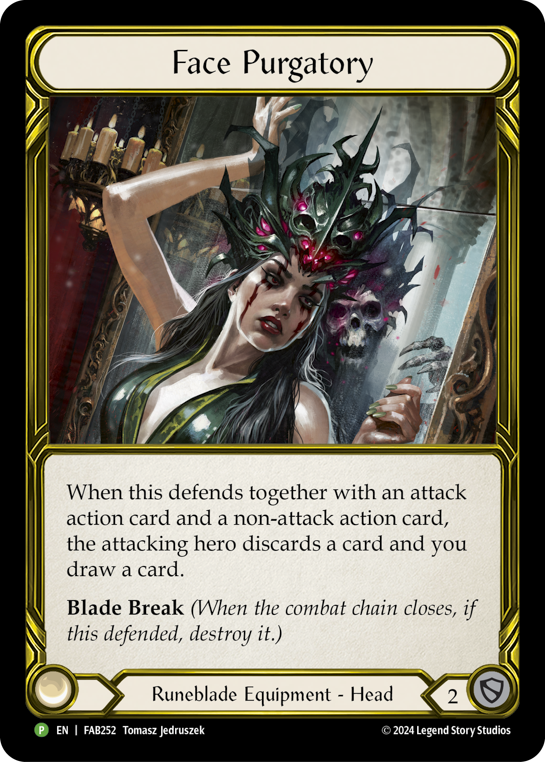
The most dangerous turn that Cindra has into you is their Wrath of Retribution turn; I always save Face Purgatory for that turn, unless they either use it early and they brick (unlikely), or I have to use Face Purgatory to survive (also unlikely). Save Face Purgatory as long as you can, and if you don’t need to use it on their Wrath turn, even better, as you can save it for a Dragonscaler Flight Path turn (if they save them for later) or for a final power turn they try to send to go over the top of your defenses.

As Midrange Florian
Verdance can set up a Potion combo easily over the course of the long game, while also gaining enough life and blocking well enough that outside of the most egregious Channel Mount Heroic turns. Florian just doesn’t have the fuel to knock down Verdance. If Verdance struggles to get online, can’t find her potions, and/or can’t find Felling of the Crown and Plow Under when she needs them, then you have a much better chance. For this reason, Midrange should be trying to race down Verdance as fast as possible, as once her hero power is online, things begin to look very dire. If the game goes long, she will easily be able to handle the otherwise hyper-effective strategy of sending a 1-card 5 by pitching a single blue to make two runechants with Grasp of the Arknight and then sending Reaping Blade.
Once she is able to send her combo, it will almost always be lethal: it is extremely important to protect your life total once you are around 20 life. This becomes very difficult with the combination of Channel the Millennium Tree and the 6-damage arcane spells: Light up the Leaves and Burn Bare. Germinate can help regain life, but you will rarely have the space to resolve it for a significant amount due to the pressure Verdance exerts once she is online.

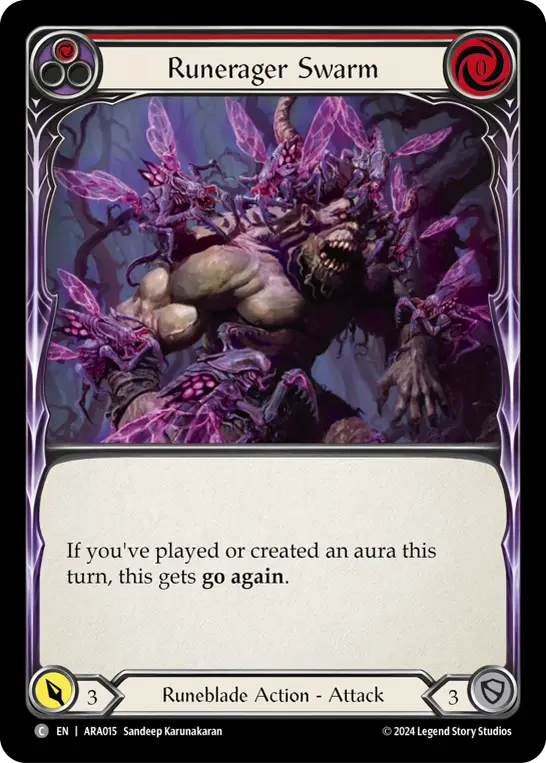
In this matchup, Verdance will be doing her best to walk you down in life total with her, in order to keep her life total below yours (strategically), allowing her to gain life despite Reaping Blade’s passive effect. Your job is to make it a run, not a walk: lining up Channel Mount Heroic with multiple Runerager Swarms, Enlightened Strikes, and Swarming Gloomveils is the key to success here!
Finally, pitch Felling of the Crown and Plow Under early if possible, as the game will go long enough for you to see them again, and having access to disruptive attacks while they are trying to preserve cards in hand for the combo turn is the main way you can win this match, combined with the high power turns offered by Channel Mount Heroic!
As Stack Florian
Into Verdance, Stack Florian has a very simple-sounding but complex plan:
- Prevent every source of damage you possibly can
- Gain as much life as possible
- Counter-pitch Poison the Well and Deny Redemption to line up with their Rampant Growth // Life combo turns
This plan is difficult to execute well, but if you can master this matchup, you can run them out of resources. Even with an Evergreen loop, they won’t be able to pressure you enough to kill you before you are able to close out the game with Germinates and runechants.
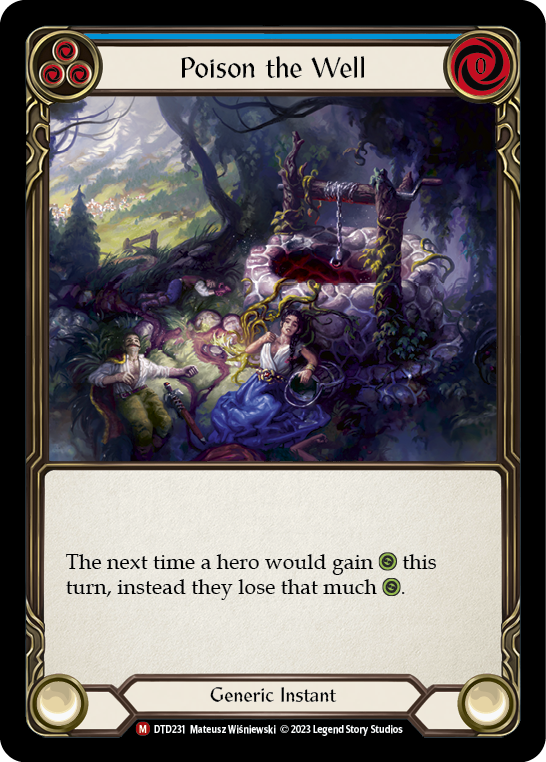


An additional “spicy” tech card is Amulet of Echoes - this card single-handedly neuters their combo turn if they are on Surgent Aethertide, and it makes their combo turn much harder to pull off if they are on Waning Moon. As a bonus, Amulet of Echoes pulls triple duty, as it’s effective into the Wizard trio of Oscilio (its main target), Verdance, and Kano!
Surviving the Combo
The ultimate key to surviving Verdance’s combo turn is the use of Deny Redemption, as just Poison the Well is generally not enough. By discarding Deny Redemption in response to the third Potion activation, you reduce their combo damage by a significant amount, even on a 4-potion Waning Moon double Rampant combo turn! They will be unable to gain life from their 3rd or 4th potion, and their full combo will be neutered significantly.
Let's look at a typical combo turn with 4 potions, 2 Rampant Growth // Life, Pulsing Aether, and Waning Moon:

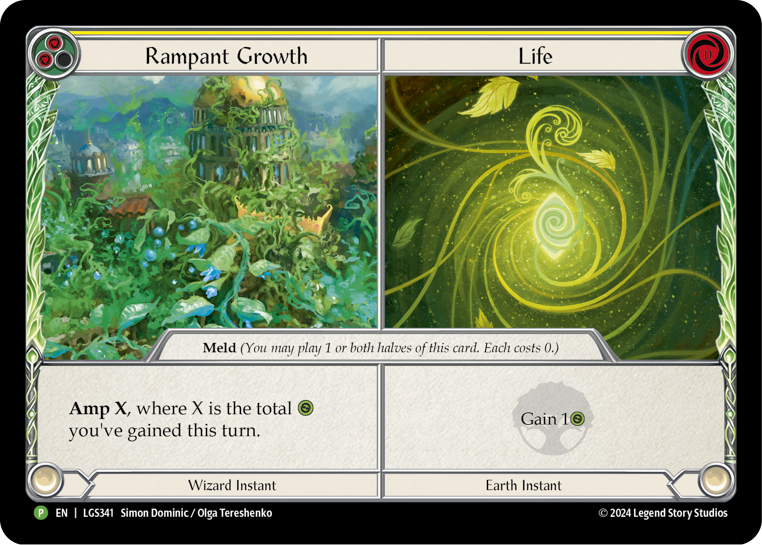
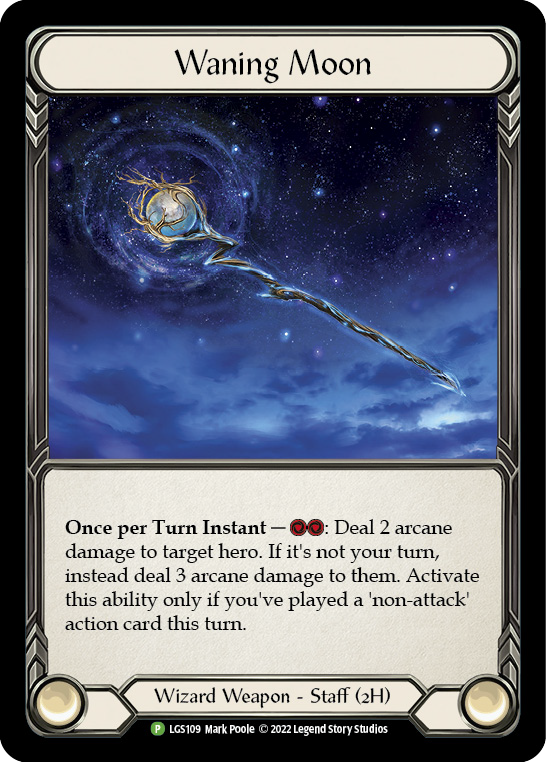
Without Deny Redemption:
- 7 Verdance Pings
- Amp 22
- Pulsing Aether for 26, Waning Moon for 2
Total: 35 damage (before Arcane Barrier is used)
------------
With Deny Redemption on 3rd potion:
- 5 Verdance Pings (2 potions, 3x Life from 2 Rampant Growth plus a Pulsing Aether)
- 7 life gained, amping 14
- Pulsing Aether for 18, Waning Moon for 2
Total: 25 damage (including the 5 pings) (before Arcane Barrier is used)
Combining Deny Redemption with Arcane Barrier 3 allows us to AB away 9 damage total if we have 3 blues plus Deny, with a final damage taken of either 16 (if we AB) or 25 (if we don’t). This becomes even better if you have Poison the Well available!
This plan into Verdance is very tough to execute, but with significant practice, you can pull it off pretty reliably, and most Verdances will not have the reps needed to navigate your counterplay. This plan does not solve the matchup on its own, but it nets you significant points into Verdance, and with it I feel comfortable against Verdance, if slightly unfavored. With this plan and my reps into the matchup, I feel significantly better on Stack Florian into Verdance than I do on Midrange.

As Midrange Florian
Gravy Bones, even post-Tipple-ban, is still a very difficult matchup for Midrange Florian, as Florian simply doesn’t have the tools required to deal with the massive amount of value that Gravy can generate almost every turn of the game. Gravy simultaneously draws multiple cards a turn, presents heavy damage with go again, threatens on-hits that present disruption and value, and builds a board full of allies that can easily overwhelm you. On top of all this, Gravy has enough blues to use Arcane Barrier equipment very efficiently, and has a late game that rivals Florian’s in the form of fatigue-breakers such as Wailer Humperdinck, recursion of power cards like Prismatic Leyline with Scooba, and the fact that nearly every blue represents another ally from the graveyard.
Midrange can overrun Gravy with power turns such as Channel Mount Heroic-empowered Runerager Swarm into Swarming Gloomveil into Felling of the Crown, but those turns aren’t guaranteed, and you need more than one of them to finish the job. Many Florians run tech cards such as Outed for some more guaranteed go again to clear smaller allies, but they still struggle with clearing Wailer Humperdinck, Chum, and other higher-health allies, especially with Sawbones and Fearless Confrontation available to weaken the few higher-power attacks that Florians run.


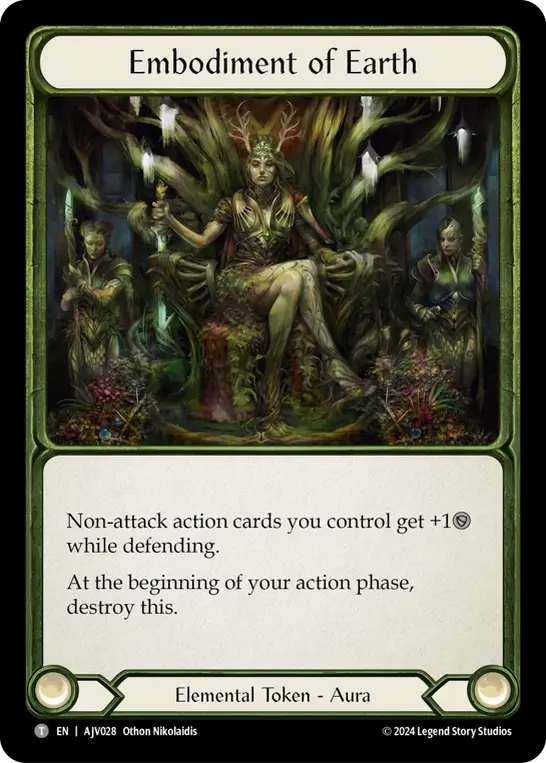
Your priorities into Gravy Bones should be killing Sawbones, Wailer Humperdinck, and Gravy Bones themselves. If you are able to clear Chum easily, and he’s actually affecting your turns, then do so, but if your turn is just going to be sending a Felling of the Crown, Cadaverous Tilling, or Plow Under, then don’t bother with Chum on that turn. Be careful with creating Embodiments of Earth (either through Barkskin or Germinate), as they self-destruct at the start of your action phase, which creates a priority window for Gravy to activate Chum!
Mainly, beyond the mentioned allies, just attack Gravy directly, and try to keep the pressure on so that they can’t send a Prismatic Leyline -> Blue Attack -> Red Attack -> Yellow (ally) attack turn without taking significant damage to do so!
As Stack Florian
For Gravy, you are extremely unlikely to fatigue a good Gravy player, and it’s very difficult to clear Wailer Humperdinck, Chum, and even Scooba. For that reason, I prefer to race the Gravy rather than try to fatigue them.
Your ally-clearing priorities are:
- Sawbones when you can
- Wailer on-sight
- Scooba when possible
- Beyond that, only Riggermortis and Swabbie are worth clearing
You want to get online as soon as possible and start stacking as fast as you can. This matchup relies very heavily on getting online early and finding Germinates quickly in order to generate the stack you need to win. If you are able to genuinely fatigue them, great, but I would say it’s very unlikely. This matchup is difficult on any version of Florian, and I feel that it’s similar difficulty on Stack as on Midrange.
The Verdict
With a better matchup into Cindra and Verdance, and a similar Gravy matchup, I would personally lean towards Stack in this metagame. You have some highly-favored matchups into Guardians, Assassins, Mechanologists, and Rangers as well. Midrange Florian does well into some of those as well, but ultimately, having game into Cindra and Verdance is the differentiator. You will have an extremely hard time into Prism and Kano, but Midrange Florian does as well, so this isn’t unique to Stack.
If you are a Florian fan who has been playing him since release, you’ll have a good foundation to try and attack the meta, but you need to justify why Florian and not Verdance. If what you want to do with Florian isn’t strictly better in Florian than Verdance, and it’s not so much better that it offsets the rough meta position, it won’t be worth it, and you are intentionally hamstringing your competitive performance.
For many people, they love Florian, and just want to play their favorite hero as best he can perform. For the competitive player, though, you’ll want to find tech that works for you personally into at least two of the top three decks to make them 40/60 or better. I’ve found in my testing that I can solve for Cindra and Verdance with Stack, and I’m very happy with that, given Gravy’s lower representation in recent events.
Ultimately, I would be cautious in bringing Florian to a high-level event. You can struggle into the top three decks, your Prism matchup is rough, and your prey (Guardians, Assassins) are nearly non-existent right now. With the uptick in Marionette, Midrange Florian is slightly more reasonable, but that’s currently your only baseline-good matchup in the top decks.
That said, Florian is still a very versatile deck that is straightforward to play at its baseline, with many opportunities for individuality and skill mastery as you spend more time with the deck. This means that Florian is likely going to be a meta presence for his entire existence, even when he’s not at the top. And sometimes, Florian hands you exactly what you need each game, consistently sending three-wide Channel Mount Heroic turns, or giving you three high-value Germinates in a row. That variance is a huge asset for Florian, and you just need to build the skillset and work the reps to win the games in between. In a metagame that can be hostile, Florian won’t hand you victories on sheer deck power alone. But if you value flexibility, skill expression, and the satisfaction of threading the needle to victory in every win, then the Rotwood Harbinger will surely reward your efforts.
Hopefully this article has provided valuable insight into Florian’s strengths, weaknesses, and strategies that you can take with you to your next event, whether you’re playing as or against Florian! Special thanks goes out to David Bruner, who has spent countless hours with me tuning lists and reviewing Florian strategies with me over the past year.
Thank you for reading, and if you’d like to provide feedback on this article, comment below, or reach out to me on Discord (@hucklr) - I’m always happy to chat.