Could LSS have been any more overt with their intentions for the resurgence of the Mechanologist class than their prize support? The focus, inarguably, has been on Teklovossen, whose art adorns the Pro Quest playmats and spreads extended across the Top 4 prize cards. But GEM Pack 4 also reinforces the theme, with an impressive alt-art reprint of the Nitro Mechanoid, this time as built by Maxx Nitro.
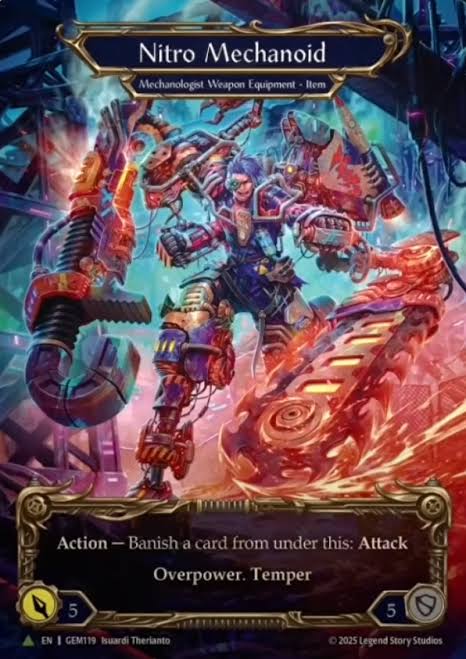
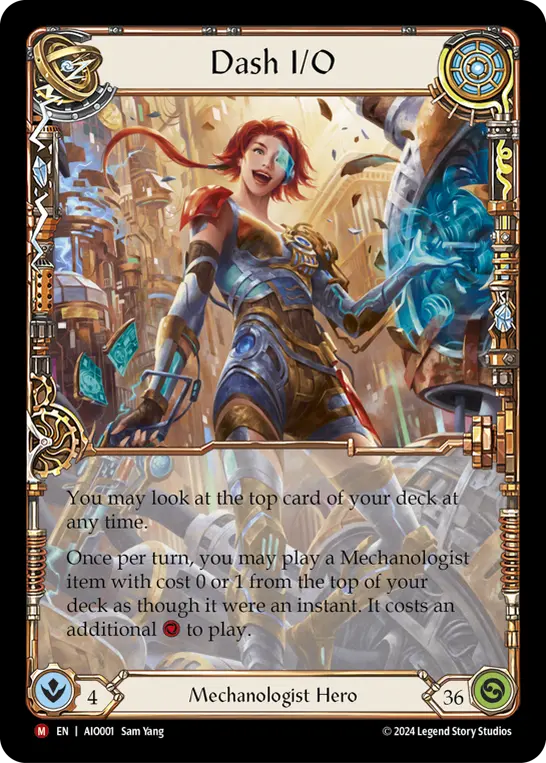
Despite the artwork, I maintain the belief that Dash I/O is the best hero for the Mechanoid. This deck has been a pet project of mine for over two years, and in that time I've honed the build around the core concept, identifying the unique strategy that the archetype supports (a gameplan played in stages that takes full advantage of the modularity and flexibility of the class). If Maxx is an aggro deck using the Mechanoid for a spike turn, Dash is a tempo alternative that sees the exosuit as a game-closing pivot. Maxx competes for meta shares with heroes like Cindra, Fai, and the traditional boost-focused Dash I/O; in that landscape, he struggles to make a compelling case. Mechanoid I/O, in contrast, fills a similar meta role to Rhinar, RKO, Prism, and Vynnset; she shifts between defensive and aggressive postures, before coming in hard with massive spike turns and evasive damage, and in that niche she rivals any of them.
I laid out the foundational skills and strategies for this deck in a Pro Series article last year, and it remains the best way to wrap your head around the gameplan and key cards for her. I'll be revisiting this deck with a follow-up article once I've been able to get more reps with the PEN version, but even then the Pro Series article - available to Rathe Times subscribers - will remain the starting point for building a knowledge base.
Patch Notes
The new cards for Mechanoid I/O in PEN are perhaps the most consequential updates since Bright Lights gave us the hero in the first place, and put us in a position where I'm legitimately considering Dash for the Pro Quest season. These cards shore up holes in the list that have plagued us since day one.
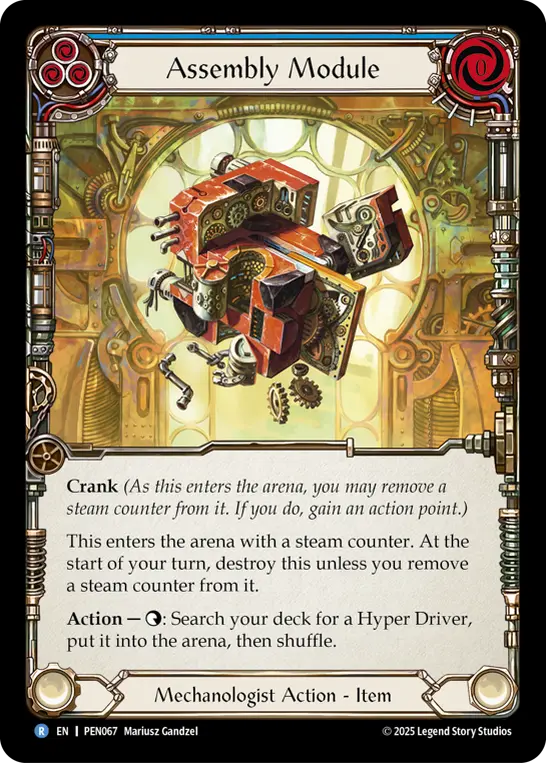
Assembly Module is a fever dream card, evocative of a fanmade concept in its direct and undisguised support for the deck. Like Cerebellum Processor before it, Assembly Module trades an action for a card; but whereas Cerebellum required the card to find its way to the top of your deck, Assembly knows what you're looking for and simply fetches it for you. Spying an Assembly Module on the top of the deck is an incredibly value, as you can crank it for an action point to spend on the search; but even if you have to play it out, it's simple enough to boost your last attack of the turn, leaving you with an action point to spend here.
With Assembly, we're now up to 12 Hyper Driver hits, before considering the two Supercells that have now moved to the sideboard. This makes the rate of acquisition incredibly high - our odds of drawing 1 or more Hyper Drivers or cards that search for them is 60% with our first hand. When you add Dash I/O's access to the topdeck and the digging abilities of boost and Teklo Foundry Heart, finding 3 becomes a rather quick quest.
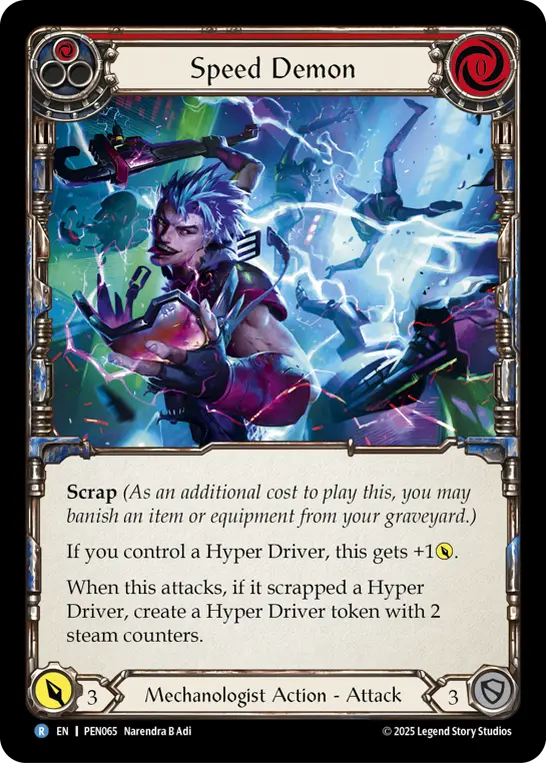
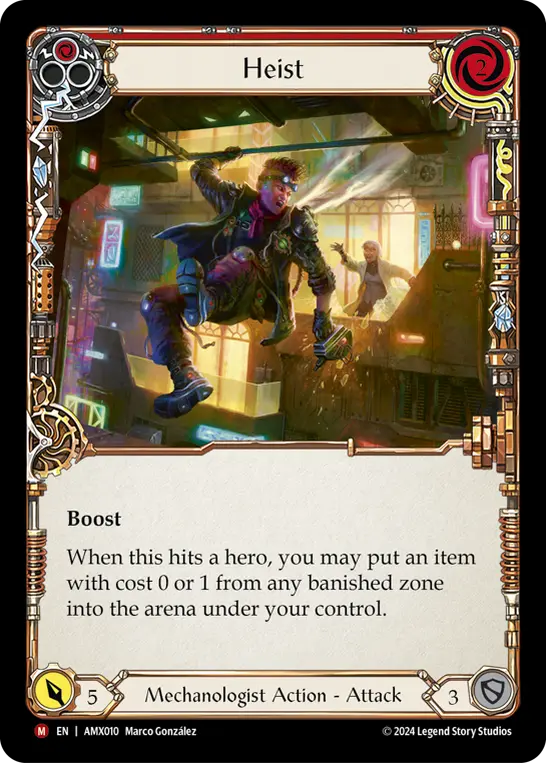
Another card that explicitly calls out Hyper Drivers, Speed Demon is the answer to the question, "What if I need to boost while I'm gathering my Hyper Drivers?" Speed Demon essentially rebates you the cost of a lost Hyper Driver, and comes in at 0-for-4 at that! Speed Demon also has amazing synergy with Heist, as it moves your burnt out Hyper Driver from the unusable graveyard to the oddly-more-accessible banished zone.
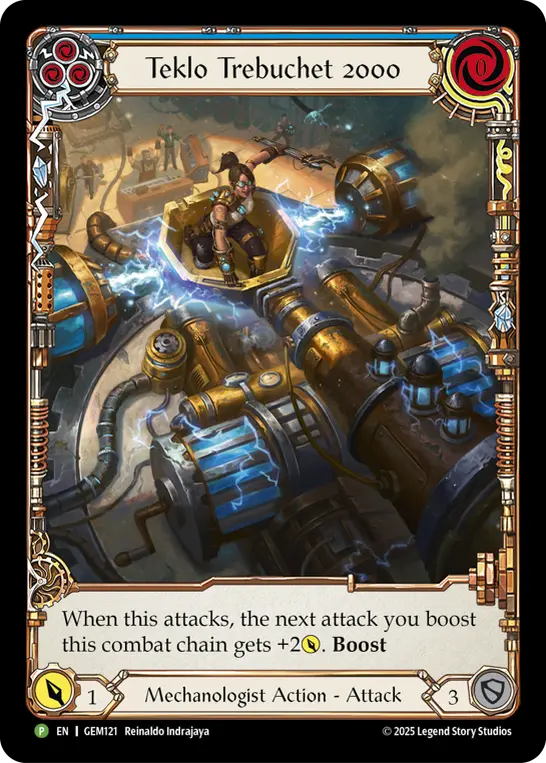
Teklo Trebuchet 2000 has drawn more than its share of attention among the Mechanologist faithful, and it's just as good here as anywhere else. A blue +2 with an attack stapled to it, Teklo Trebuchet deals its allotted 3 damage across brilliant breakpoints, while acting as a resource card when you can't optimize the damage (or simply don't want to boost). As this can be a deck that sees every card a 2nd time around, damage-dealing blues are of high value.
The Decklist
Weapons
- Symbiosis Shot (1)
Equipment
- Achilles Accelerator (1)
- Heavy Industry Surveillance (1)
- Cogwerx Base Legs (1)
- Galvanic Bender (1)
- Viziertronic Model i (1)
- Teklo Foundry Heart (1)
Loadout
- Aether Sink (Yellow) (3)
- Backup Protocol: BLU (Blue) (2)
- Assembly Module (Blue) (3)
- Big Bertha (Blue) (3)
- Fast and Furious (Red) (3)
- Boom Grenade (Red) (3)
- Cerebellum Processor (Blue) (3)
- Construct Nitro Mechanoid (Yellow) (3)
- Heist (Red) (2)
- Dive Through Data (Red) (3)
- Backup Protocol: RED (Red) (2)
- Hyper Driver (Yellow) (3)
- Throttle (Blue) (3)
- T-Bone (Red) (2)
- Null Time Zone (Blue) (3)
- Spark of Genius (Yellow) (3)
- Lay Waste (Red) (2)
- Over Loop (Red) (2)
- MetEx (Red) (2)
- Rev Up (Red) (3)
- Zero to Sixty (Red) (3)
- Supercell (Blue) (1)
- Zoom In (Red) (2)
- Throttle (Red) (3)
- Zipper Hit (Red) (3)
- Speed Demon (Red) (2)
- Hyper Driver (Red) (3)
- Teklo Trebuchet 2000 (Blue) (3)
If you've been attuned to my vision of the Mechanoid I/O archetype, most of this list is going to look familiar to you. We have the same focus on big boost cards that take advantage of the resources we generate while slowing down the burn of our own deck, and while I've been intrigued by the Maxx Armory Deck equipment for its specific interactions with Hyper Drivers (Puffer Jacket being the most compelling alternate), ultimately I've remained with the same 6 pieces. (I still dream of a more compelling weapon for the deck, but they don't seem to want Mechanologists to have start-in-play resource outlets or one-card plays.)
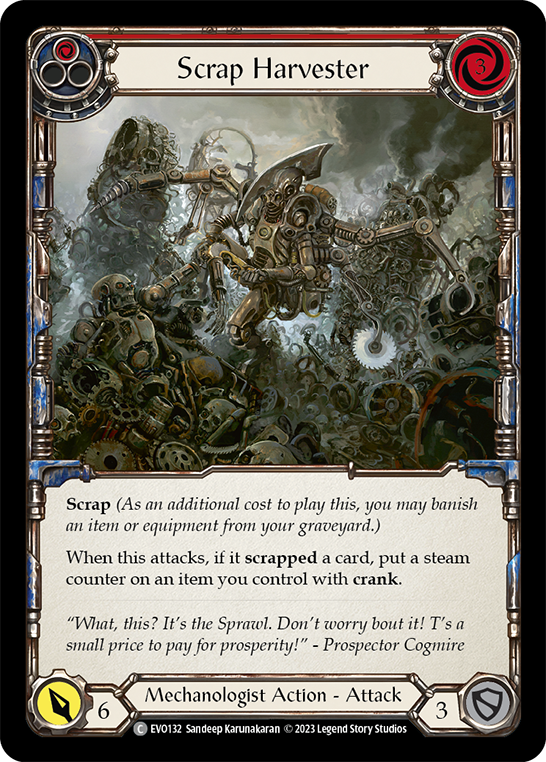
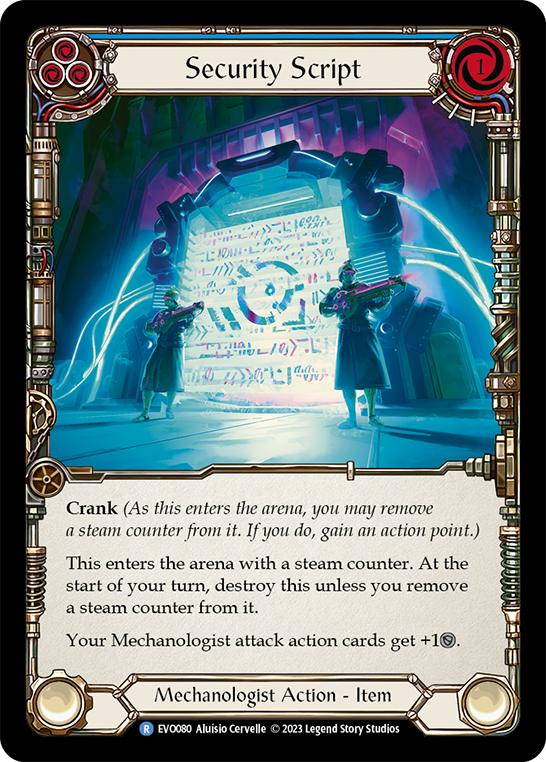
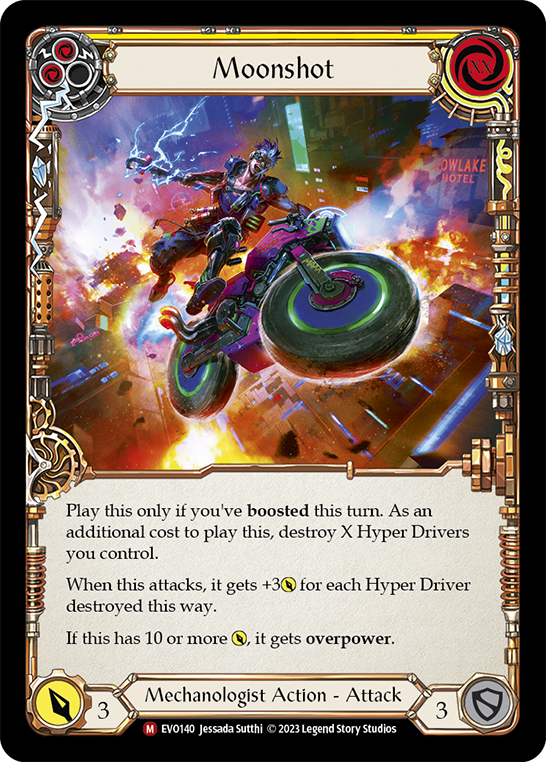
In my personal copy of this list on FABrary, the Maybes section is extensive (I've trimmed that down for your benefit). This reflects another aspect of my deckbuilding philosophy: I don't really believe in a perfect 80, and generally feel that decks should be constantly changing, tinkered with from week to week in response to subtle shifts in your local meta - or simply to remain unpredictable. The list I'm offering here is a pretty safe build, without some of the experimental or high variance cards I personally like to swap in. (Scrap Harvester R, Security Script, and even a single copy of Moonshot have been recent inclusions that I still like quite a bit.)
The sideboard is at its best when it remains simple, and my guidance there is this:
- Add 3-5 Items and 8-10 attacks.
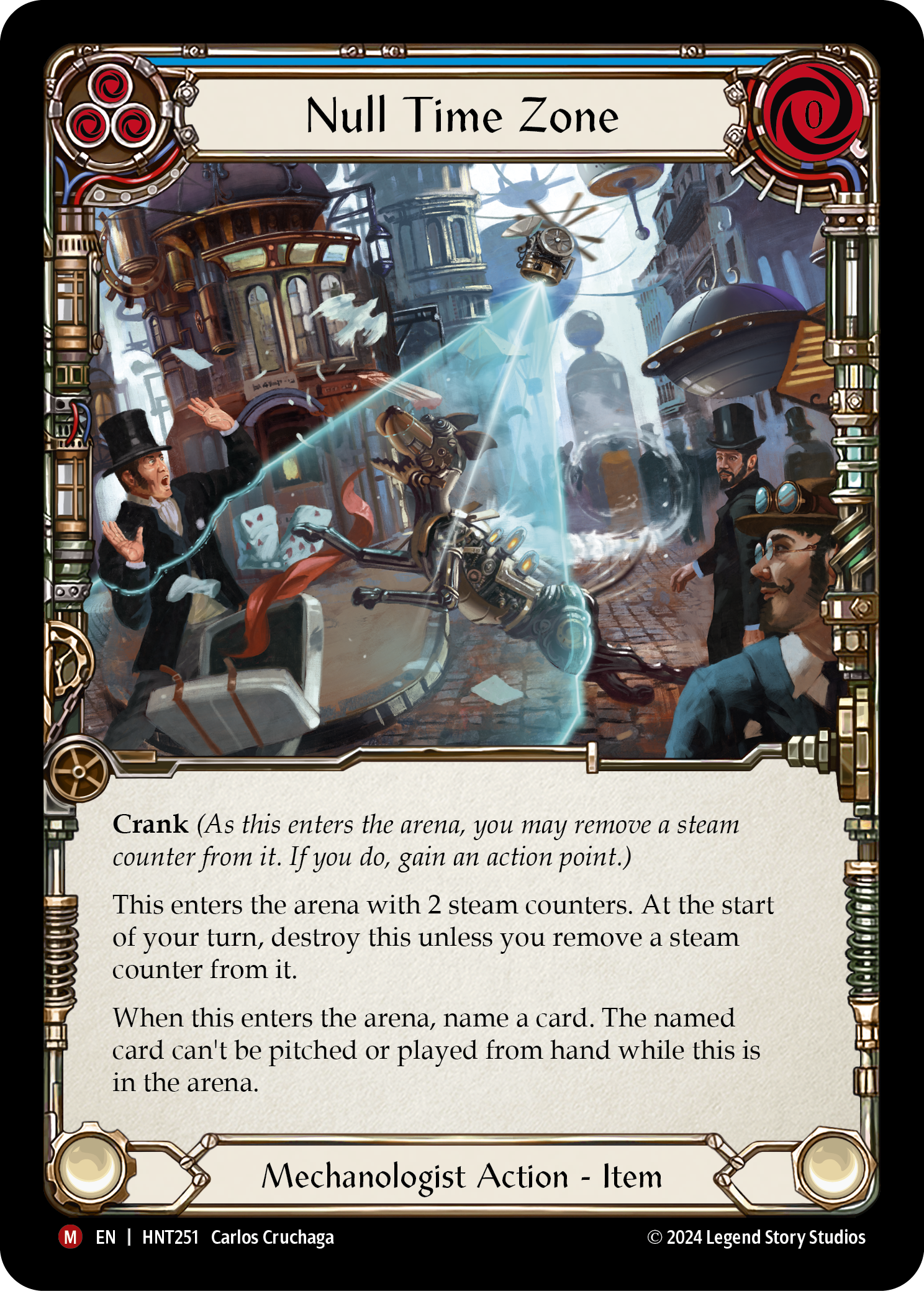
- Run Null Time Zone if you can articulate the key cards you don't want to see the opponent play.
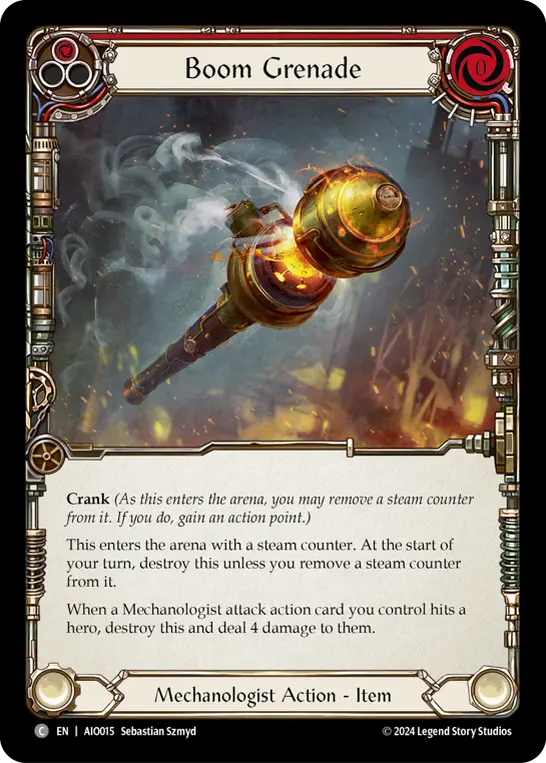
- Run Boom Grenade if you need to push damage fast or expect they won't block.
- Run Backup Protocol: BLU for a shorter game; RED for a longer game.
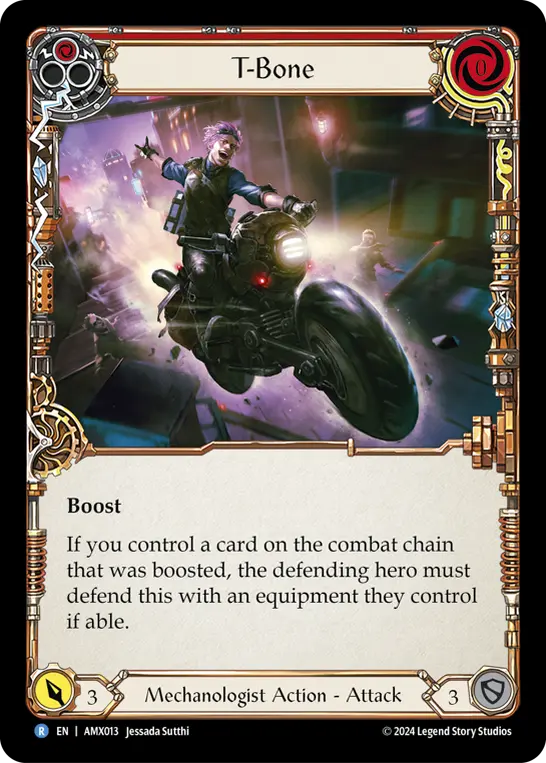
- Run T-Bone only if the opponent has equipment you can take or if you need to stay low to the ground.
- Run Over Loop if there's a chance the game might go long.
- Run Lay Waste if they're known for their heavy armor density.
- Supercell goes in only if the opponent is known for item and/or deck destruction.
Mechanoid I/O's Role in the Meta
While the CC meta of Compendium has yet to be showcased, we can make a few assumptions based on the competitive landscape just before its release.
- Verdance has undeniably declined since the banning of Rootbound Carapace, but she's still plenty strong and has many experienced pilots.
- Arakni, Marionette will probably remain an aggro favorite, with disruption and toolbox cards that the Draconic heroes don't have.
- Gravy Bones remains a well-rounded staple with few bad matchups.
- The bogeyman of the format, fatigue Pleiades, is likely to continue to lurk in the shadows, a deck that may not be at all the top tables but can ruin your run if you don't plan for it.
- For those skilled with Wizard gameplay, Oscilio has massive potential but can also collapse on himself.
There are plenty of variables to consider beyond these. Is Kayo still in? Will Kassai surge back? Will Jarl stick to fatigue or is the aggro plan viable? Is Teklovossen real? But speculation can quickly muddy the waters, so let's focus on those heroes we can almost certainly count on seeing.

The Verdance matchup is tough, but we have a better plan into it now than we've ever had before. Mechanologists have relatively effortless Arcane Barrier, which is a major blessing, but once we slide into the mech suit we no longer have any arcane defenses. To address this, I've gone deep into the archives and returned with Aether Sink.
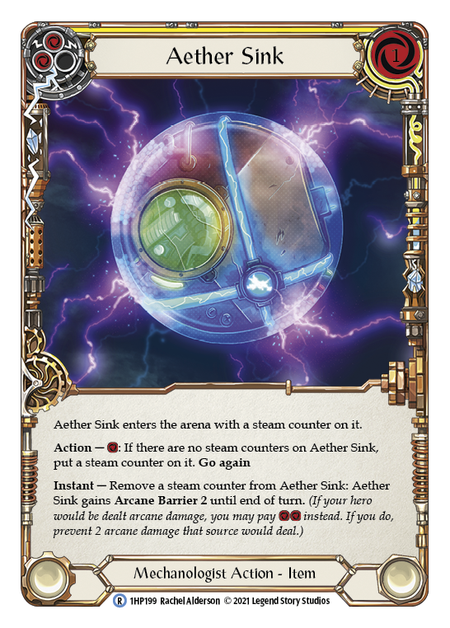
This one has surprised me, but in retrospect I'm not sure why I've never considered it before. (Actually, I know that it's because of my hard and fast rule that any item outside of Hyper Driver must have crank.) Aether Sink is a yellow pitch, which is workable. It costs 1 (or 2 off the top of the deck), which, again, is workable. It costs an action point to play out, which, you get the point. But in exchange for all that trouble, Aether Sink gives us a use for an extra resource: preloaded Arcane Barrier: 2 for the turn you pull the steam counter off.
This utterly changes the math against Verdance in the late game. Before, resolving Mechanoid prompted the Verdance player to shift to a defensive posture and only play out arcane spells. (And when we start at 36 life, it only takes the 6 copies of Burn Bare and Light Up the Leaves to kill us.) If we manage to play out our 3 Aether Sinks, however, they no longer have a Storm Striders kill available; all we need are 2 blues to entirely cover those spells. (Note, however, that taking an action to recharge your Aether Sink will give them a window to instant speed kill you before the Aether Sink can reload.)
Thankfully, Verdance now struggles to make progress on her gameplan while forced into a defensive position. Additionally, Null Time Zone can do a lot to slow her arcane output. Stifle her arcane potency, exert pressure, and you can get there.

I have a lot less to say on the rest of these heroes, as they don't ask us to stray too far from our usual playlines.
Marionette can be difficult, due to the quantity of 4s in the deck and our lack of defense reactions. Disruption to our hand can make it hard to develop the Hyper Drivers that may wander into our hands. There's also the non-zero chance that they've packed Shred, an absolutely devastating counter-punch to our equipment defenses; once you're in the mech suit, it might be worth naming Shred with any Null Time Zones you find. These games generally proceed at a midrange pace, and our best chance to put ourselves in a good position will be to find key items off the top of the deck. It's okay to fall behind on life, as we can count on the Mechanoid to stop the bleeding and apply massive pressure quickly once we've built it.

What I love about boost as a class mechanic is that you can go wide whenever you need to, but your cards don't pay for that go again with their defenses. Evaluate each and every ally on its own, and decide which need to be removed and which can be ignored. If you boost once in a turn, you might as well boost again; that Hyper Driver counter's been spent already.
Gravy is a matchup where it's probably worth running T-Bone just for the ability to go wider. This is also a matchup where you probably skip Speed Demon, which is the only non-boosting attack in the sideboard. Backup Protocol: BLU is excellent here for pulling back Teklo Trebuchet 2000 to snipe an ally while buffing your next attack.

Mechanologists are generally vulnerable to fatigue, but the Mechanoid provides an endgame strategy that can help us close. With a general lack of offensive pressure, Pleiades struggles to slow us down in the 'collecting Hyper Drivers' portion of our game; and once we start presenting 18-24 damage per turn, her blocking plan folds. Be judicious with your boosting, and plan to go as wide as possible on the turns where you mount an offensive.

Oscilio likes to concentrate damage in the late game, when we've given up our Arcane Barrier. That said, Oscilio can be fragile, and if we exert pressure it can be hard for him to last long enough to assemble a combo. I don't sweat this matchup, but like Kano before him, Oscilio can just steal games sometimes.
Overall, the position for Mechanoid I/O is this: while our own gameplan is quite scripted, we're surprisingly flexible into how we can respond to our opponent, up to and including abandoning the Mechanoid plan entirely for a full-throated aggro push. Overpower is surprisingly potent across the current landscape, and because we generate resources as part of our card suite, we've been able to incorporate higher costs to the benefit of our damage values. Unlike aggro Dash, we don't present 3s at all.
Between Boom Grenade, Null Time Zone, T-Bone (the sole exception to our "no 3s" rule), and Heist, we have a fair number of relevant disruption cards, each targeting a different strategic preference. Dash I/O helps us get items into play without wasting hand space on them. And between our equipment and the Mechanoid itself, we have a massive 21 points of armor.
Personally, I love decks that have phases of gameplay, a plan of progression that rewards you for timing the pivots correctly. Mechanoid I/O is decidedly that kind of deck. It forces your opponent to shift their strategies in response, rather than playing the entire game in one posture. Not every deck can do that well, nor is every player practiced enough to read your cues.
It's now or never for Mechanoid Dash. PEN has given us the final pieces of the puzzle, and I believe we're ready to step on the gas and make this concept reality.