In the game of Flesh and Blood, you build your deck around your hero’s class and talent. Talents define and change the deck a great deal, making heroes of the same class feel vastly different.
When talents were introduced in Monarch, Light and Shadow brought us deeply thematic gameplay. The insidious and demonic Shadow heroes were coded as tortured and misunderstood villains, in contrast with the squeaky clean of heroes of Light. In the set immediately after - Tales of Aria - Elemental brought a greater deal of complexity and power to the game. Since then, “talented” heroes have been among the strongest in the game; almost all of the heroes who have reached Living Legend possess one.
Talent design has been significantly more niche since the format-warping Mystics of Part the Mistveil. The advent of Revered and Reviled from Super Slam fit the theme of performance athletes, but didn't define their heroes to nearly the degree of prior talents.
And then there's Chaos.
Hunting for Chaos
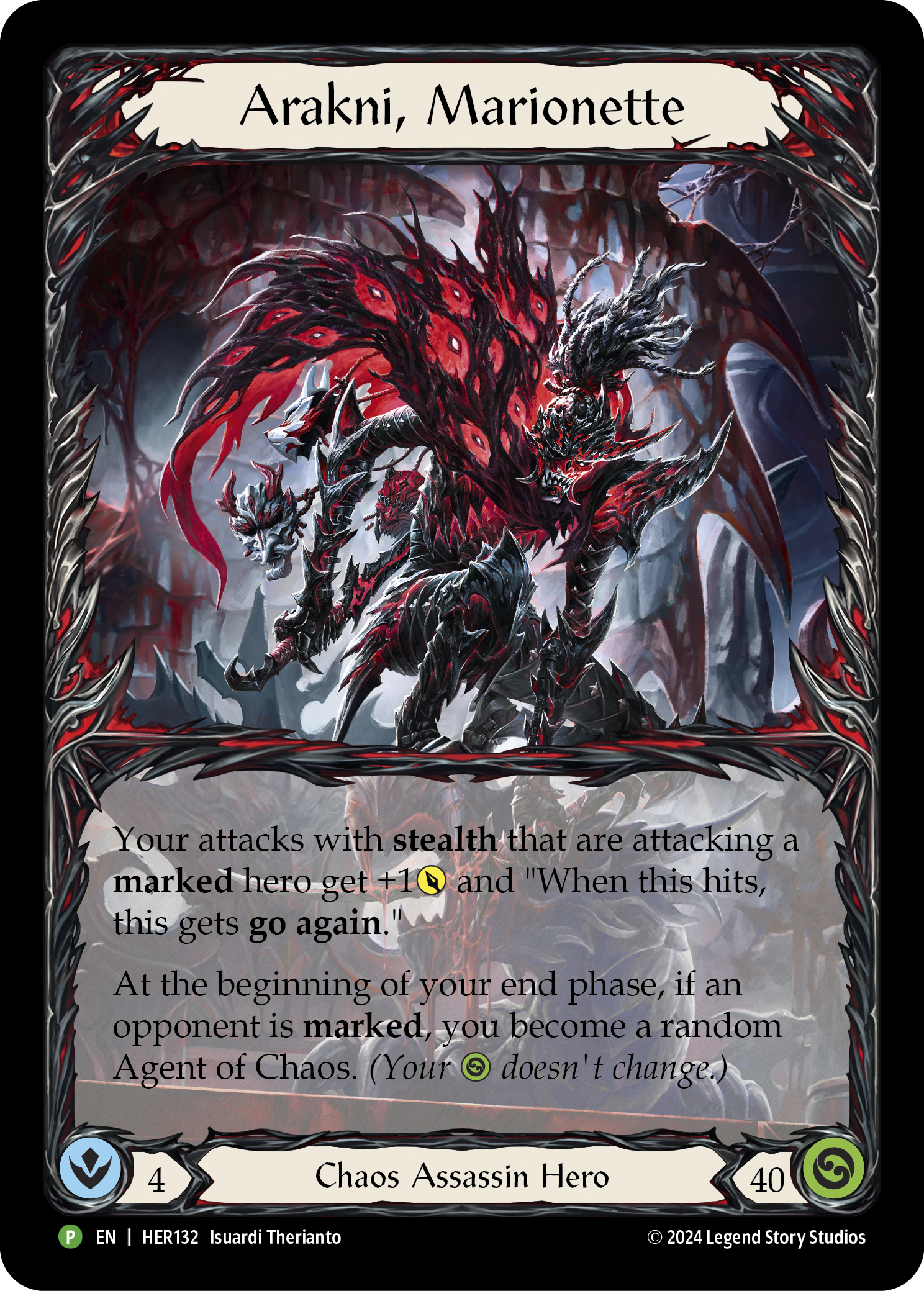
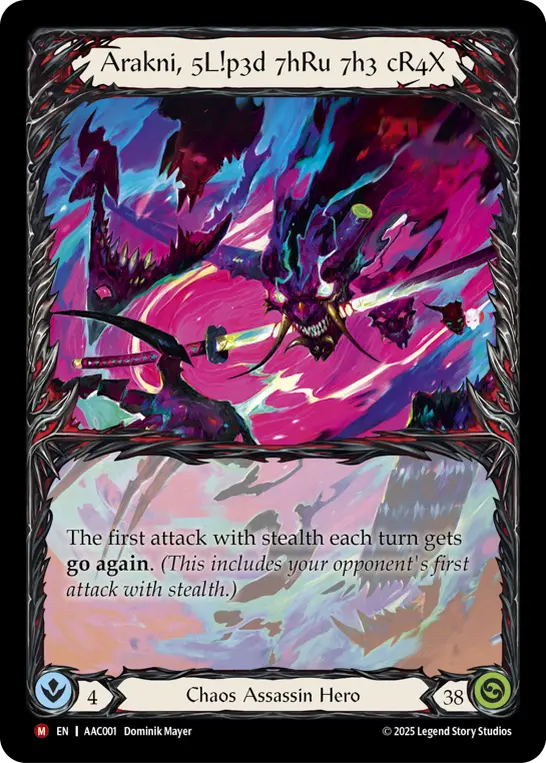
The Hunted gave us Arakni, Marionette and Arakni, 5L!p3d 7hRu 7h3 cR4X (AKA 'Slippy'), who gave us our first taste of the Chaos talent. This early outing only offered a limited number of cards for the talent: Spur Locked and Schism of Chaos.

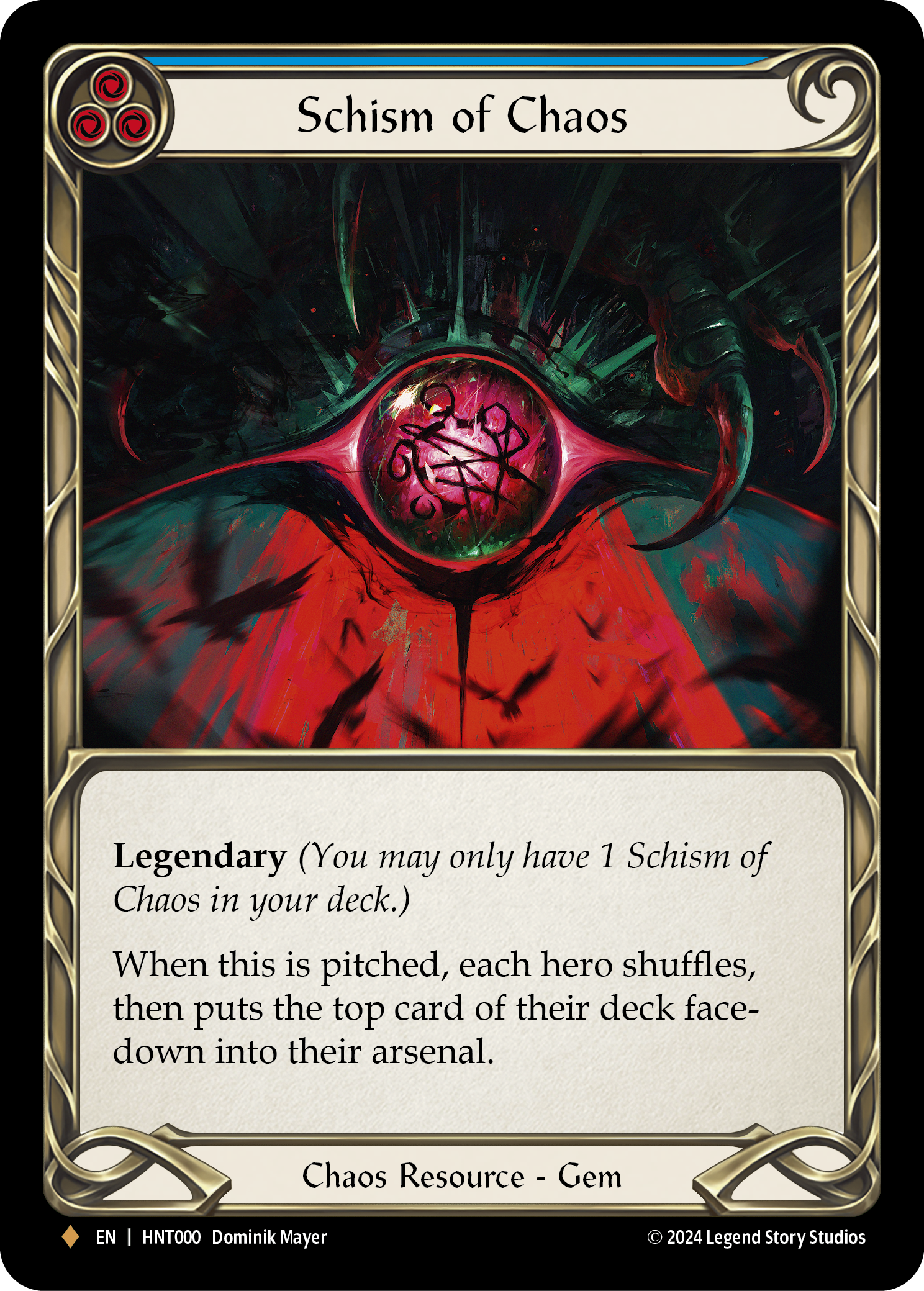
Schism has been relegated to the pile of niche gems that are almost too niche to see play - Fabled cards like Blood of the Dracai and Arknight Shard.
Spur Locked came to us from the mind of the 2025 Player of the Year. The ability for someone to pay life and search their deck for a card is relatively unheard of in FAB, but less so than in other games. Despite the power of the card and the novelty of it being a player’s champion card, it’s still a card waiting to see much play.
As time has passed, we can see in retrospect how these cards told us where the Chaos talent would ultimately go. The main signpost for Chaos was on the hero cards themselves: the unconditional, symmetrical go again on Slippy and the attack reactions on almost all of the Agents of Chaos. We see Chaos talent bringing both aggression and disruption - without concern for whether that might be used against them.
Chaos Rising
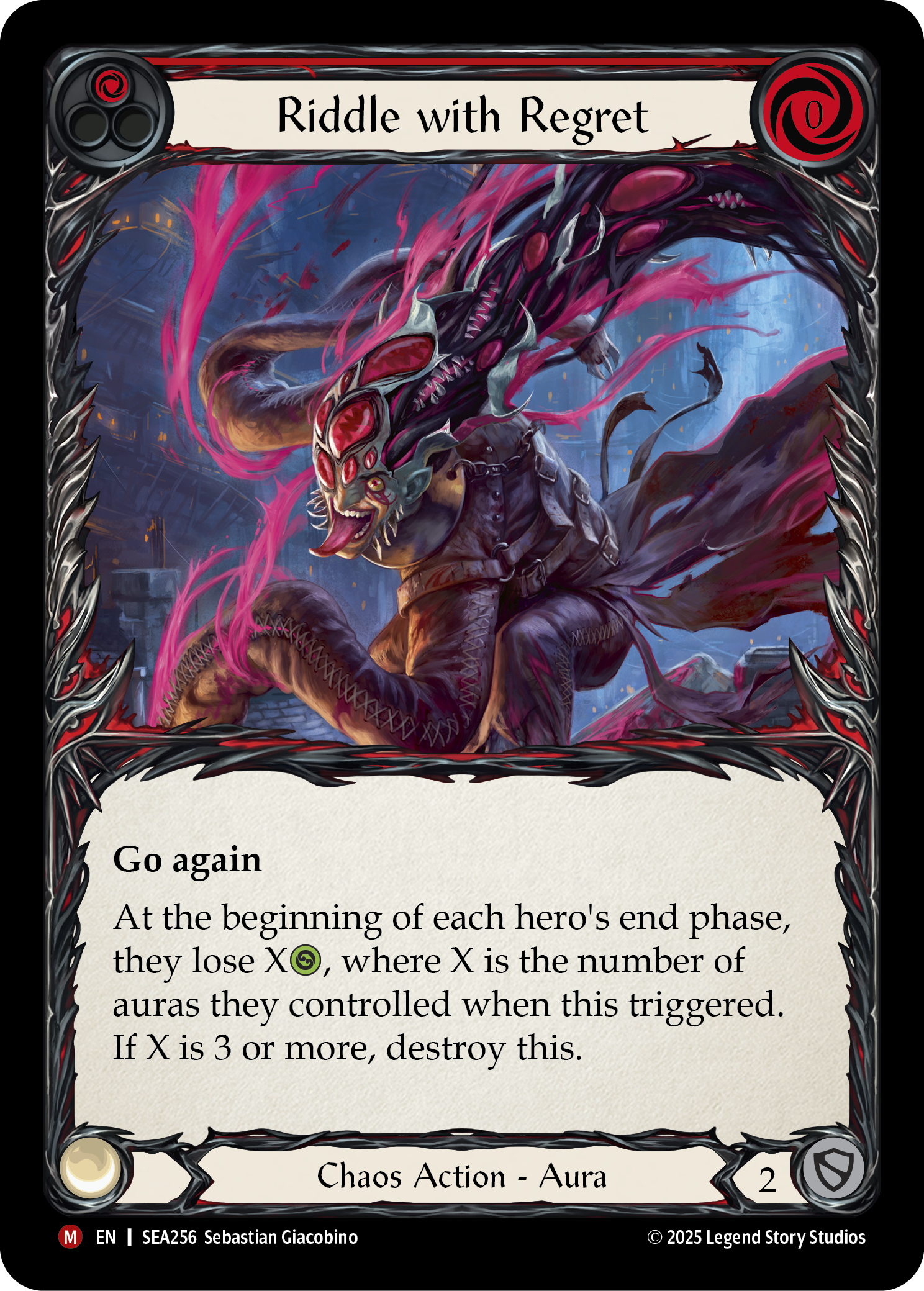
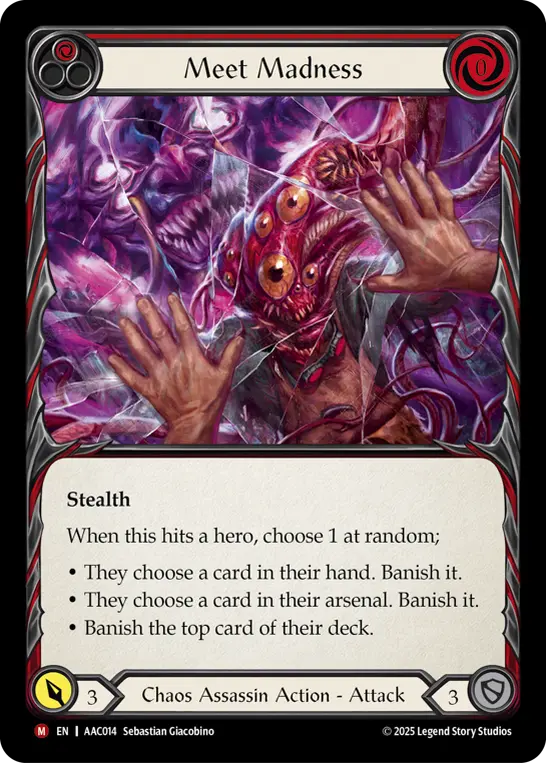
High Seas brought us the first new card in the Chaos talent: Riddle With Regret. While this strange two block saw little play - as it came after the Living Legend of Enigma, a prime target for its effect - it showed yet another symmetrical effect in Chaos. Toward the end of 2025, Armory Deck: Arakni added Meet Madness to the roster (while this card is locked to Chaos Assassins, thus far that's all we've seen paired with Chaos).
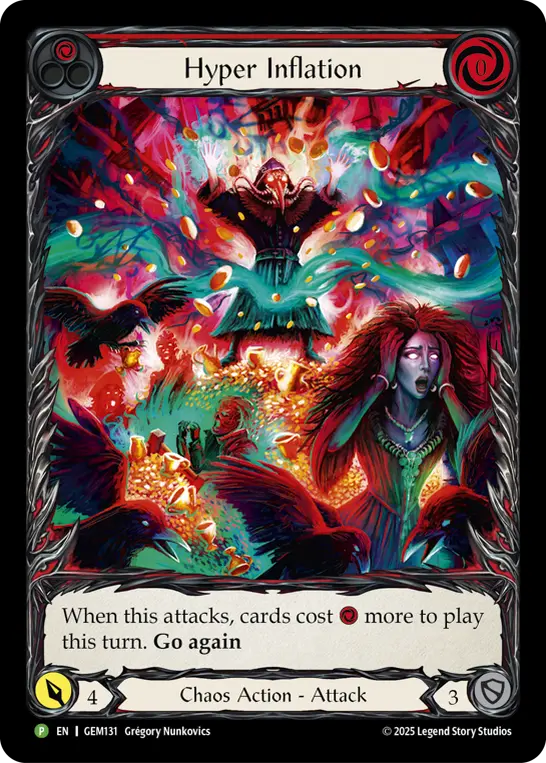
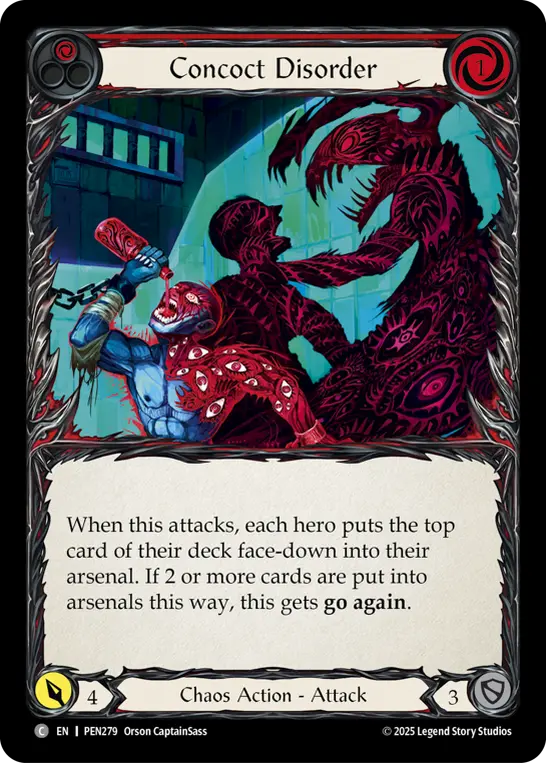
Chaos' card pool really began to take off in Compendium of Rathe. They mostly provide moderately aggressive overlap as chain starters or mid-turn effects - as both Hyper Inflation and Concoct Disorder are 4-power attacks with go again. This pushes Chaos into a proactive style of gameplay.
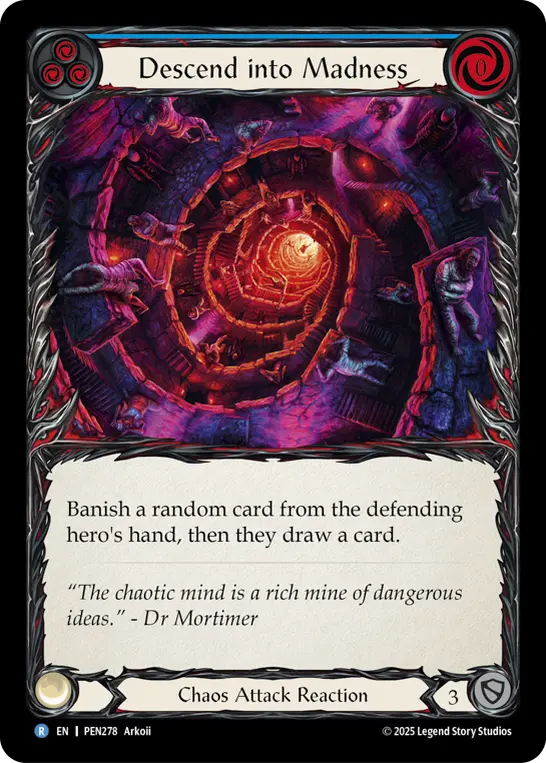
The so-far under-explored Descend Into Madness fits the same design ethos of Glint the Quicksilver and many Guardian blues: fine in first cycle, but with potent interactions in the second. (I’ll discuss this card further later in this article.)
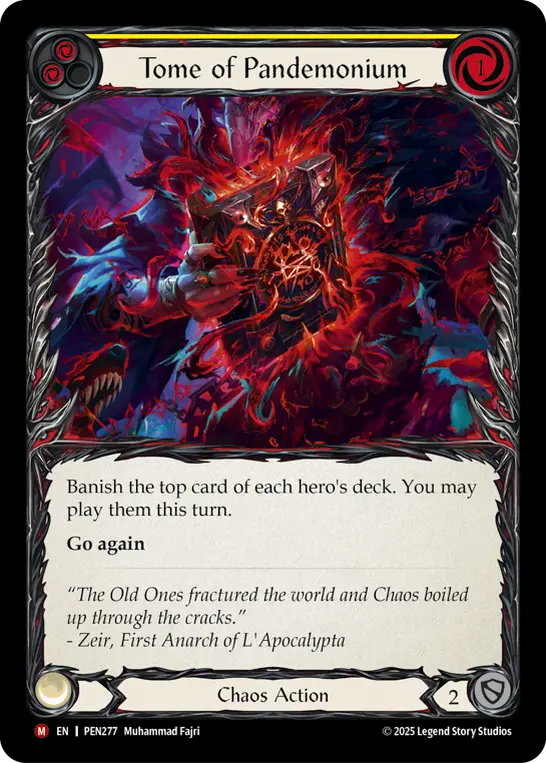
What’s more noteworthy is the Majestic card Tome of Pandemonium. The floor on this card is abysmal because of the random banish from a deck that could be very different from the proactive Assassin deck you’re playing. At its ceiling, you’re drawing 2 cards and dealing 1 point of deck damage to your opponent.
The Dice Giveth
Chaos is one of the most thematic of all the talents (alongside the crippling taxes of Ice and the speedy aggression of Draconic). LSS has done a great job of characterizing the talent as of the Compendium release. Chaos plays as you’d expect: random effects that might even help your opponent.
The main factor about its viability is that it all depends upon how you’re stung by the asymmetry of the symmetrical effects. Your opponent will take a significant sum of damage from a Spur Locked, all in exchange for a single card in deck. Your opponent will have the same number of cards in hand after blocking your attack, but they may be counting on their turn working with a specific card that may be banished by a Descend Into Madness. At the same time, your Assassin opponent might be feasting on the go again that Slippy is giving them. Hyper Inflation may leave you hungry for resource cards that your hand may not be able to provide on a turn when you need to seize tempo.
That’s the nature of playing with higher variance, random effects in a game as meticulous and precise as Flesh and Blood. For players of a certain level of competitive intent, and players with a certain degree of skill, relying on variable effects that can’t have guaranteed outcomes is undesirable. The first few events featuring Compendium of Rathe cards saw a marked lack of new Chaos cards in high-placing Marionette and Slippy decks.
Chaos Incarnate
Given Marionette’s meta share at the end of the Super Slam season and in the beginning of this Compendium season, we can take a look at how they could look with a slightly higher count of Chaos cards in the deck.
Weapons
- Hunter's Klaive (2)
Equipment
- Blacktek Whisperers (1)
- Mask of Deceit (1)
- Flick Knives (1)
- Fyendal's Spring Tunic (1)
- Stalker's Steps (1)
Loadout
- Amulet of Echoes (Blue) (2)
- Codex of Frailty (Yellow) (3)
- Descend into Madness (Blue) (3)
- Kiss of Death (Red) (3)
- Meet Madness (Red) (3)
- Cut from the Same Cloth (Red) (3)
- Fate Foreseen (Red) (3)
- Death Touch (Red) (1)
- Frailty Trap (Red) (1)
- Hyper Inflation (Red) (2)
- Hyper Inflation (Blue) (3)
- Infect (Red) (1)
- Orb-Weaver Spinneret (Red) (3)
- Schism of Chaos (Blue) (1)
- Look Tuff (Red) (3)
- Lair of the Spider (Red) (1)
- Overcrowded (Blue) (1)
- Leave No Witnesses (Red) (3)
- Tarantula Toxin (Red) (3)
- Savor Bloodshed (Red) (3)
- Inertia Trap (Red) (2)
- Pain in the Backside (Red) (3)
- Pick Up the Point (Red) (1)
- Persuasive Prognosis (Blue) (2)
- Under the Trap-Door (Blue) (1)
- Scar Tissue (Red) (3)
- Up Sticks and Run (Red) (3)
- Sigil of Solace (Red) (1)
- Shred (Blue) (2)
- To the Point (Red) (3)
- Tome of Pandemonium (Yellow) (3)
- Stains of the Redback (Red) (3)
Putting Descend Into Madness into the blue base can ruin the well-planned texture of an opponent’s hand, and Schism of Chaos can ruin a well crafted pitch stack. Tome of Pandemonium can supplement draws in the midgame, much as Codex of Inertia does in current Mario lists - and running all 3 copies of Fate Foreseen (red) in the sideboard allows you to see your topdeck to ensure that you’re pulling something useful from your own deck.
Hyper Inflation is particularly strong into the defensive decks that are starting to appear in the metagame. That cost increase is acting as an Authority of Ataya against defense reactions. The reds in the sideboard act as extra proactive answers into defensive decks, while the blues in the maindeck work to stuff the average d-react in any given deck while also being a block 3.
This version is highly experimental, using the 'Daggers Matter' strategy that Jacob Clements has been using to recent Calling success. The Chaos cards act as a way of adding additional variance, which gains you incidental advantages.
High Roller
With the intense variance available to the Chaos talent, it makes me wonder where it might be used in the future. So far, Chaos only exists as a subset of Assassin. It adds a level of proactive, aggressive variance to an otherwise proactive class (despite its origins as a defensive fatigue deck). But the lore seems to suggest that Chaos is a corruption spreads across the region.
As more and more players veer towards keeping their decks efficient and consistent, there is one Class that has always played with variance. Chaos Brute feels like a natural, thematic fit for the next stage of heroes that could have the Chaos talent. Chaos Brute cards could benefit both by generating dice roll effects and giving both players the option to roll. LSS might also use the connective tissue of the Pits to jump Chaos to the Trap Ranger archetype, where benefits for the opponent often backfire in the Ranger's favor.
As for right now, Chaos exists to make certain Assassin decks more proactive. We can only speculate where future design space will go.