
Like many Flesh and Blood players, I played Magic: The Gathering for most of my life. Acting on the opponent’s turn felt natural. When Flesh and Blood launched, I immediately fell in love with its resource system, which I still believe is the best ever designed for a competitive card game. Yet despite that, I struggled to fully connect with the gameplay.
Until Wizard.
I always play Wizards. In every game, every system, across genres, the Wizard is often defined by doing something other characters fundamentally cannot. In Flesh and Blood, that fantasy is translated cleanly and powerfully as the ability to circumvent regular timing restrictions.
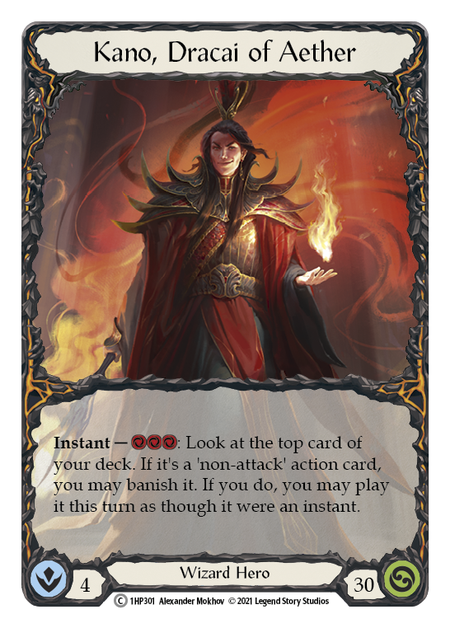
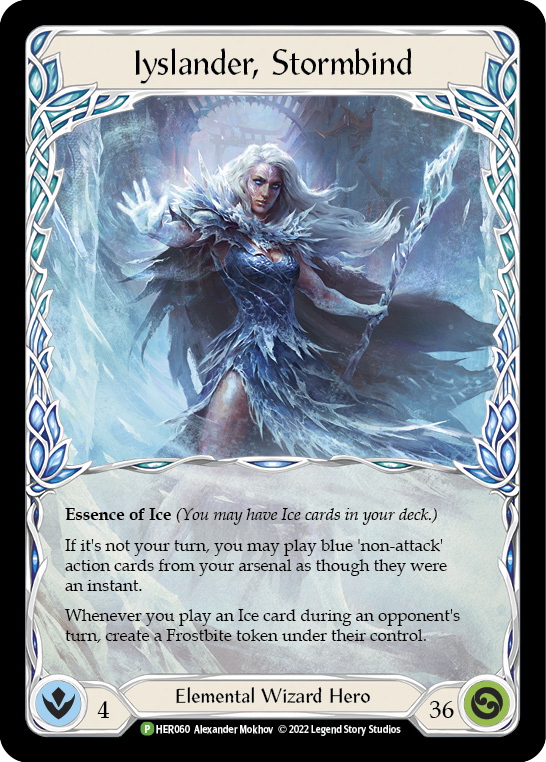
Kano did not immediately hook me - I’ve never been particularly drawn to doomsday-style storm decks. But when Iyslander entered the game, something clicked. Playing Wizard in Flesh and Blood became the best card game experience I have ever had.
What I’ve grown to love is not simply dealing arcane damage. It's forcing opponents to think differently. The threat of an end-step spell is often more powerful than the spell itself. The opponent must respect something that might never happen, and that tension is real, skill-testing, and deeply interactive.
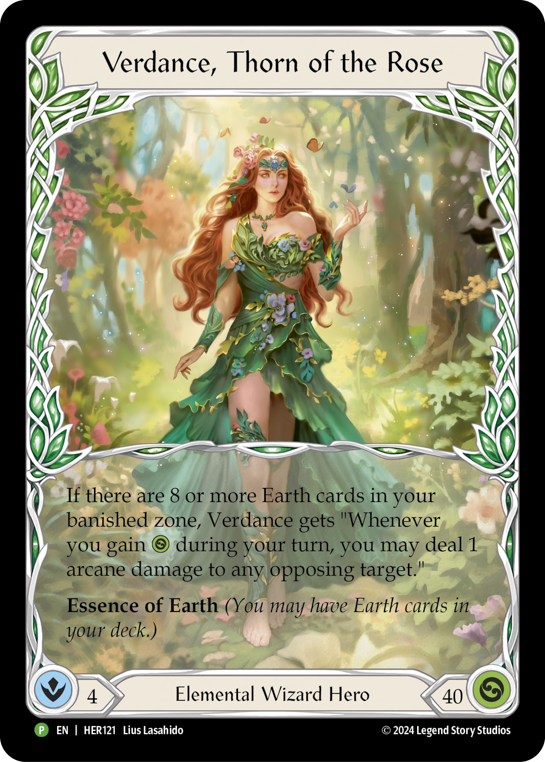
Even as Rosetta was clearly attempting to restrain Wizards’ innate ability to act on the opponent’s turn, I still found my favorite hero of all time. Verdance only does once what Iyslander’s text box allows her to do every turn, and yet I loved her. The puzzle of blocking, disrupting, and slowly chipping away until the opponent is suddenly in range of Storm Striders made me fall in love with the game all over again. Watching opponents treat 9 life as if it were 0 because of Striders pressure is one of the most satisfying experiences Flesh and Blood has ever offered me.
That brings us to Storm Striders, and to why Compendium of Rathe's new alternative, Tempest Dancers, fails to replace it.
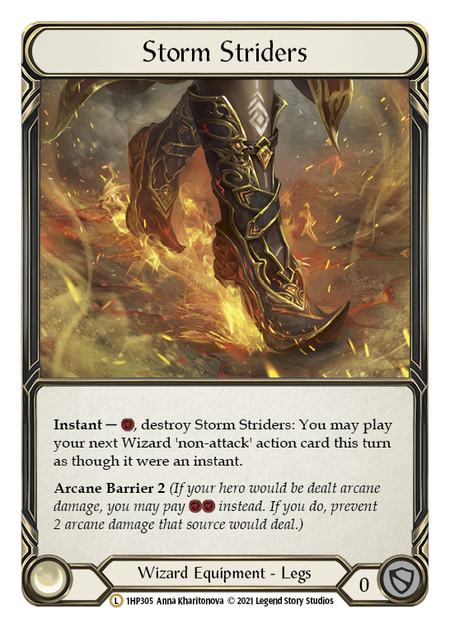
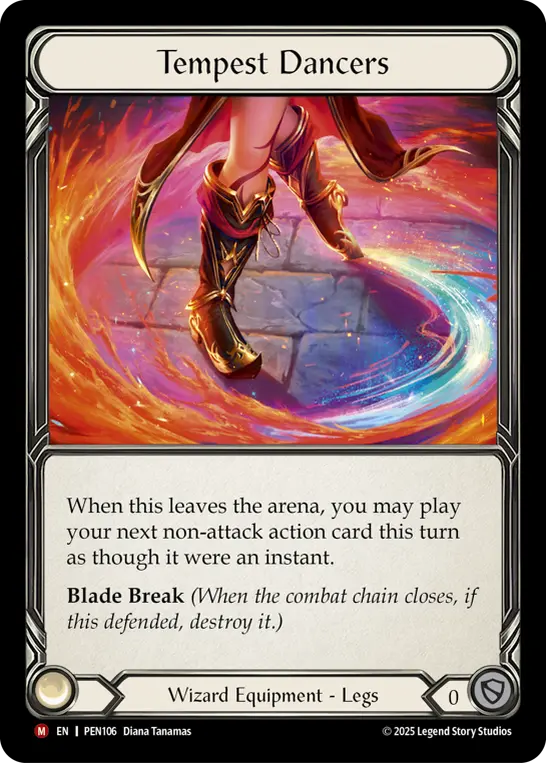
Let's be clear: this article is not a ban prediction, nor a balance complaint. It is an attempt to explain why Tempest Dancers does not meaningfully replace Storm Striders - even as a weaker alternative - because what Storm Striders provides to the Wizard class cannot be substituted by a telegraphed, opponent-controlled effect.
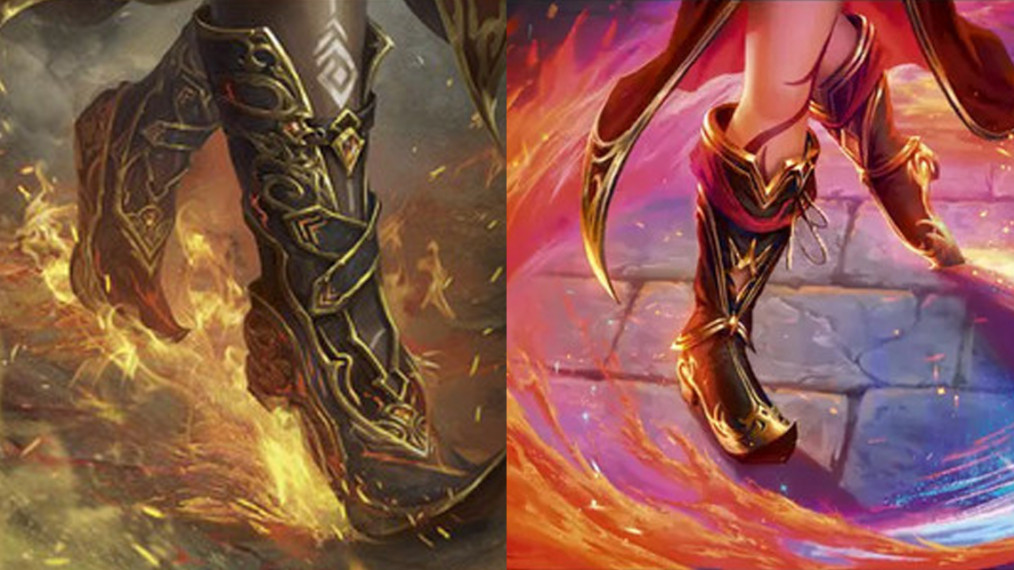
Storm Striders is not simply “the Wizard instant-speed extra turn enabler.” It is the card that gives Wizards proactive agency over time and resources. By breaking to grant instant speed on demand, Storm Striders allows the Wizard to decide when the game shifts from simple combat-math conversion to instant-speed interaction. The need to account for it exists before any card is played, creating pressure even when nothing happens.
Storm Striders... creates pressure even when nothing happens.
Tempest Dancers does not do this.
By only enabling instant speed after it leaves the arena (typically as a result of it breaking at closing of the chain), Tempest Dancers removes the Wizard’s ability to choose when instant speed matters. The timing is dictated by the opponent, not by the Wizard. The effect is reactive by design.
This is not a small difference. It fundamentally alters how Wizards sequence turns, bluff interaction, and apply pressure over time.
Reactive, one-shot designs reduce instant-speed play to a finisher enabler rather than a persistent strategic threat. Against skilled players, this distinction is critical. Experienced opponents already avoid attacking a Wizard unless they have the resources to survive instant-speed interaction. Storm Striders forces those players to respect uncertainty across the entire turn cycle. Tempest Dancers does not, because once it triggers, the window is narrow, known, and easy to plan around.
Once Tempest Dancers triggers, the window is narrow, known, and easy to plan around.
Perhaps the point isn’t for Tempest Dancers to rival Storm Striders directly at all. Still, their perceived similarities make it necessary to address the broader narrative surrounding Storm Striders’ right to exist. Storm Striders is powerful, but it is powerful in exactly the way the Wizard class is meant to be.
Arcane damage has some of the worst resource-to-damage scaling in the game, and you do not even lose a card when defending against it. Much of the frustration surrounding Storm Striders is misplaced; it is not truly about the boots themselves, but about arcane damage forcing arcane barrier equipment usage and taxing both resources and tempo in a game where many decks want to say “no block” and swing with a full grip of 4s.
That frustration is not a design flaw - it is interaction.
Arcane damage... taxes both resources and tempo. That is not a design flaw, it's interaction.
Flesh and Blood is a competitive game. Players do not get to choose their opponents. I do not particularly enjoy playing against board state heroes either, but they are part of the ecosystem, and learning to navigate them is part of competitive mastery.
The reveal of Tempest Dancers causes genuine concern for me - not simply because the card is weaker than Storm Striders, but because it signals a philosophical shift. It trades Wizard’s freedom over timing for a safer, narrower, opponent-controlled interaction.
That shift matters.
Tempest Dancers may function for Verdance as a simple “threat of 9,” but it disrupts the broader interaction patterns that make Wizard feel like Wizard, especially in a class with no go again and no inherent way to reclaim tempo once sequencing is constrained.
Storm Striders is the single card that makes me want to play Flesh and Blood. When Verdance eventually leaves the format, I will continue playing Wizard with Storm Striders, because the play pattern it enables is irreplaceable to me. I am not asking for Storm Striders to be untouchable forever. I am asking that it not be treated as something that can be cleanly replaced. Because Storm Striders is not about raw power; it's about agency over time and resources.
And Tempest Dancers, by design, does not offer that.