
Silver Age will soon provide a budget-friendly format for Flesh and Blood. Even so, not every event will be Silver Age, creating a need for budget-conscious deckbuilding in FAB's premier Classic Constructed format. Whether you're wading into a new hero to test the waters before diving deeper or simply trying to play CC without breaking the bank, Living without Legendaries discusses deckbuilding without the more expensive essentials, letting you experience the core gameplay of heroes without fully committing.
The way classes and talents play differently from one another is a testament to FAB’s dedicated design. And where class identities have overlapped too much, LSS has shifted to address those similarities - such as Warrior's moving to a more value-oriented identity after Assassin capitalized on attack reaction gameplay. It’s an impressive feat that, even when a class have four or more heroes, the characters within the class manage to carve out their own identities.
Unfortunately, this is a double-edged sword. While extreme diversity is great for gameplay, it also reinforces a card pool where staples are often siloed within a class or talent. And when these staples include Legendaries, it makes it that much harder for any player to buy into a given hero. Even established players grapple with this barrier; in fact, it’s my biggest pet peeve as a player. Cindra absolutely needs Blood Splattered Vest to function, Kassai and Fang would be hard to make work without Grains of Bloodspill, and Gravy Bones would much rather have Dead Threads. It all just leaves me staring at my Tunic wondering if it’s going to get as much play as I thought it would.
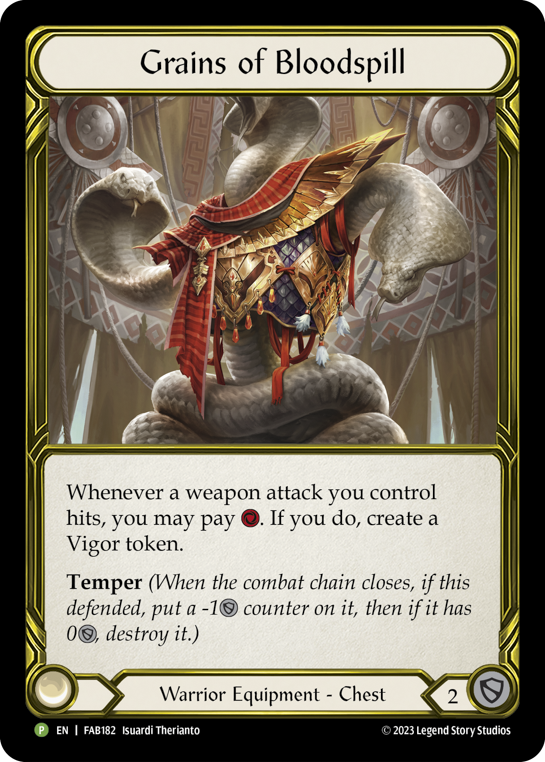

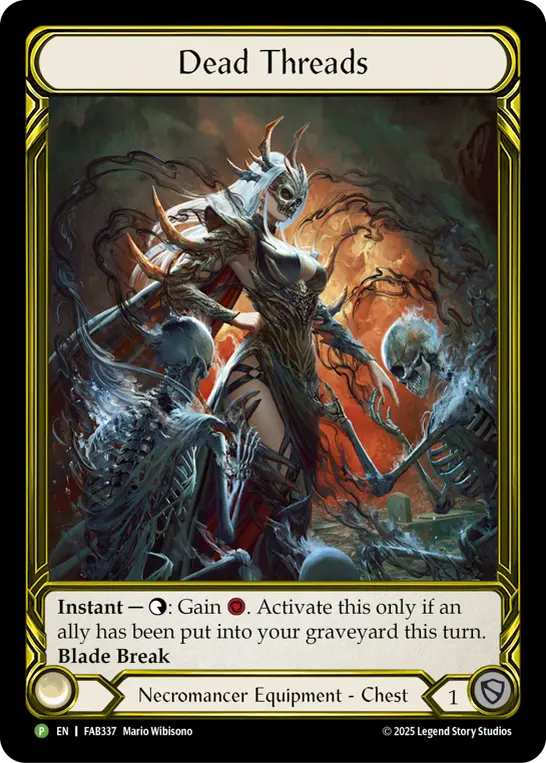
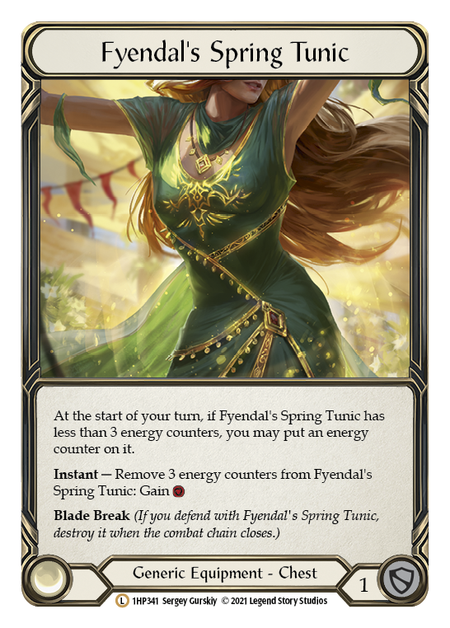
This aspect of the game necessarily creates a lot of class specialists. It’s hard to branch out from something you know you like when you’re paying at least the price you would for Fyendal’s favorite dress (if not more) just to get equipment for one deck you think you might like. Even if you have Tunic, the most flexible equipment in the game, many decks no longer utilize it. Between my wife and I, we have 15 Classic Constructed decks, and add another for my wife’s recent fascination with Riptide. Of those, only five use Tunic as the best in slot. The others use class-specific options.
However, I think it’s also important to know what you want from a hero that piques your interest. If you fall in love with them, you’re probably going to want all the bells and whistles you would expect to see at any competitive event. It’s just as reasonable to recognize you enjoy a hero’s core gameplay loop, but don’t want to sink all the time and effort into honing that hero to the point one might with their “main.” This is actually something my wife and I do frequently, and it’s kept us very happy. Clark Moore’s 60 for 60: Kassai decklist formed the foundation of my own budget Kassai deck. I enjoy Kassai’s gameplay loop, but she doesn’t pull on me the way Ira or all the Ninjas have. I’ve had a lot of fun learning the ins and outs of the hero, and it’s made me a better player, but I’m also happy with the list as it is and never felt like I’m missing out enough to go through the trouble of buying Crown of Dominion and Valiant Dynamo. Someone who discovers they’re a big fan of the hero would end up buying into it further, but the important part is I gave myself the chance to try Kassai without shelling out up front.
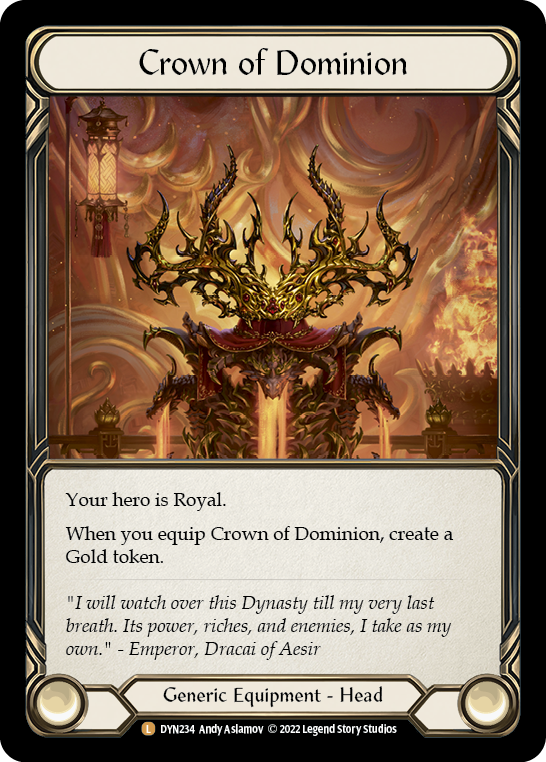
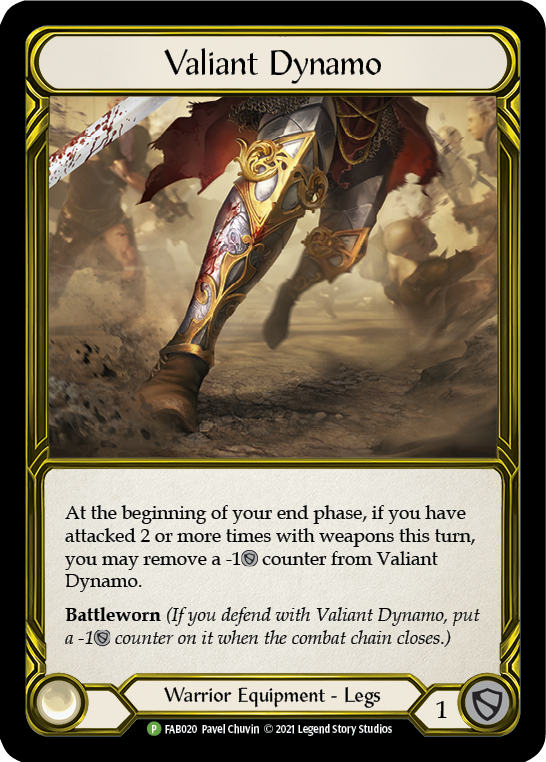
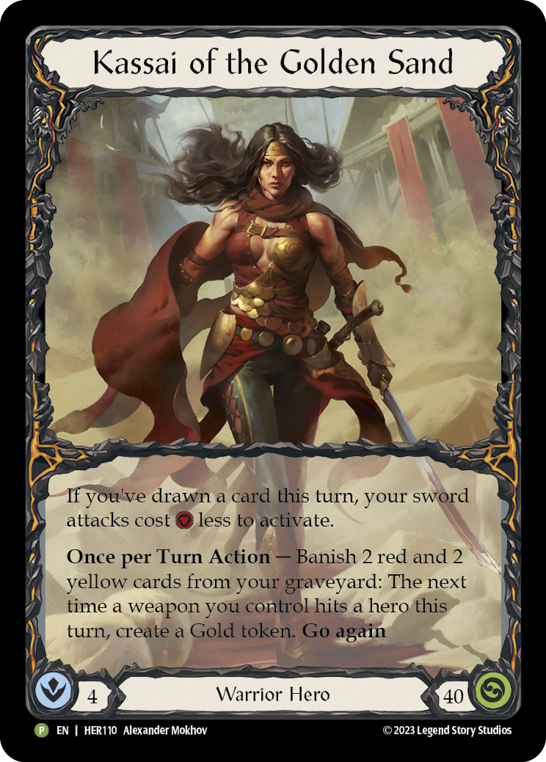
My wife did something similar for Kayo, Underhanded Cheat with staples she already had; she found that she loved him, and went on to buy the rest of the deck. I also tried this with Boltyn, starting with the Armory Deck and some cheap upgrades. Because I already have Tunic, that list appears much more complete than my Kassai list, but both are the same concept: A small buy-in to try something, and being resourceful with what I already own.
This is the mission statement of a new series I’m starting, Living Without Legendaries: to offer a decklist to players looking to branch out that takes a holistic approach in its deck building philosophy. Rather than operating under a set budget for the entire deck, the goal is to make it work with as few Legendary-rarity cards as possible while supporting good class fundamentals and an identifiable “core” card pool. Additionally, expensive Majestics are off the table unless they are an absolute must-include. The intention is to make something enticing to both new players and the established player looking to try a hero before committing that establishes a strong base for playing both the hero and the class.
Shadowborn Abomination
I want to start this series off with Levia, a hero I absolutely adore. Her undercosted attacks and unique spin on ratio and resource management drew me in, and I think it’s something you have to appreciate to understand her. Building Levia is not about individual cards, but rather as components to an engine. A poorly chosen part will bring the entire machine to a grinding halt. Thanks to my Brute-specialist wife’s newfound interest in Guardian, I’ve had the chance to use her staples and take our favorite self-consuming eldritch barbarian out for a spin. I immediately noticed not only how powerful she was, but how fun it was to learn all her intricacies.
Playing Levia well requires balancing a constant stream of information, and always planning with your next hand in mind. If you plan poorly and empty your graveyard too soon, you may struggle to convert a 1-for-6 with go again for any significant value because you don’t have enough cards to banish – and then take blood debt to boot! Managing how many cards with less than six power hit your graveyard (especially when it comes to activating equipment abilities) is the single hardest skill of the deck. It's also the most important skill. Even when you’re learning these lessons the hard way, it’s hard not to smile the whole time from the sheer rush you feel when you realize you’re sending 20 damage next turn from her undercosted attacks. If you’re looking for an all-around unique experience for a change of pace, Levia would be one of my first recommendations.

Weapons
- Ravenous Meataxe (1)
Equipment
- Old Knocker (1)
- Hooves of the Shadowbeast (1)
- Hide Tanner (1)
- Spoiled Skull (1)
Loadout
- Beast Within (Yellow) (3)
- Endless Maw (Red) (3)
- Bloodrush Bellow (Yellow) (3)
- Call to the Grave (Blue) (3)
- Dread Screamer (Blue) (3)
- Deadwood Rumbler (Blue) (3)
- Doomsday (Blue) (1)
- Sea Legs (Yellow) (3)
- Deep Rooted Evil (Yellow) (1)
- Shadowrealm Horror (Red) (3)
- Agile Windup (Yellow) (3)
- Graveling Growl (Yellow) (3)
- Dread Screamer (Red) (3)
- Mark of the Beast (Yellow) (3)
- Tear Limb from Limb (Blue) (3)
- Vigorous Smashup (Yellow) (3)
- Wild Ride (Red) (3)
- Smashback Alehorn (Blue) (3)
- Boneyard Marauder (Red) (3)
- Hungering Slaughterbeast (Red) (3)
- Soul Harvest (Blue) (1)
- Levia, Redeemed (1)
- Wrecker Romp (Blue) (3)
One of the best parts about Levia is her maindeck core is incredibly cheap on its own. Outside Swing Big and Show of Strength, our deck list looks almost identical to recent lists from the master of Levia, Man Sant, with two Legendaries and no card individually over $10 USD. They’re so close they could almost be personal preference choices. We come very close to the best Levia has to offer for $120 USD at time of writing. That’s less than the cost of a Tunic, or most other hero equipment suites.
Before jumping into anything, I should probably address the Meataxe in the room.
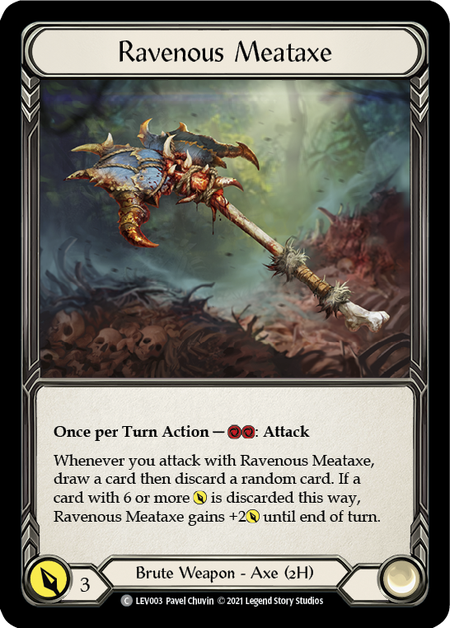
With Mandible Claws still legal in CC, why did I bring Meataxe? Kayo, Armed and Dangerous’ position on the Living Legend board indicates the Claws may not be around for too much longer. While he wasn’t the monster the community anticipated him to be in Super Slam season, with RTN season right around the corner, his position is dubious once again. For the sake of keeping this piece relevant for as long as possible, I did all of my testing with Meataxe, but I recommend Mandible Claws for as long as they're legal. They should be an easy swap; most Meataxe decks look incredibly similar to Claws decks, and should require swapping few, if any, cards to make the other work.
The only thing on Levia’s mind is blood. We want to turn our opponent into a pile of pulped viscera before blood debt grinds us into dust. To do this, we have to manage our aggression carefully. Blocking is often the most useful avenue to get cards in our graveyard to banish. However, our hand is possibly our most precious resource. If we block too much, we can’t send an attack to turn off blood debt; block too little, and we can lose the race.
Most Levia decks circumvent this with her suit of armor. The usual suite of Scowling Flesh Bag, Savage Sash, Gauntlets of Tyrannical Rex, and Scabskin Leathers blocks a whopping 11 at most, or 10 if she’s activating Sash. This can be even higher if she’s wearing Carrion Husk instead. Tack on Flesh Bag functionally blocking for more than it’s printed block value because it’s intimidating a card after a go again attack, and Levia has a dense fridge to lean on while filling her graveyard from her hand.
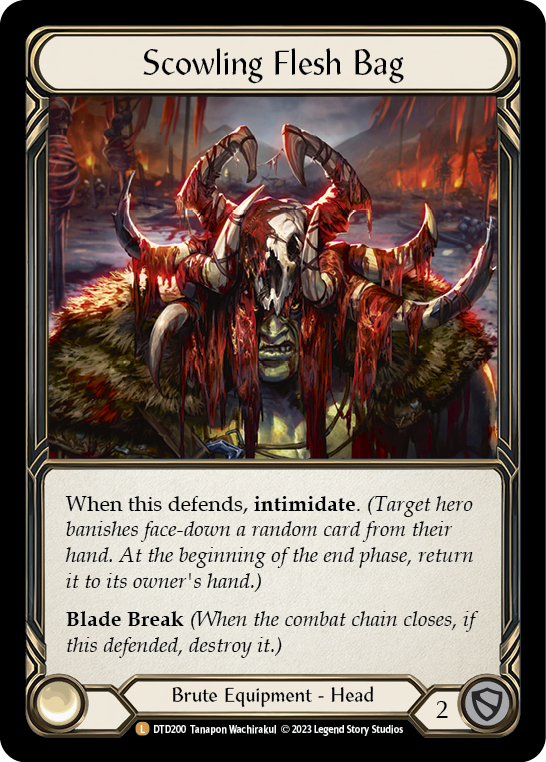
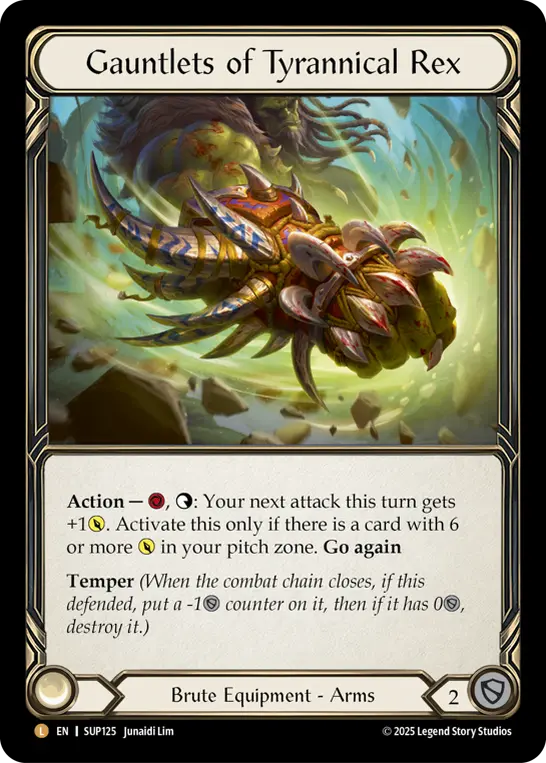
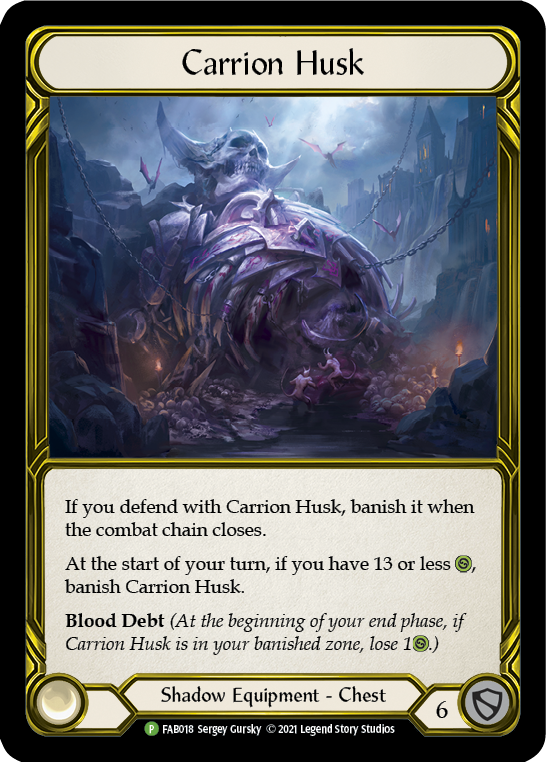
In order to accommodate a different armor set, we have to alter the core of the deck a little. There’s no cheap equipment that offers the same defensive ceiling. Instead, we have to lean in the opposite direction: equipment that supports a bloodmad rush to the finish line.


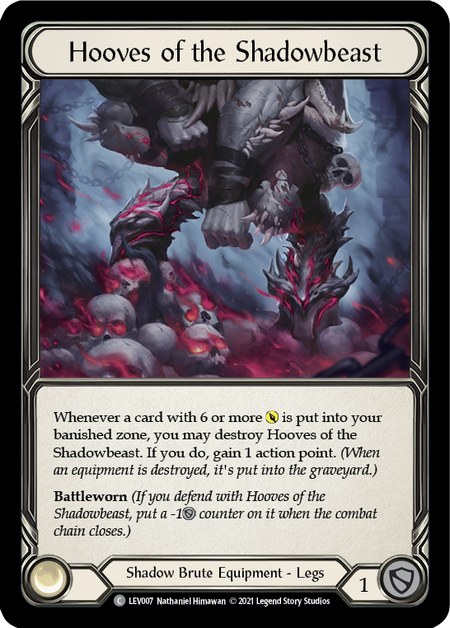
Spoiled Skull gives us more gas from our banish in a pinch, such as if we don’t draw a way to turn off blood debt. Old Knocker is always a solid option, but presents some difficulty with Sea Legs; you could play Barkbone Strapping over Knocker, but I value the consistency more. Hide Tanner and Hooves of the Shadowbeast keep the hurt on, giving us more power and more action points when we need them to turn the corner.
Core
The best fit for this armor suite is an older build that started after High Seas released. This build goes heavier on go again attacks to push the most amount of damage possible, trying to abuse large hands. This might sound counter-intuitive, given we have three points of armor block, but it means we get to punch much harder than we would otherwise.
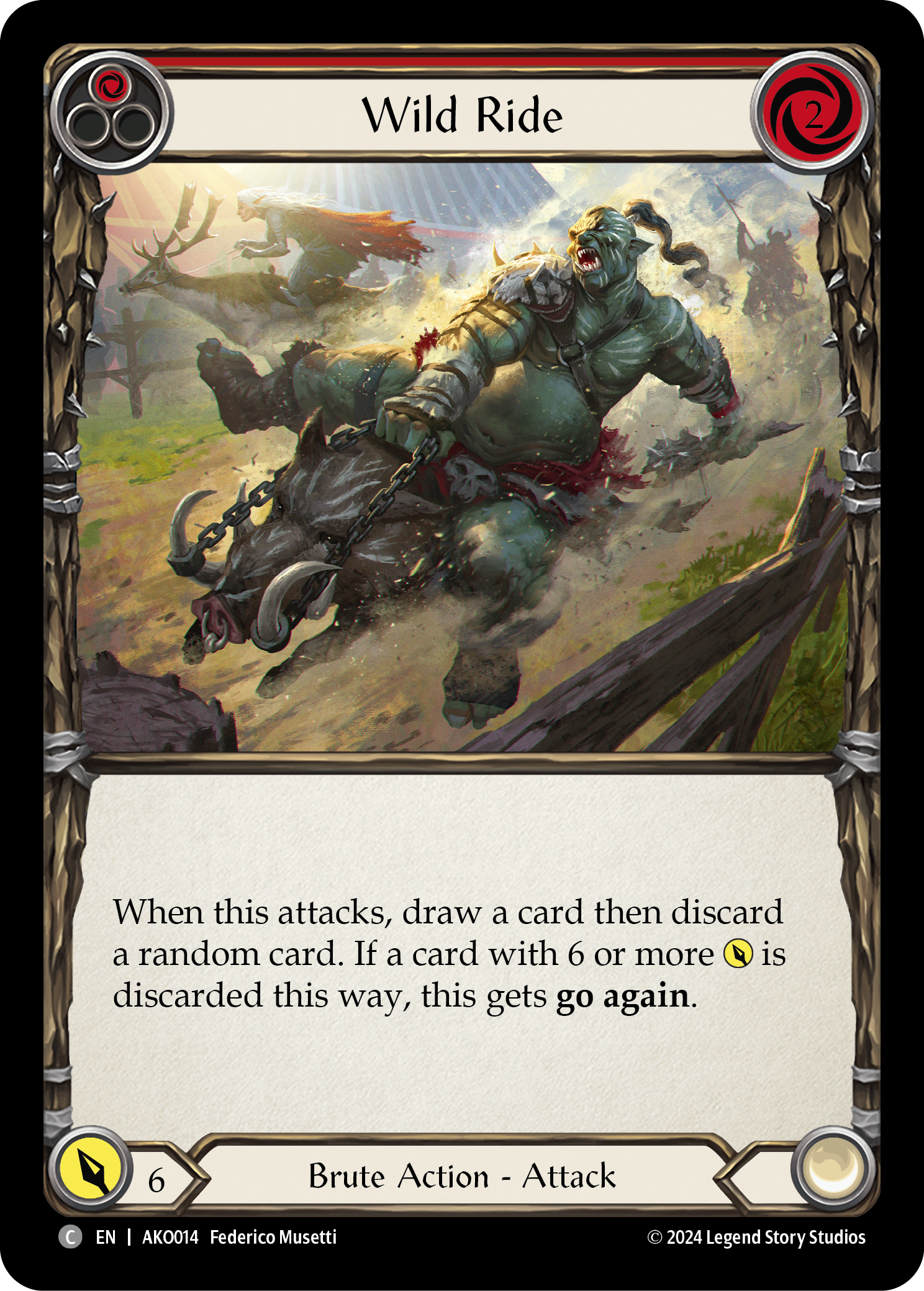
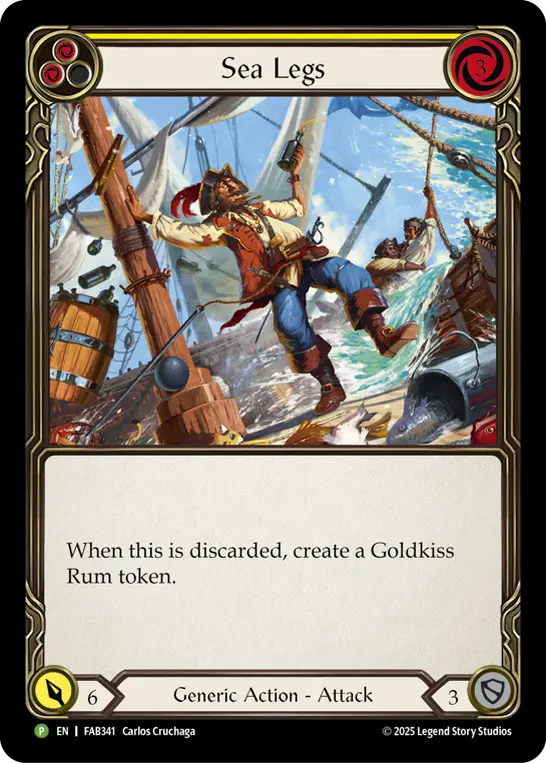
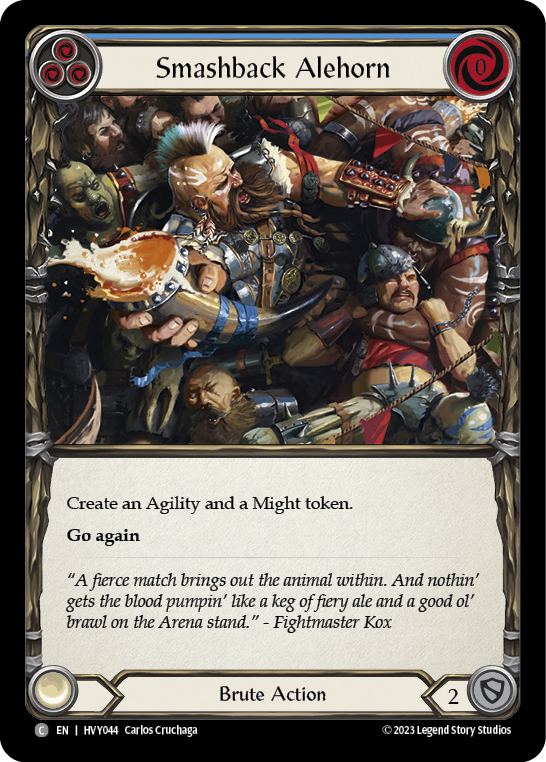
Between go again attacks, Agility, Goldkiss Rum, and Hooves of the Shadowbeast, we have 19 sources of go again. 10 of those sources are Agility, Goldkiss Rum, and armor, which makes converting hands flexible and easy. Our Bloodrush Bellow turns become that much scarier when we can throw three large attacks without much effort, especially when we have a bottle of rum around just in case. Ravenous Meataxe allows us to discard Sea Legs much more consistently, and it synergizes well with other cards we were already playing, like Tear Limb from Limb and Deadwood Rumbler.

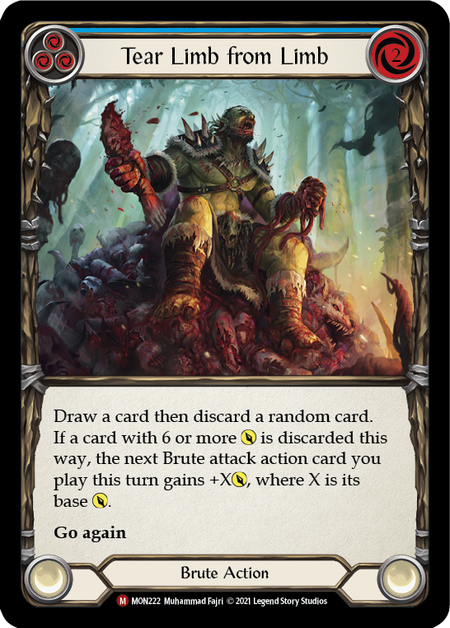
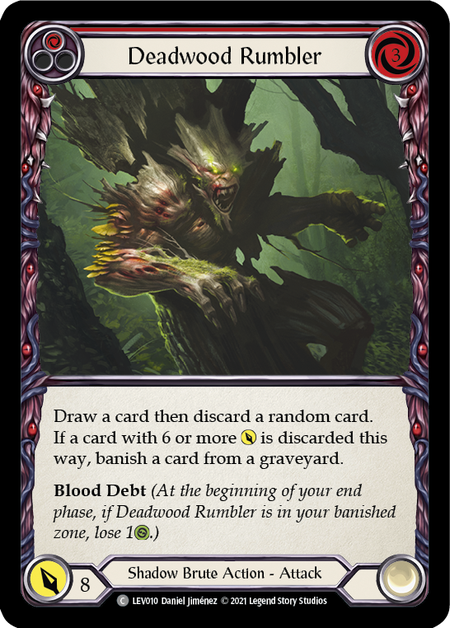
Speaking of enablers, all of Levia’s powerful options are within budget. Thanks to our copious amount of go again (for a Brute), any card draw we have is dangerous and must be respected. These are the cards that push us over the finish line, and it’s thanks to these being inexpensive that a cheap Levia deck is even possible.
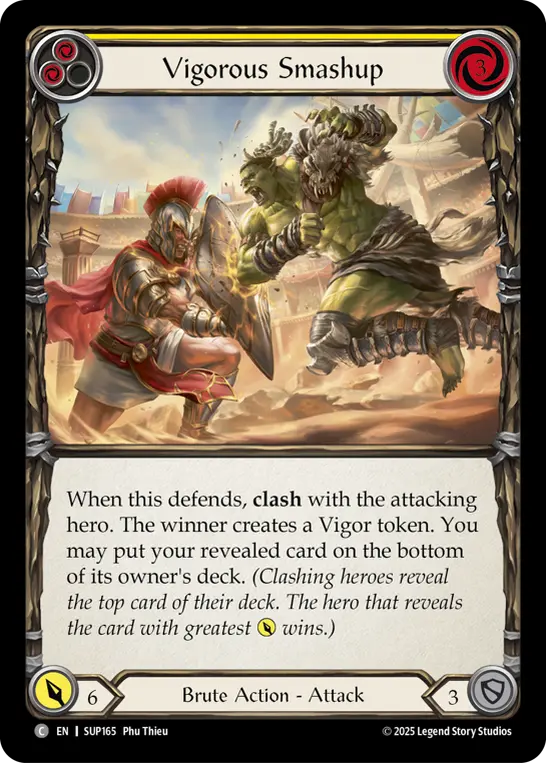
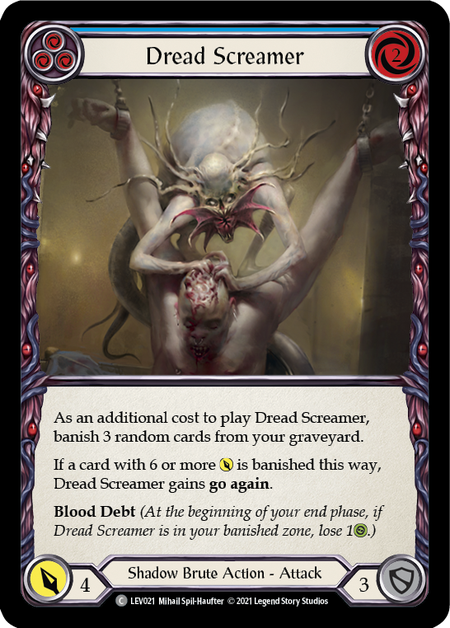
To fuel both the graveyard and our turn, I started playing Vigorous Smashup. The card thoroughly impressed me. Our deck uses Vigor very well, and we’re very likely to get it too; we play 13 cards without any power, and we could count blue Dread Screamer as almost a miss for only having 4 power. Everything else in the deck is at least 6 power, which is usually going to net us a resource on the block. For a budget deck, it’s a solid inclusion, and one I would never leave home without at least the yellow copies of. If you think the no-block count is a little high for your tastes, I would consider the blue copies to be my first choice to substitute.
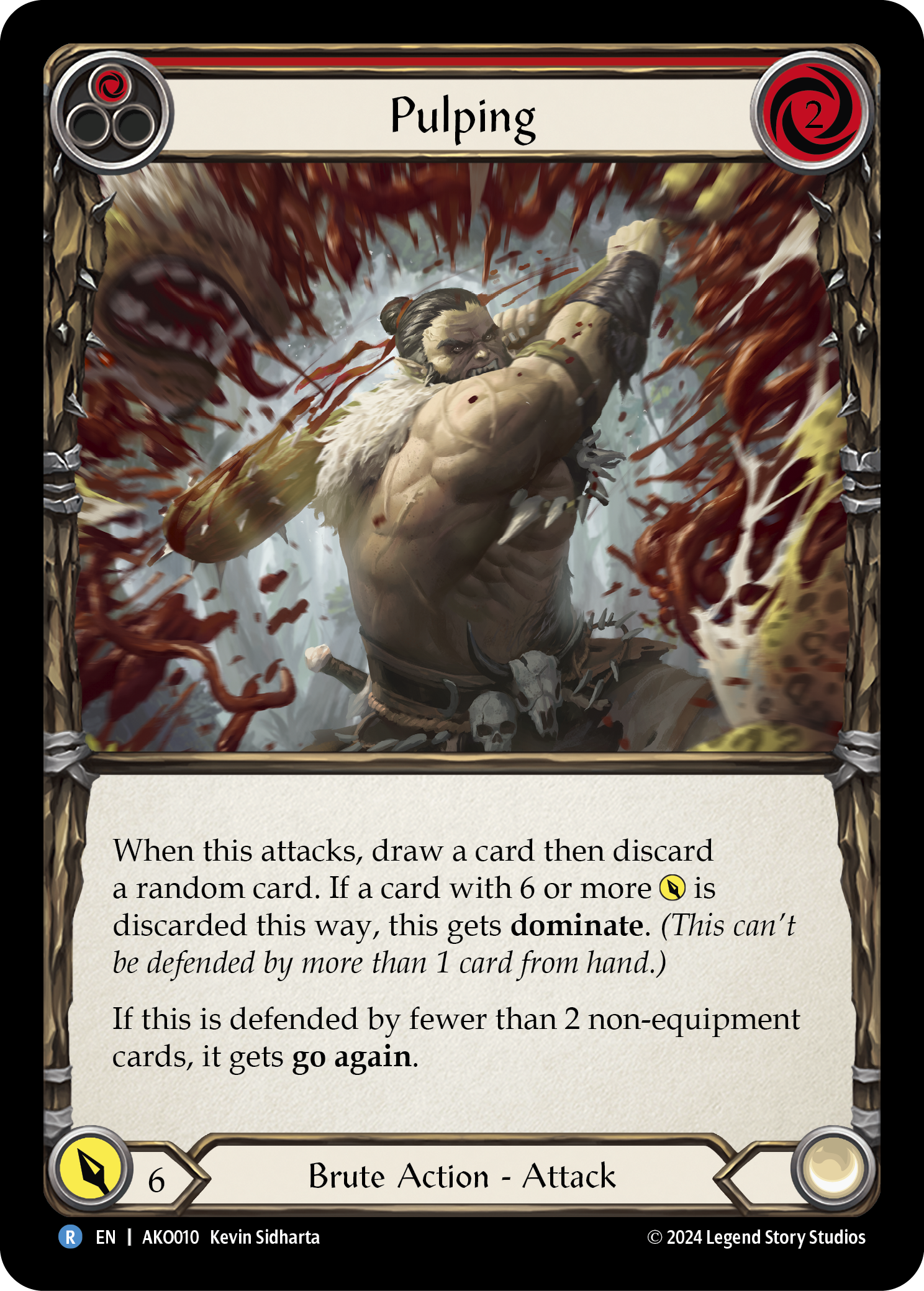

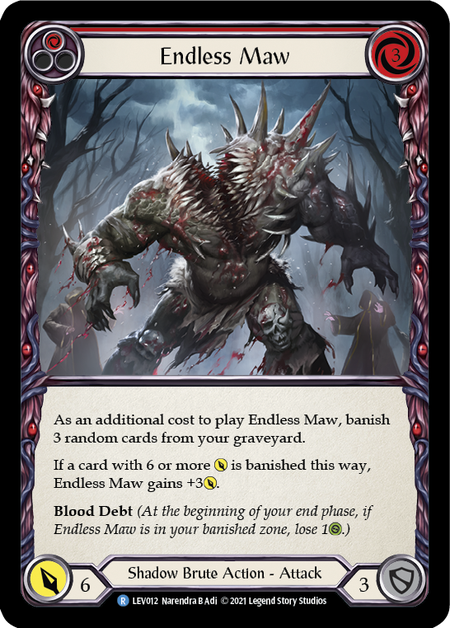
We round out our attacks with the usual cast of friend-shaped creatures that just want to give free hugs. All of the staple Shadow attacks are commons and rares, which makes them easy to acquire. We could trim a set for red Pulping, and some budget Levia decks do this. I moved away from it because there were too many no-blocks for me, but it’s hard to say no to another extra go again attack. Except when it comes at the cost of playing with one less of these adorable little guys, of course. Just look at Dread Screamer. He just wants to give you a kiss on the forehead! How could we say no?
Worth Their Weight in Cash
While I do my best to make a deck functional, representative of the hero, and fun without breaking the bank, some cards are expensive because they are too important for a hero to forgo. Living Without Legendaries is centered around an authentic presentation of the hero for someone looking to try before they buy; therefore, we have a couple pricey inclusions to meet this goal.
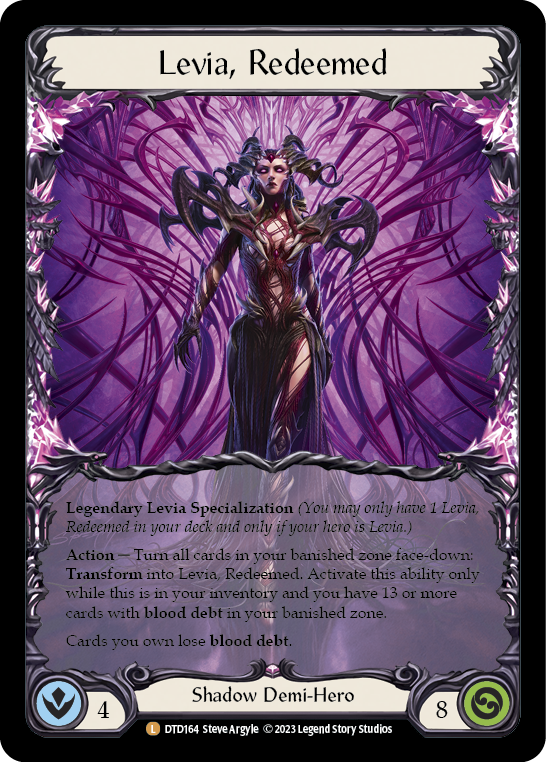

Levia’s demi-hero is a must play, and it’s a large part of why she’s playable at all. While it’s rare for us to reach 13 blood debt, in grindy matchups it’s necessary. Blasmophet gives our most powerful attacks back for closing out a game when we need them most. Levia, Redeemed is used much less frequently. In certain aggro matchups it can be a panic button, but it’s very rare we reach 13 blood debt before either player has lost the game. Levia, by her nature, requires having these backup plans, or else she will inevitably lose to her own blood debt. While it is a touch pricey, it’s a must-have, and it’s not nearly as expensive as other Legendaries in the game right now.
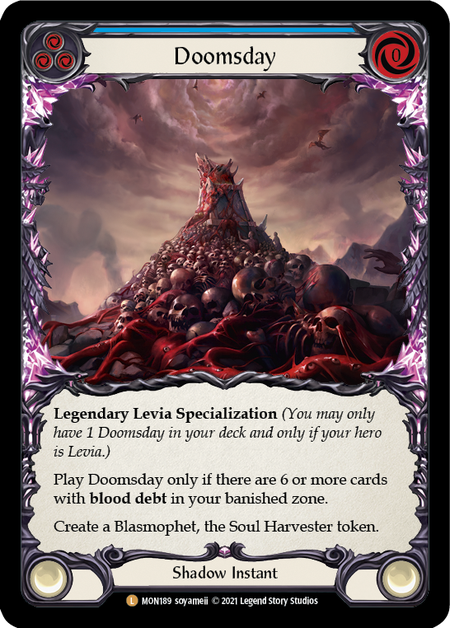
Doomsday looks niche on the surface, but it fulfills an extremely important role in the fatigue matchups. Fatigue is incredibly difficult for Levia since we hurt ourselves for the opponent. His 6 toughness demands commitment to take off the board, and his attack trigger lets Levia turn off blood debt for a turn. Doomsday is a must into any midrange or grindy matchup.
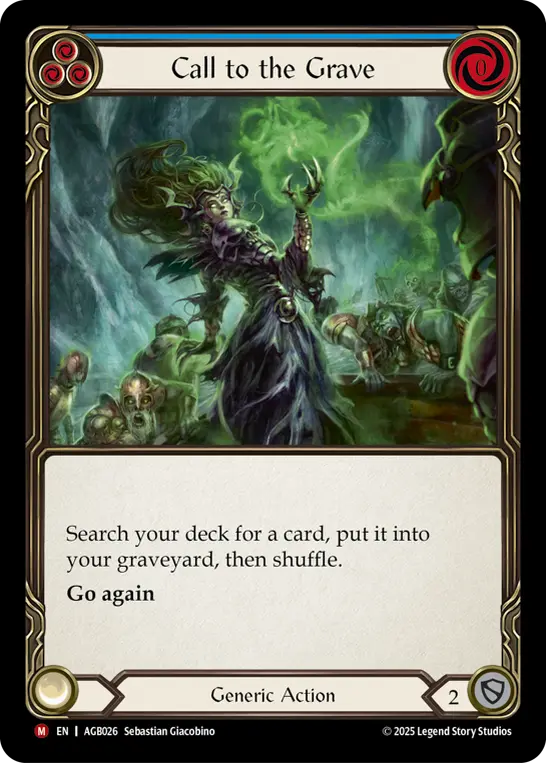
Call to the Grave is another emergency shutoff valve that barely makes it under our $10 USD limit for majestics. In a pinch, we can use it to put Mark of the Beast into the graveyard, which banishes itself to keep Blasmophet from coming to collect on our debt. While it has some fringe use in getting a different 6-power card to use as fuel, it’s not a good use of the card, and those situations are few and far between. I did the first several playtest games without this card, and I only died from having a different blue in its place once – in those circumstances, we might be losing anyway. Regardless, it is a powerful tool to have at our disposal, and it frees up our hand to block out entire while not paying the price for it. If someone was looking to trim the price down further, I could see an argument for removing these for cheaper options, but I would only do this if someone absolutely can’t acquire a playset of these.
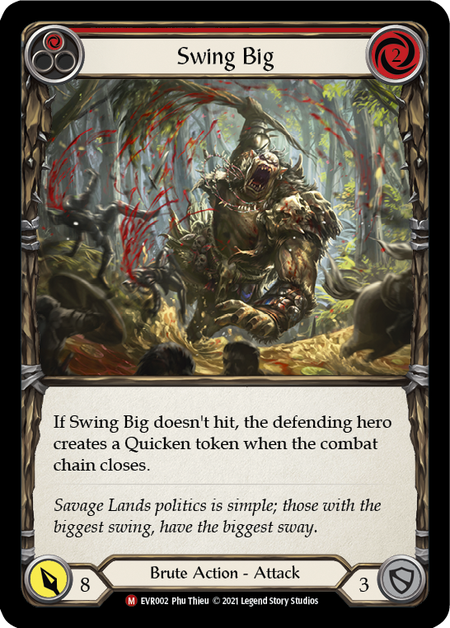
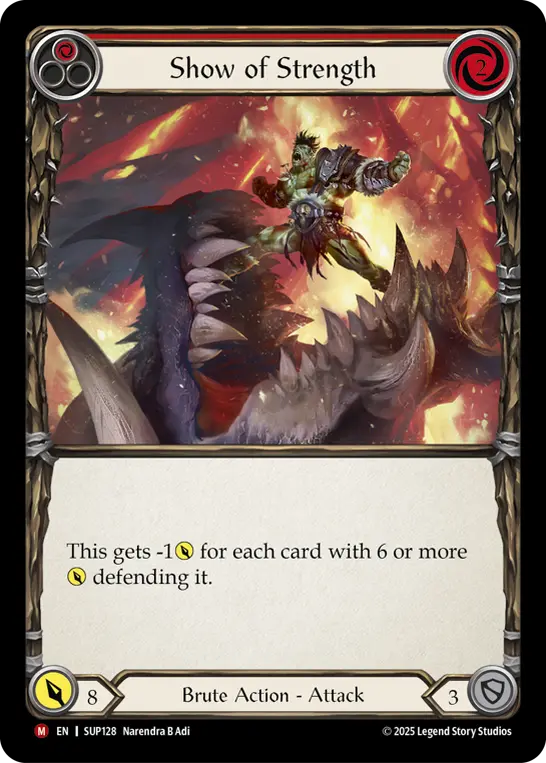
While our deck is very close to what Levia wants to be, we did have to exclude some cards that weren’t necessary. Thankfully, there’s only two inclusions that jump out as missing. Swing Big and its cousin Show of Strength are above-rate attacks that are excellent finishers after a 1-for-6 with go again. However, they aren’t absolutely necessary. Our “block two, send two” hands get a lot better with these, but we don’t absolutely need them to carve a bloody path through our opponent’s life total. Show of Strength is actually within the budget at about $9 USD a copy, and if you can get them, slot them in; but as an introduction to Levia, the deck works fine without them.
Inventory
I did not design an inventory for this deck. Every local Armory scene is different, and what might be a crucial sideboard piece for one player could be the first cut for another. However, I wanted to point out one thing to consider.


Our helmet of choice already provides us with Arcane Barrier 1, but if we want more, we have plenty of options. Nullrune is always a solid choice, and Skullhorn gives us AB2. If you need spellvoid for combo matchups, we functionally have a full cycle at our disposal at the cost of blood debt.
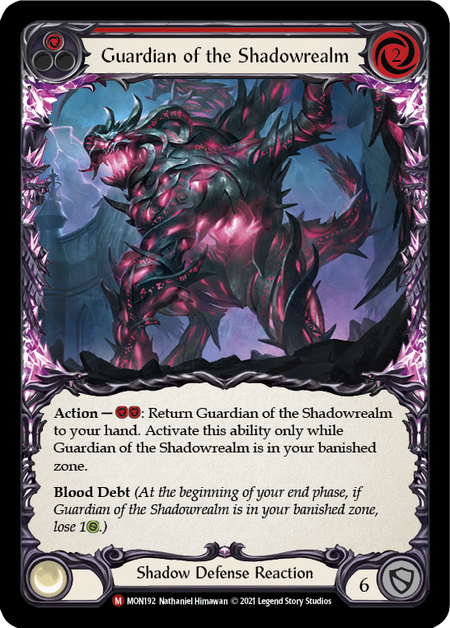
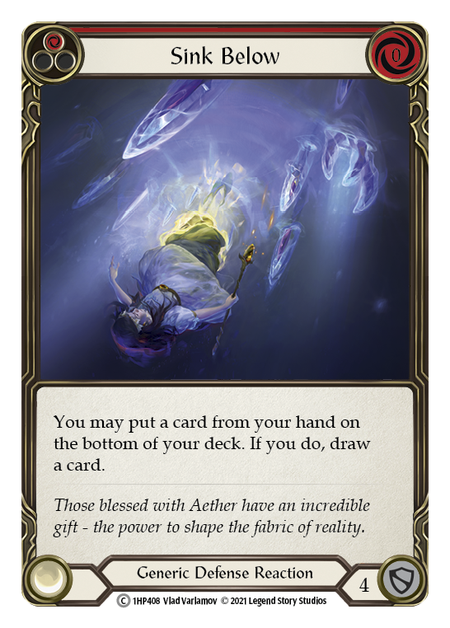
Many Levia inventories have few options outside arcane barrier and spellvoid, but a few players carve out space for defense reactions. The most common are my favorites: Guardian of the Shadowrealm and Expendable Limbs. If you don’t have these, Sink Below is always a reasonable card.

Tips and Tricks
I hope this has been helpful to some players out there looking to branch out into a new class or archetype. I’ll leave you with some of my advice on how to play the deck. Levia is tricky to pilot, and sometimes it’s not at all intuitive what you should do when you look at a new grip of four cards.
- Go Second. Levia needs to fuel her graveyard. Most opponents will make you for first, which is almost like taking a turn off. Our build is less susceptible to this, and can be further resilient to it by including red Pulping and Savage Feast. Think of blocking on turn 0 less as sculpting your hand and more about setting up your graveyard for your turn.
- Know Your Ratios. We have 13 cards that don’t have any power, and 3 more that only have 4 power. That’s 17 misses with Meataxe. We also have 8 cards that can’t block at all. Keep track of the odds of drawing these, banishing them from your graveyard, etc. Levia may look brainless, but underneath she’s actually all math!
- Sometimes You Gotta Pay to be the Boss. If you have very little blood debt and a hand that can’t turn your hand into much value, it’s better to block with it to get more gas in the graveyard and take a couple points of blood debt to arsenal a card. You can also use this to purposefully turn into Blasmophet.
- Sometimes it Pays to be the Boss. We have the potential for truly obscene turns off Bloodrush Bellow or Shadowrealm Horror. If you have the setup, take whatever your opponent throws at you on the chin. It’s very hard to race Levia, so we can easily keep up with whatever the opponent throws at us.