
Any hero from the Pits is used to low places, but Arakni, Huntsman has held a special place at the bottom of every single tier list for time immemorial. A very select few have worked to understand the deck beyond a silly pick for Armory. Among those bold enough to bring Huntsman to competitive events, we've been presented with very different decklists, built out from different perspectives of what makes Arakni “good”.
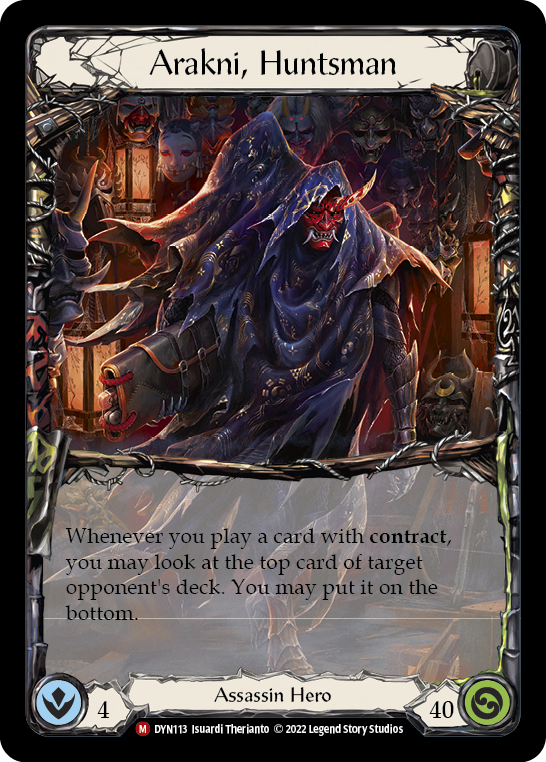
I mention this to illustrate why Arakni, Huntsman is still one of the most unexplored decks in Flesh and Blood, even 3 years after their release in Dynasty. There have been a few “good” performances on the deck; for my own part, I placed 47th at Calling: Los Angeles in 2024, and runner-up at Battle Hardened: Sonoma in 2025. But despite that strong finish, I would not say that I've found the most optimal list, or even the standard deck, that a person should play. Huntsman suffers from the lack of a focused community to refine the deck, especially when compared to the refinement that has gone into other decks throughout the competitive history of the game. I don't mean to take away from anyone who might be working on the deck - in my opinion, it's the most Assassin thing to be working from the shadows on a solo endeavor. Which is, essentially, what I'm doing here now.
This is how I think about the hero and my angles of attack, which are most certainly more vibes-based than math-based.
Building a Backstory
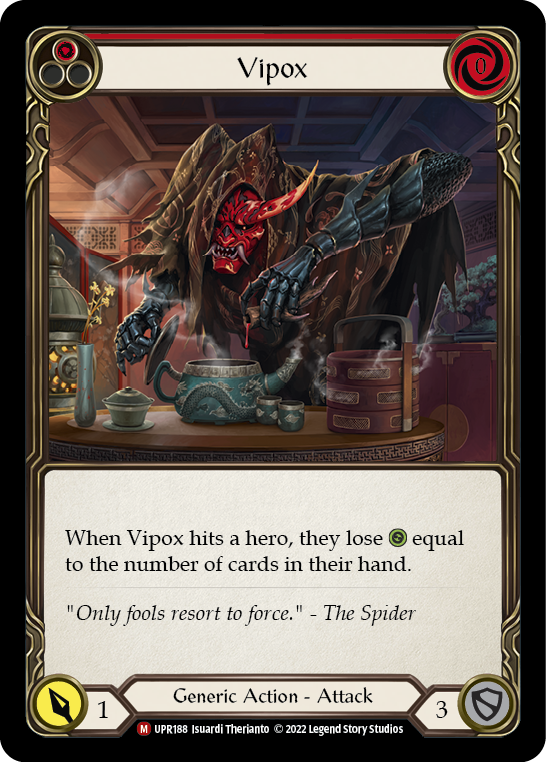
Arakni, Huntsman was the first Assassin, and beyond simply loving new classes, I also thought Arakni's vibes were incredible. The hero design is iconic: the mask, the cloak, the hump! Even the background of the hero art invokes questions and story points. There are a plethora of masks hung on the wall, does this mean that each mask is just a tool for specific jobs? We'd even unknowingly seen the hero previewed in Uprising on the card Vipox.
In Dynasty, Assassins were built around contract: a “mill”-like mechanic that would create Silver if the contract banished the correct card. If you have enough Silver, your equipment can be bought back and used again! This is an amazing marriage of theme and mechanics, an aspect of the game that I love, and it drew me to the hero. This was the first time we'd seen a FAB deck literally running your opponent out of cards! It was a totally new win condition. (And as any Dash I/O player knows, it's fun to look at an extra card on top of the deck.)
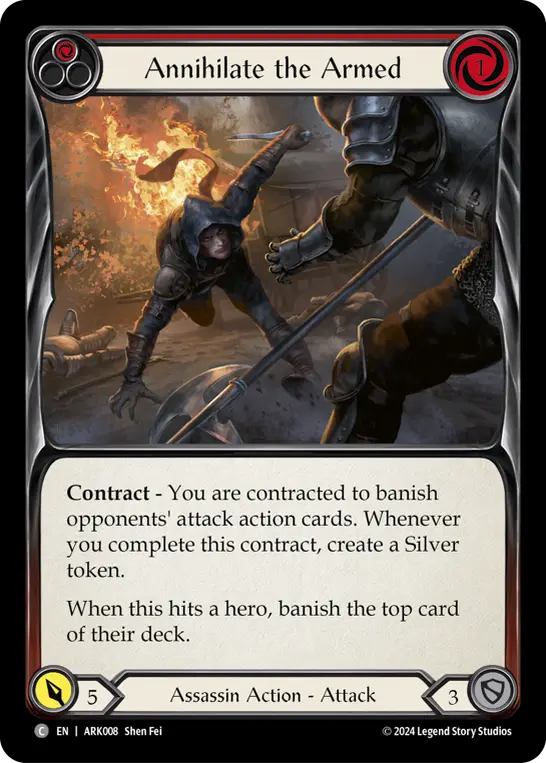
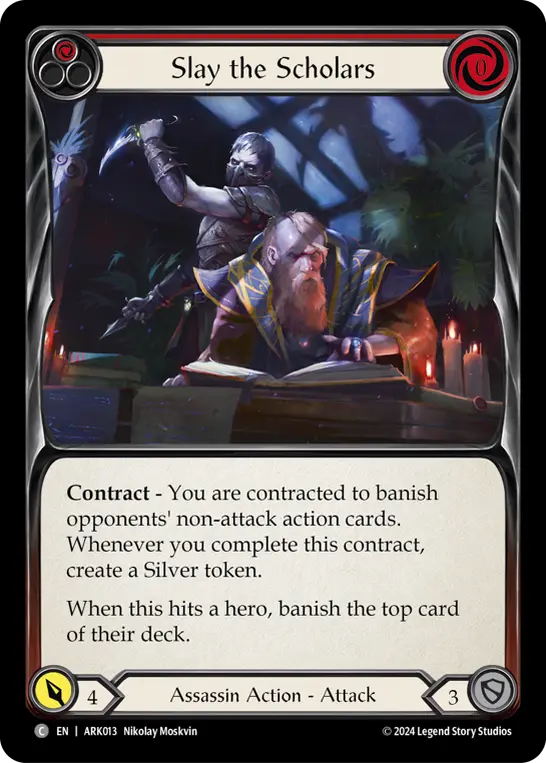
The Assassin card pool is very fractured. Huntsman is the only hero who can take advantage of the non-majestic contracts; Uzuri and Nuu prefer different stealth cards, and Marionette and Slippy utilize stealth in their own ways that, again, emphasize different card choices. This means that each Assassin's card pool feels very limited. The reaction packages have been handled the same way: they're specifically aligned to the hero they're released with.


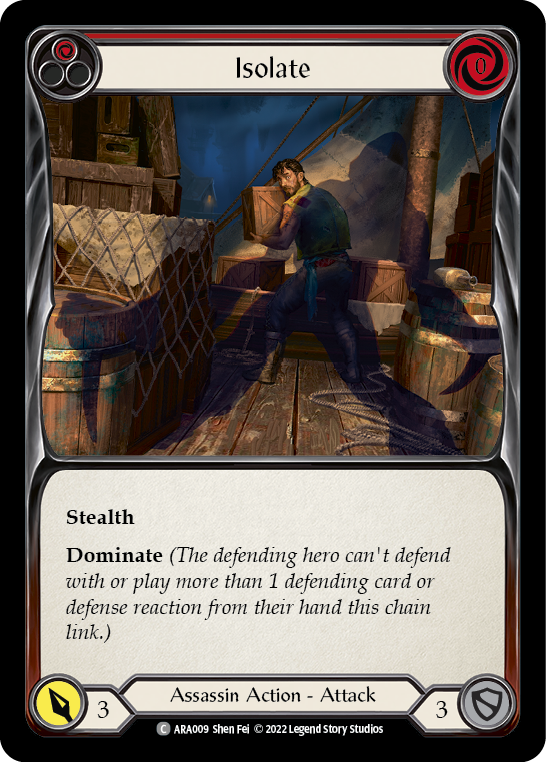
Because of this, the support for Huntsman since their release has been minimal at best. A person could build a stealth-based Huntsman, but why? Other Assassins make greater use of stealth, and you're not really utilizing Huntsman's ability, or maximizing the benefit of banishing cards from deck. A person could also build an all-contract deck, leaning into making as much Silver as possible - but the tradeoff there is that you are missing out on some truly powerful cards that Huntsman needs.
Taking the Contract
To justify Huntsman, you must justify contracts. So why run contracts?
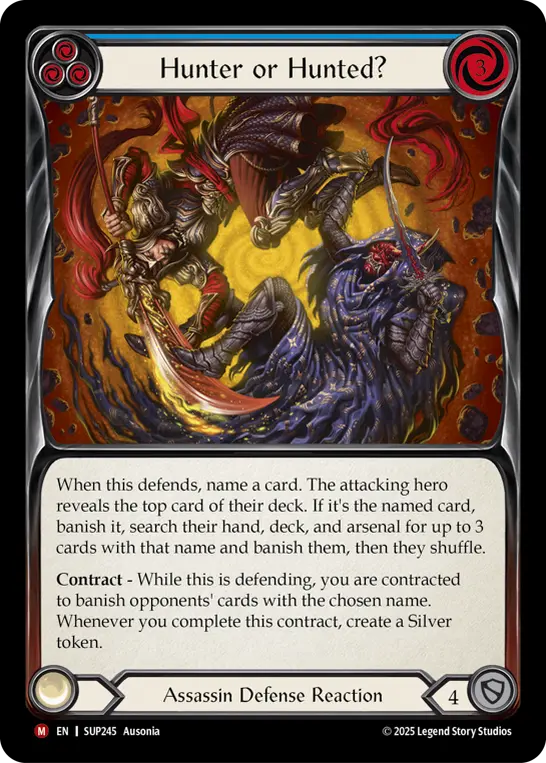
Huntsman’s ability is more powerful than you might think. Contracts can make you Silver; and the more Silver you can make in a game, the more powerful you become. Contracts also let you maximize the powerful specialization Coercive Tendency. Lastly, contracts let you get rid of your opponent's cards - and now, thanks to Hunter or Hunted?, that's a real threat to anyone.

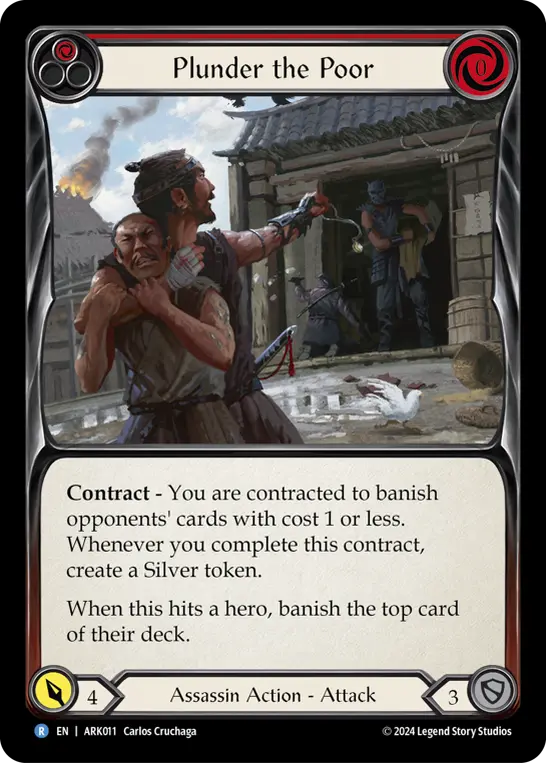
This is how I think of contact cards. Plunder the Poor is a 0-for-4. If your opponent blocks with one 3-block card, then Plunder the Poor is taking 2 cards away from the opponent and dealing one damage, furthering two win conditions at once (life and deck damage). If the opponent doesn't block, then you deal 4 damage and take a card out of the deck (which I still think of as 2 cards worth of value). The damage dealt is that of an above-rate card, in my opinion.
Playing contracts often has another benefit: it allows you to use Huntsman's hero ability. Seeing the top card - whether it ultimately stays on top or not - gives you insights into future hands. You can work with probabilities based on what you have seen throughout the game. If they have pitched, blocked, or played a card, you know what might be in their hand. Of course, if they block out your contract, then you know for sure that what you saw on top is going to be in their hand. The more you understand the hero across from you, the more this little bit of knowledge helps you make decisions throughout the game.
Since we're talking about Huntsman’s hero power, perhaps I can explain how I decide on whether to bottom and leave a card. If I expect they want to block the contract, then I will leave a low-impact card. If it's something like Bloodrush Bellow, and will facilitate them having a large turn that then necessitates me having disruption in the next hand to make sure I don’t get blown up, then I will bottom it - which is a double-edged sword, because late game if they draw a power card and have the space in the game to play it, then it might spell doom for Huntsman! You have to keep that part of the equation in mind as you navigate the rest of the game.
If they aren’t going to block your contract, then I will try to fulfill the contract or bottom an impactful card, since they are holding cards in hand and want to play their cards. It will only take 10 turns (less when you factor Flick Knives pings) of 0 for 4s for them to die, which goes faster than you might think.
Making Money
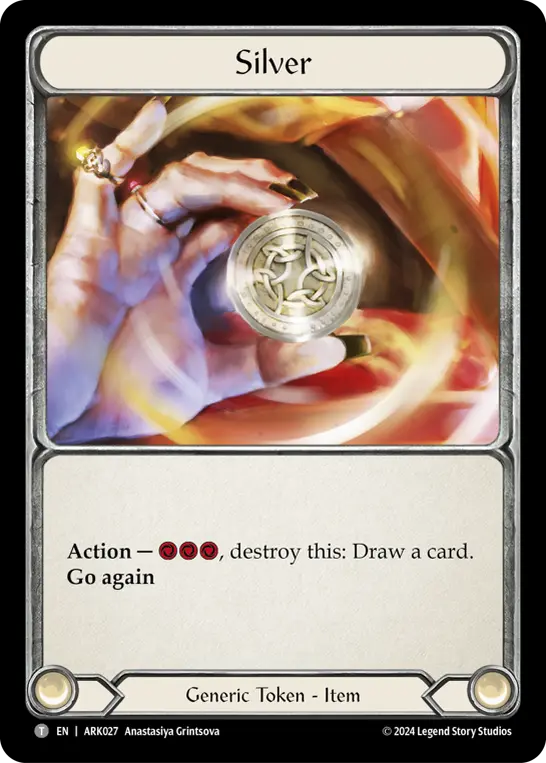
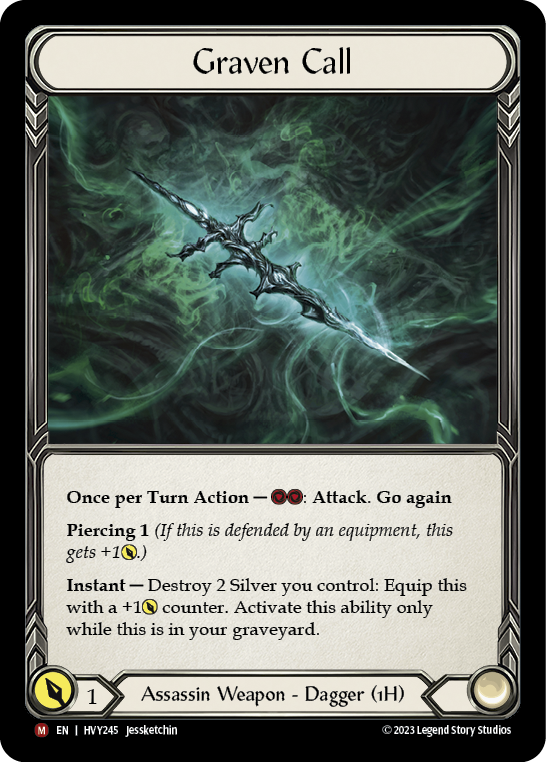
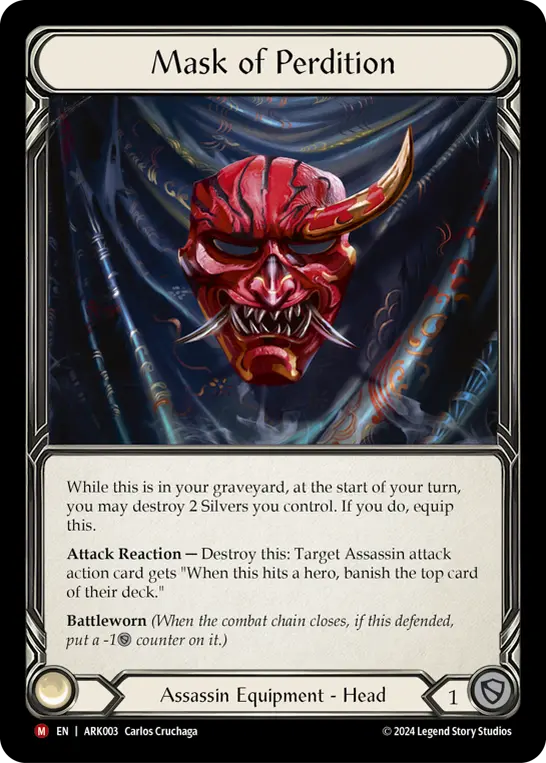
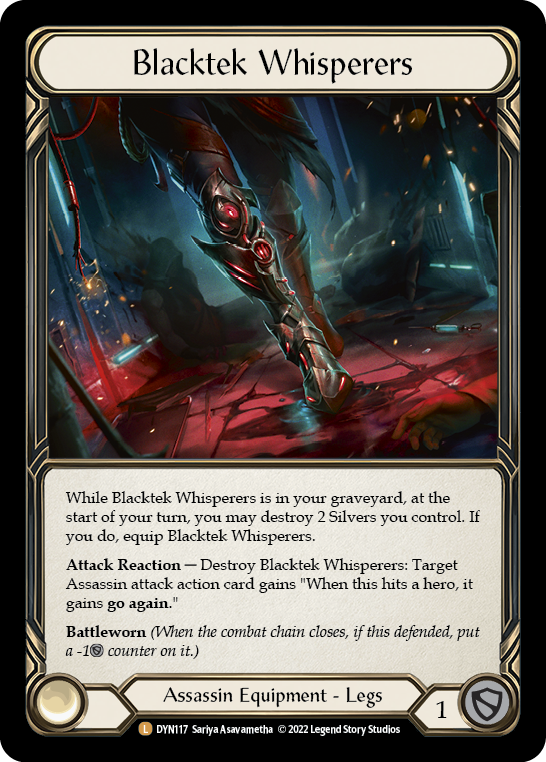
Silver. It's important. In some ways, one Silver equals one half of a life point; once you have 2 Silver, you can now deal an extra damage and get back Graven Call. With Mask of Perdition and 2 Silver, you can block an extra damage and banish an extra card - which could be an unending cycle, until they lose all their cards of course! Blacktek Whisperers also allows you to block damage, but also pushes more damage while potentially banishing extra cards. If your opponent is blocking contracts so you can’t use your equipment, then you are trading 1 card for 2 in most cases, and that furthers the game plan of running them out of cards.
This brings me to why Hunter or Hunted? has finally made Huntsman a real powerful deck. Not only does it allow you to make much more Silver so you can use your equipment more aggressively, it has the potential to take more cards out of the deck than any other contract. Perhaps its most powerful aspect is the deck knowledge you gain. You learn if there is a sneaky one-of Pummel, how many defense reactions they are running, or what is left that you have to worry about. And if you rip a card from their arsenal or hand, it can be game-winning.
Hidden Clauses
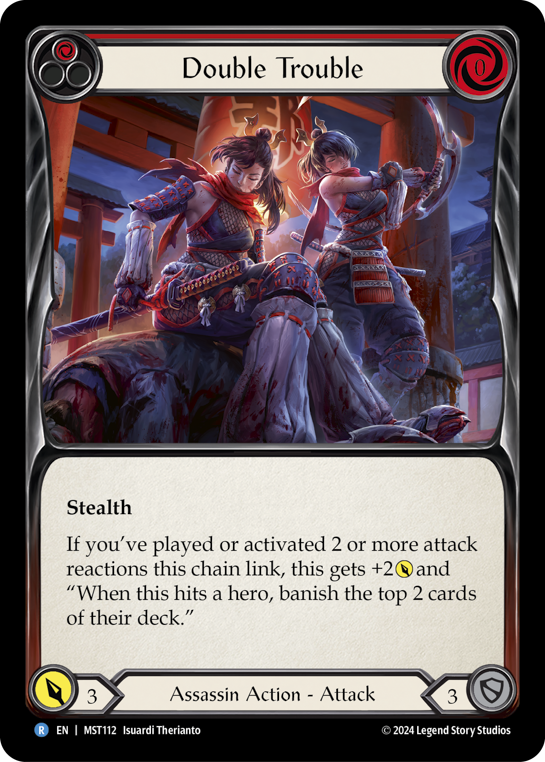
Can we blend stealth with contracts? I believe so, but at the risk of losing the control we get from the hero power. I think that there are a few stealth cards that represent meaningful additions. Double Trouble is probably the best - not only does it provide meaningful damage at red, it also combines well with Mask of Perdition. With three on-board reactions from equipment, red Double Trouble deals 5-6 damage, could banish up to three cards, and can gain go again... all while requiring two cards to stop the on-hits! The next best, in my opinion, is Persuasive Prognosis. Late game, it's a good one-card hand and gives you another card that forces interaction from your opponent.
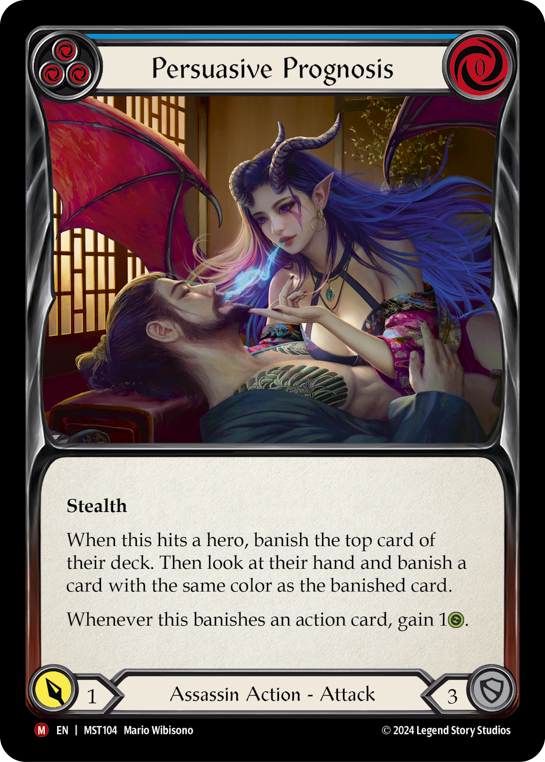
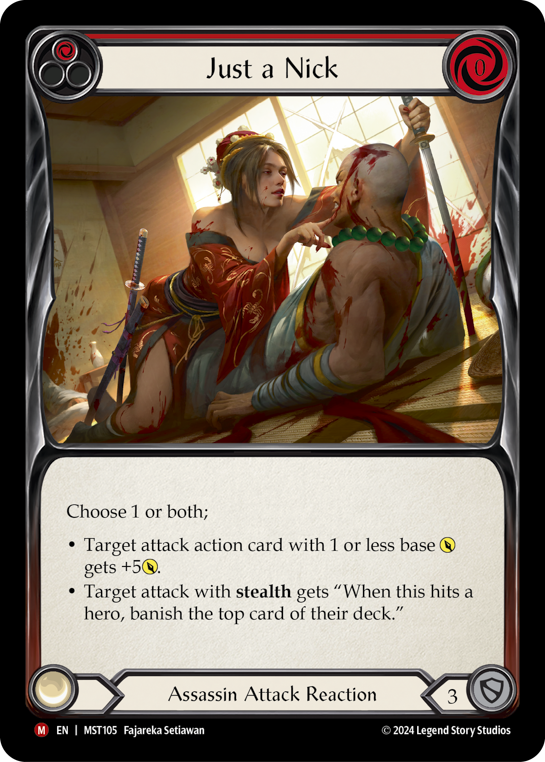
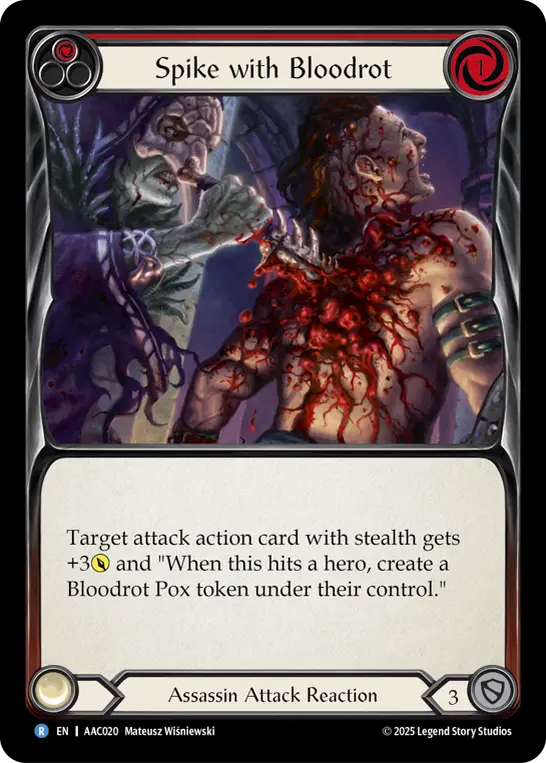
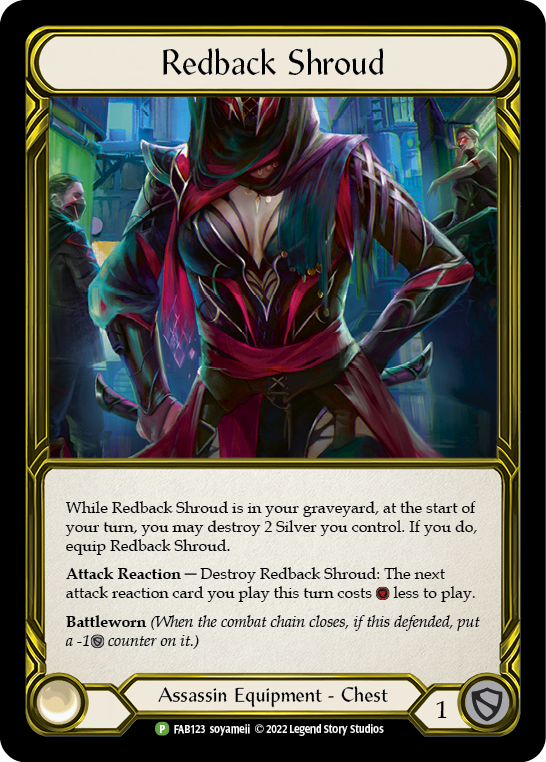
The real question is, how far can stealth be pushed in Huntsman? I think Just a Nick is powerful enough to warrant a few blue stealth cards, beginning with Prognosis. But it does begin to blur a line. Do we include any of the Spike reactions? Do we add in Redback Shroud? There's a lot more Silver to be gained now. Ultimately, you'll need to decide for yourself how to manage this package and what variance is acceptable to you.
Executing Your Plan
I come to the table with two plans on Huntsman: I will either kill you, or run you out of cards. But ultimately, you’re going to decide which you get. An important part of how I play the deck is reacting to how my opponent is playing against me. Did they fat deck? That's likely to stick them with clunkier hands, so their offense is going to be easier to manage - which means I can attack more, pressuring their life. Are they blocking my attacks? Then I need to save my reactions for second cycle, maybe looking to run them out of cards. Are they holding all their cards and sending it all to face? Time to block, play small hands, and use Mask often to get rid of their cards as quickly as possible.
My challenge to you is to play the hero. Test the outer limits of any ideas you have, right down to the limits of single cards. A lot of the nuance of this hero is not easy to understand right away, and playing with an open mind is the best way for you to learn. This hero rewards knowledge of the current meta, so study up.
Develop your sicko tendency. Revel in the fact that no one wants to play you on Talishar. Laugh manically when you banish four cards with Hunter or Hunted?. When you both run them out of cards and kill them, tell your opponent you just got "the Huntsman special". Become feared, become lethal, become death!