

We all hear about Pro Players on their teams; testing extensively, going into events as grand as Worlds or as frequent as Callings. It almost seems like a mystical superpower that keeps some familiar names at the top tables. For established players, we know that the power behind the curtain is testing. Testing is essential to ensure you’re prepared for the matchups you may or may not see, and to understand the gameplan your deck may have against certain matchups.
But the actual process of testing is nebulous. Is there such a thing as bad testing? Is there such a thing as testing too much? What are the best practices in testing?
My answers to that are "yes," "sort of," and "hold on I’m getting to it."
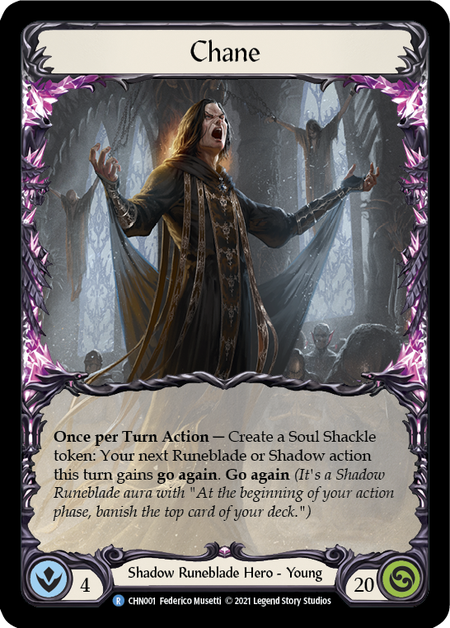
I had a total blast playing the first ever premium Silver Age event in Valencia. I didn’t do especially well, but Petter Olsson - a dear teammate and a player at the store I manage - won the whole event, taking out titans of the game like Arthur Trehet and Pablo Pintor. Despite what other creators have said, my friend did not take his decklist from the prior Silver Age event in Japan. He had arrived at the same conclusion about Chane’s 'totally fair and balanced' power level through good testing within the team and at multiple Silver Age events in London stores.
This article is a way of talking about what I considered to be best practices in testing for events. These are all based on my practices in TCGs past and present, practices from other teams in this game, current practices from teams in other TCGs, and how you can apply them when you next meet up with your team.
Team Test Tactics
You absolutely should test with at least one other human person whenever you can. For the purposes of going into an event where the results matter, you absolutely need to give yourself the best chance for success, and knowing your deck is crucial.
Testing can be with anyone, but they should meet certain criteria:
- Does this player know your playstyle? Are they used to your play patterns, deck choices, tells, weird idiosyncrasies? They can help you work on things about you that may not be helpful, and know how best to help you understand why things happen in-game.
- Is this player of a similar or higher level of skill than you? Do they have better finishes, better results on events great and small? Playing with someone you’re at an equal level to is helpful, as you can both make gains at the same time, which is always helpful; but if you’re working with a player who’s newer or less experienced, then you’re not testing - you’re coaching. There’s an element where this is helpful, as it can push your attention back toward the fundamentals of your deck and where its overall power lies; but to progress and gain the deeper understanding of wider gameplans into multiple decks, you need to test with someone who knows what they’re doing and can challenge you in a way you’d expect to be challenged at an event.
- Does this player have similar goals? Sure, it’s nice to test with someone who’s very proficient, but if they are just an Armory grinder who enjoys the game but doesn’t play to progress in the game, they won’t feel the same level of urgency as you. You want to test with intent, but if they don’t have the same level of intention, they may not give it their all, which won’t help you progress.
- Does this person have a broad collection? You don’t want to choose the Armory’s Teklovossen or Betsy truther as your testing partner. You want reps into a good number of different decks; some from the tip top of the metagame, and some slightly more fringe, but still powerful.
Test with a human whenever you can.
Find people who are aligned with how and why you want to test, and that will improve your game - for both of you.
Test With Intent
Once you’ve got your gaggle of other players, it’s essential to test with a bit of structure, and in an ideal environment.
When you sit across from each other, don’t just jam a game. That’s not testing, that’s playing. There’s merit to doing it this way if you’re learning the deck, but this is encouraged only if it’s a fair matchup. If your testing partner plays something deeply favoured into you and you win absolutely no games, that will leave you despondent, and unwilling to test the deck if the play did not go your way.
Test with structure in an ideal environment.
Let’s say, hypothetically, that you’ve picked up a new deck, and want to learn how to play it against the other top decks. Playing them with what you would guess is an intuitive gameplan for each of those other decks, over the course of one to two day’s sessions, will give you an intuitive look as to how that deck operates.
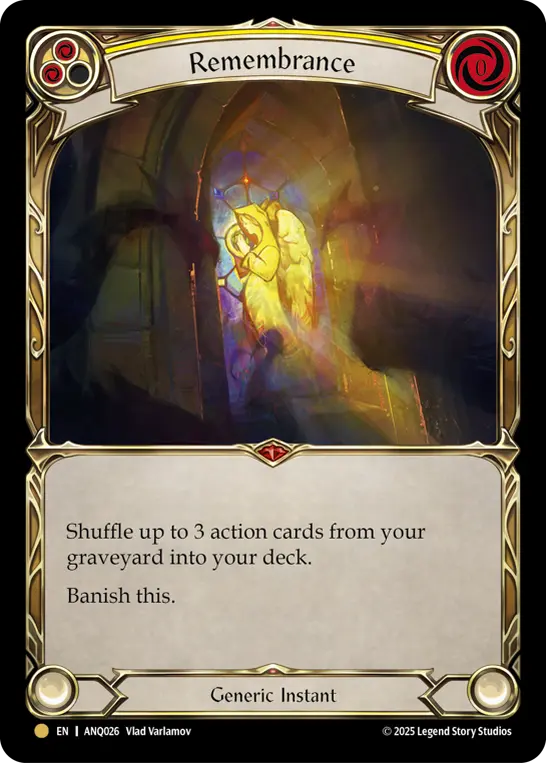
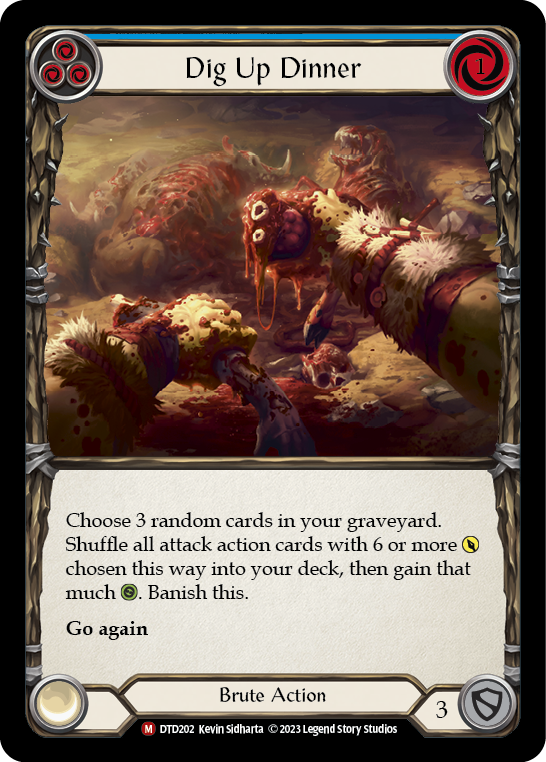
Once you have that baseline understanding, then you and your testing partners need to apply certain gameplans, thought experiments, and metrics into your testing. If you’re on a deck that’s somewhat susceptible to fatigue, have your testing partners play with the intent of fatiguing you for a few games. How does that actually change your play patterns if you don’t account for fatigue? How does it change when you present more cards than normal? How do things change if you present cards like Remembrance or more class-specific tools like Dig Up Dinner? On a similar vein, ask your opponents to play their deck with a different game plan than what we’d expect from that list. How do you and your deck respond to playing on that slanted axis?
This can even go a step further if you believe you have some alternate insight into how your deck works. Let’s say you had a particularly interesting brew for a meta hero. The benefit of being on a testing team is that these other individuals would have helped you reach the conclusion that this alternate build is viable (or more likely, non-viable coping). In that case, you have the benefit of getting them to test as though they’re on the other meta contenders, and have no idea about the surprise factor of how your deck operates. After that, encourage them to play in a way to counter this new strategy, to find any weaknesses in it. This can be anything as minor as cutting one or more cards that others think of as staples, or even a radical re-evaluation of the macro gameplan a hero can present.
Despite how good this “off the wall” deckbuilding can be in terms of spiking events, this is a very rare instance of how metagames change, and there are other pitfalls about this testing strategy - which I’ll get to further along.
Building Castles Out of Data
How do we know our testing is working? We can’t go by vibes alone, or counting which member of the team on which deck has beaten this player on this deck this many times. Sure, all of those are factors, but that’s not the whole story. We need to be able to collate the data we’re getting from all this testing and use it to find a conclusion.
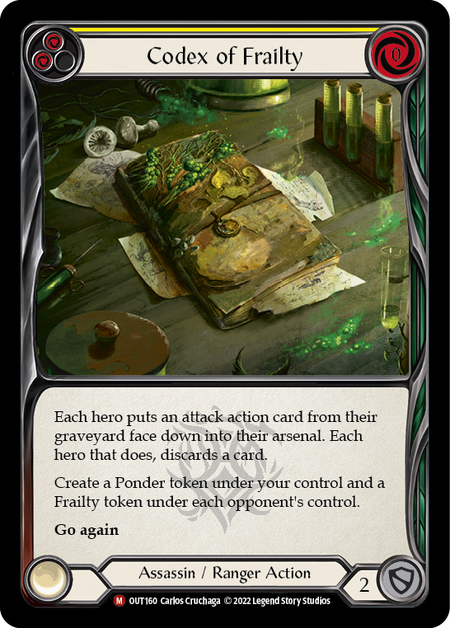
Flesh and Blood is a game of skill, which means certain practices, card interactions, and sequencing can lead to mappable, repeatable outcomes. Assassin pressuring away 2 cards from their opponent, then going Codex of Frailty into Leave No Witnesses will always pressure an arsenal and/or Equipment block. Spinal Crush against an aggressive opponent will always necessitate more blocks than a Ninja may be able to deliver.
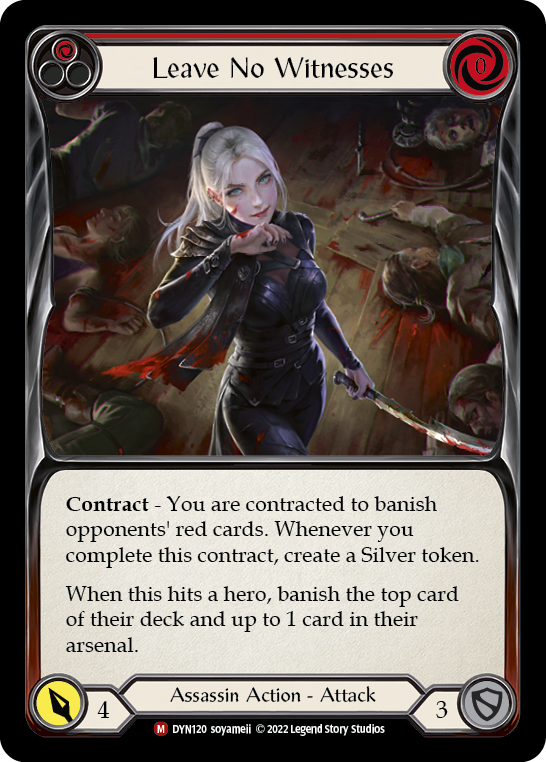

Tracking those card-by-card interactions are easy. Some of them are so known in the player base, they’re predictable from higher level players. But in the testing, we can also see our unusual plays having desired effects. These are things which must be taken note of. Like literally. Even at casual Armory games, I note down interesting and desirable interactions to repeat - and bad, harmful interactions to avoid. If there are ever opportunities to re-create that line of play, I will usually try to do it, to see if it nets me X amount of value, or favourably shifts the tempo.
This notation can be as little as having a journal open by your playmat during the testing sessions, or having spreadsheets with matchup matrices for how your deck operates in certain configurations of going first or second, with this deck count, or this load out. Either way, if you want to improve, gather the information that you want to notice and refer back to it often, to learn from.
Collect data in testing and use it to find a conclusion.
In the kind of testing where you’re working on if a card choice is effective, note what you ended up doing with the card. Did you pitch it for second cycle? Did you snap play it the moment it was in your hand? Did you block with it when you were behind? Note it down.
If you’re testing matchup configuration to see if a certain deck prefers going first or second, play that matchup as first or second a few times and note the outcomes. Did going first allow you to set up, to pitch power cards, to fill the graveyard? Did going second give you windows to set up on their turn with instants, to filter efficiently, to be as aggressive as possible?
Inside Interference
There’s no such thing as too much preparation for an event, but there can be instances where internal preparation can skew thinking if the team is too internalized. You have to remember that the world is bigger than the table you and the team test at.
Let’s go back to the suggestion I had about testing new deckbuilding ideas. If you’ve come up with this alternative way of playing, you may become used to it - probably to your detriment. Not everyone plays the way you and your team does. If you’ve tailored your deck to play into one of the other meta heavy hitters, who plays a very specific gameplan into you, you would feel pretty confident in how it went for you. But the moment you sit down against that deck in a Calling, and your opponent does one action that’s sequenced slightly different than what you’re used to, it can send you into a tailspin of confusion.
Test your decks into different gameplans.
Test with the awareness that there are many hundreds of thousands of other players in the world. While they might have the understanding of the deck that you and your team does, they also may not, and won’t play according to how you test. Be aware of that, and test your decks into a lot of different gameplans, even within the same matchup.
Let's Talk Talishar
We need to address the digital elephant in the room.
Talishar has a lot of benefits when it comes to testing, as it’s a place to test how card interactions work and to try out entire decks if you haven’t invested in pricey staple cards.
Talishar is not a suitable replacement for in-person testing.
Flesh and Blood is a very tactile game. It’s on you to remember to tick up Tunic. There are a lot of necessary motions to go through when you’re playing your cards, and Talishar removes those avenues. There will never be a Talishar Calling. Even the bigger remote events, like The League That Means Nothing, is all done via webcam. There is a benefit to playing cards in paper, as it’s up to you in a serious event to remember your triggers and to move your cards from hand to combat chain to grave in the proper manner.
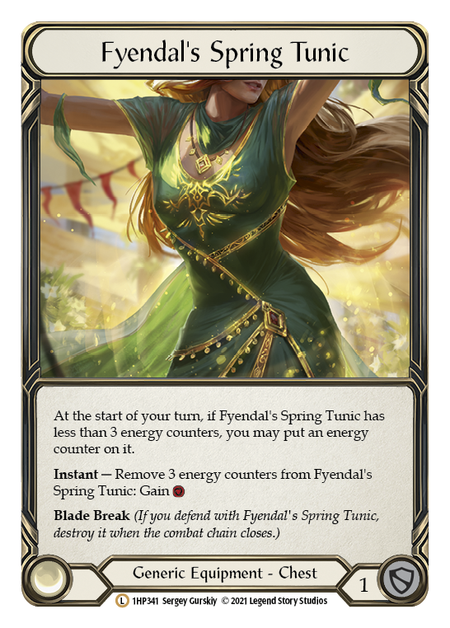
Talishar is not a suitable replacement for in-person testing.
Another factor that undermines Talishar as a testing platform is the random quality of the players. If you’re playing with your team over a Discord call - which is essential for The Armory or Team Sigil - then by all means, that could lead to some quality testing. Just going on the ladder and playing against anyone on Talishar is not the way. I’ve had the pleasure of playing against names I recognize from the creator sphere, but I’ve also played against players who don’t know basic card interactions, or how the client works. That’s not good enough for when I’m trying to actually improve my game or learn something about my deck or the wider metagame.
Processes of Perfection
Applying smaller or larger deck changes between test games, and taking detailed notes about how certain game states felt and how potent, or anemic, certain card interactions were - there are some other practices in testing that my teammates developed that I completely swear by.
At the start of every game, while we’re deciding on our equipment and what we’re boarding in, we usually ask each other what the deck’s Win State and Fail States are.
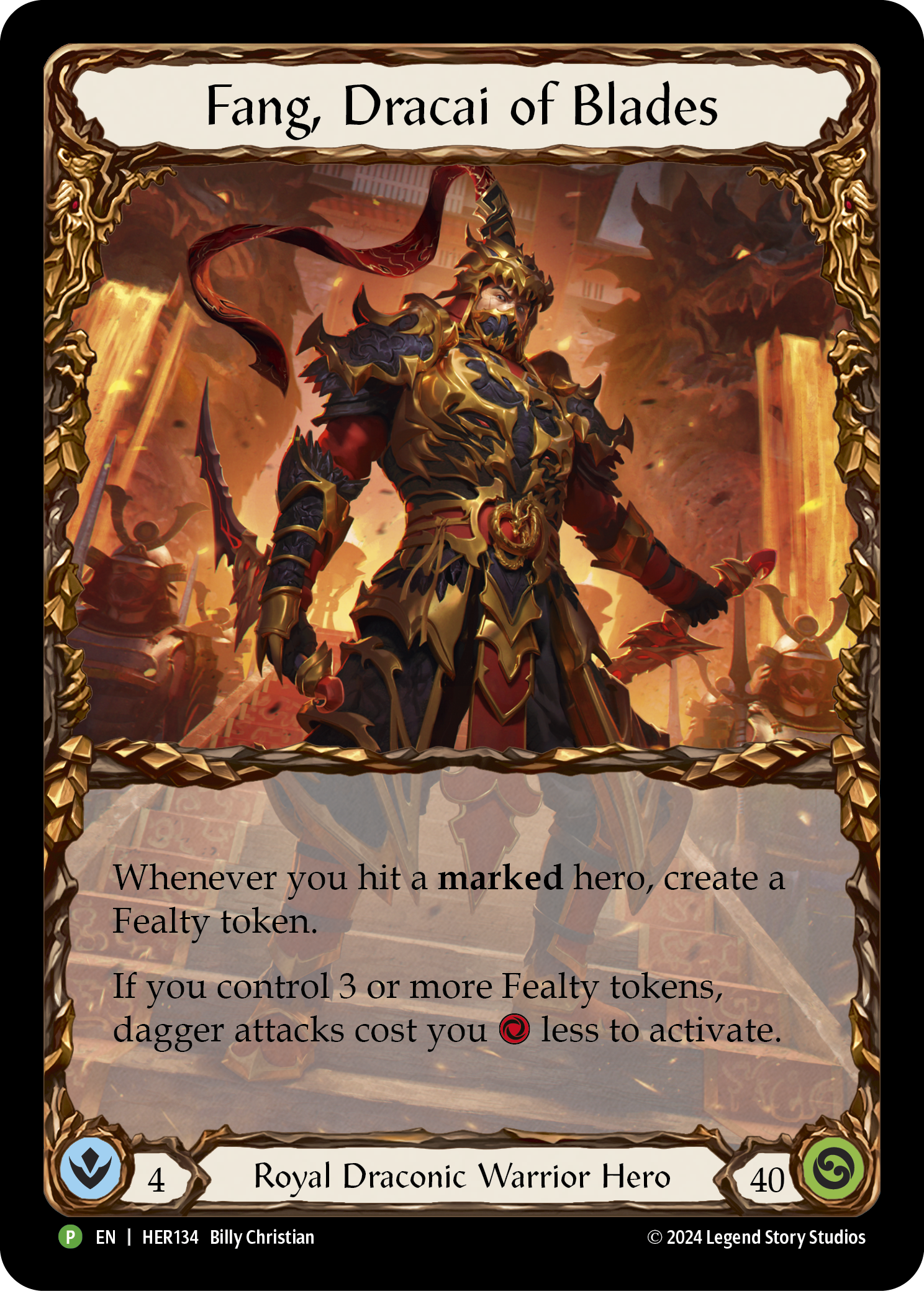
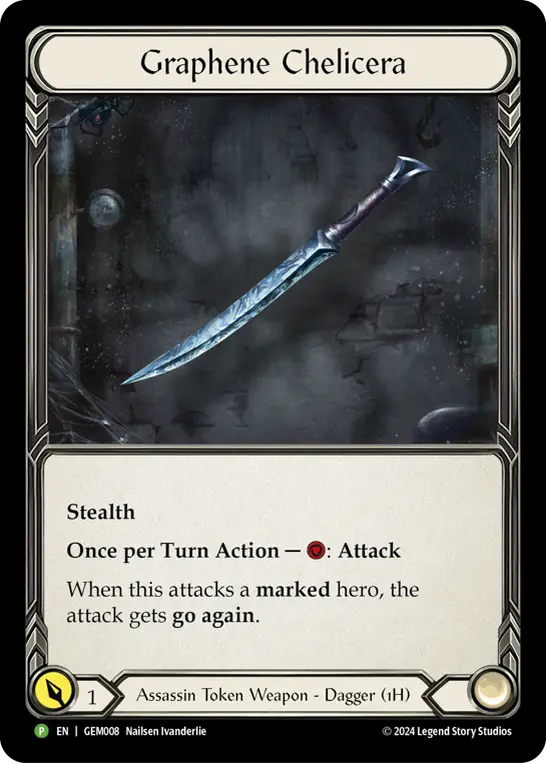
To understand the answer to what the Win State is, it asks us what the deck's macro gameplan is - how it wants to win the game: presenting efficient damage, presenting above rate turns, stalling until it reaches its in-game quest (8 Earth in Banish/3 Fealty/Klaive + Chelicera), surviving until there’s no more reasonable threats in their deck. Once we have that macro game plan understood, we can transition into the deck’s overall micro gameplan of what to do hand-to-hand on an average turn. By understanding that, we can hold it in mind turn over turn as the game state evolves.

When we answer what the Fail State is, that does not mean “if I do/don’t brick”. That’s a fail state for every deck in every trading card game from now to the end of time. Bad variance and draws are always a factor, but relying on them as an excuse for why we lose is not conducive to learning from testing. Understanding where your deck may fail - whether it's tech choices on the opponent’s side, an unexpected form of anti-synergy, or just some nature of the matchup - will inform you about the longevity or the “legs” of your deck. Figuring out these fail states now, in the low stakes environment of testing, is far, far better than in the grand final of a tier 3 or higher event.
Test with a clear statement of what your Win State and Fail States are.
The next two suggestions for what to do while testing go hand in hand. Actively talking about the card quality of your hand, and even playing with your hands revealed so that you both can talk about optimal lines, is a great way for you both to learn and advise about each other’s decks simultaneously. There’s a bit of loss in value when testing attack reaction-heavy decks like Assassin or Warrior, but there’s also benefit to that, to see how much an average hand in one of those kinds of decks can convert for.
It’s simple, engaging practices like this that can give players a lot of insight into how their and their teammate’s decks work during a testing session.
Maintain the Boardstate
It’s essential to say one thing about the last few suggestions, even if it seems obvious: ACTUALLY COMMUNICATE WITH YOUR TESTING TEAM!
It might be fun to bring a wacky version of a deck to a testing session, but bring it with the intent of testing it to see its viability. Aggro Boost Teklo or Turtle Katsu are not real decks. Moreover, these are test games. While it’s fun to win and sad to lose, you need to treat these games with a level of cool dispassion. You’re here for everyone to get better, so play with knowledge and the willingness to learn about what you’re doing with coming events.
Communicate with your testing team.
I have heard numerous horror stories about players being kicked out of big, fairly prestigious teams for playing weird archetypes within known decks and not communicating it to the team. If you take your losses hard and gloat about your wins, you're not contributing. This attitude helps no one in a testing environment. The games aren’t there to merely be played, they’re there to be learned from. You cannot take them personally.
While testing is also part of the drive to find secure, measurable results, it can’t merely be about business. The most important part of the testing environment is that you’re testing to be better at a game you all deeply love. What should unite the entire testing team is a shared passion for being the best at Flesh and Blood.
Testing is a spirited but analytical way of engaging with Flesh and Blood to make your results and experiences better. With this game’s reliance on variance being the lowest among modern TCGs, testing is essential for ensuring strong results.