After a quiet month to end the year, Flesh and Blood opens 2026 with an extensive series of Road to Nationals events punctuated by 6 Battle Hardeneds and 2 Callings. With dozens of events each weekend, the data points are coming in fast and furious. Add to that a December Banned and Restricted that only now is showing its impact plus the ascension of Florian to LL, and you've got a dynamic meta that is actively reshaping itself. Gravy Bones continues to be a favorite of top tier players; Dash I/O has begun to rise as the successor to Cindra's aggro throne; Marionette is carving out a spot as the gatekeeper of any hopeful for the crown; and Oscilio stands ready to strike like lightning without warning.




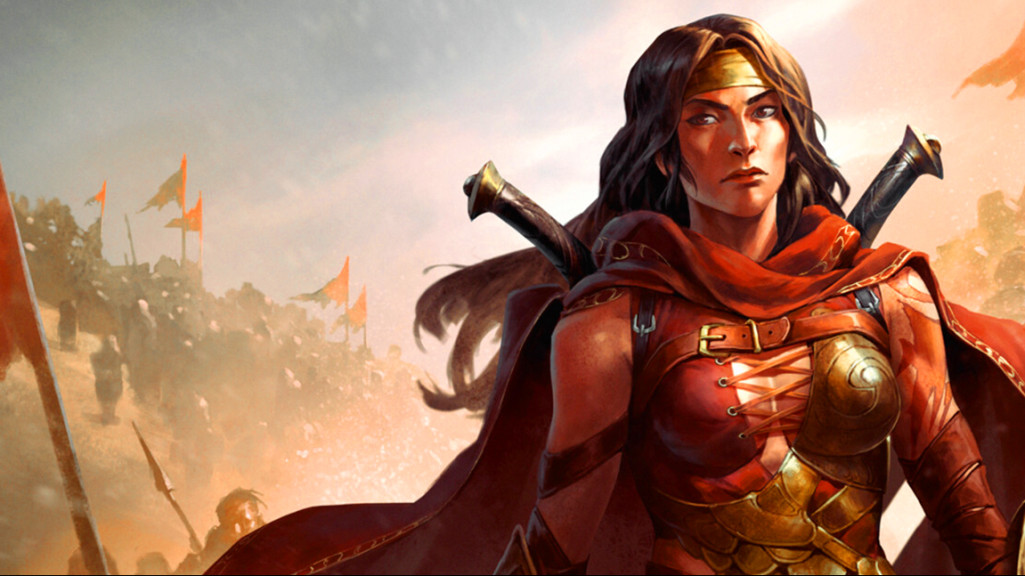
So why am I talking about Kassai? At the start of the year, many speculated that this was her moment, that Kassai would be the deck to beat at major events. But the shift from Calling: Akihabara to Calling: Columbus was stark: Kassai's conversion rate to Day 2 fell from 35% (6 of 17) to a mere 6% (1 of 18).
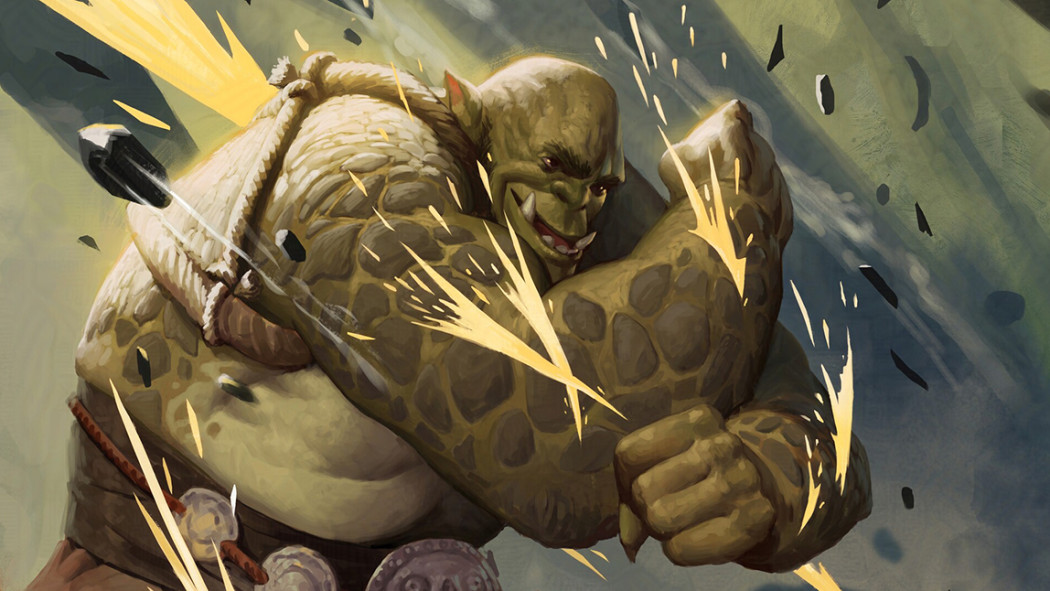
But set aside the top tier of events, and Kassai's results look a lot different. In Road to Nationals events through the first 3 weeks, Kassai lands in an Elite 8 with 5% or more of the wins so far, sharing the spotlight with Verdance, Florian, Marionette, Kayo, Gravy Bones, Dash I/O, and Oscilio. Kassai's 24 wins constitute 7.4% of all RTN events, tying at 6th with Oscilio and ahead of Dash I/O; and as Florian exits the format, Kassai sheds a difficult matchup.


Correctly predicting the meta at a given event is a major advantage, but with that high reward comes high risk. Gravy Bones may seem like a great choice, but when you arrive to find your local RTN is skewed toward Dash, you're gonna have a bad time. Back Dash instead, and you might be running on fumes into a field of Guardians perfectly content to fatigue you.
The alternative is to choose a hero with a high floor, even at the expense of their ceiling. And it's here that Kassai shines.

Cintari Counting
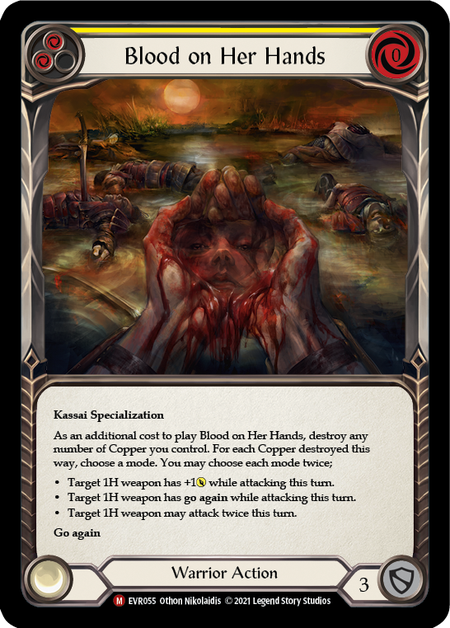
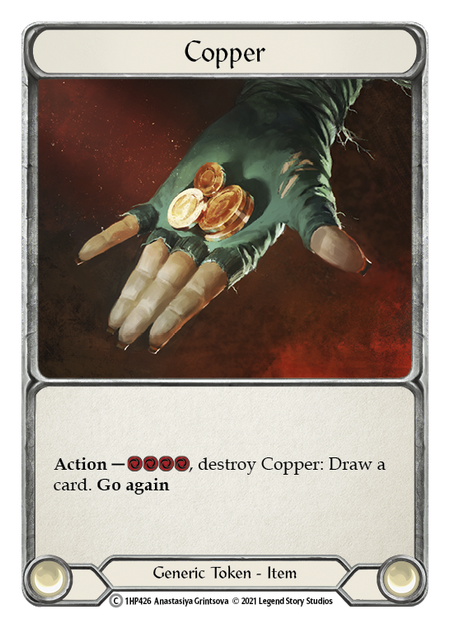
As a product of Heavy Hitters design philosophy, Kassai is a numbers deck, focused on extracting value turn over turn and gaining advantage in inches across consistent gameplay. Kassai is well known for her spike turns - opponents spend the entire game vigilantly watching for Blood on Her Hands - but these spikes don't come from combos, they're simply a long-range payoff to turns and turns of value accumulation and storage. Any time you collected a Copper token, you didn't benefit from one of the other on-hits or evasive tools available in the Warrior card pool; and if a game ends with Copper on the table, you effectively left value on the table that, on an earlier turn, you sacrificed power for.
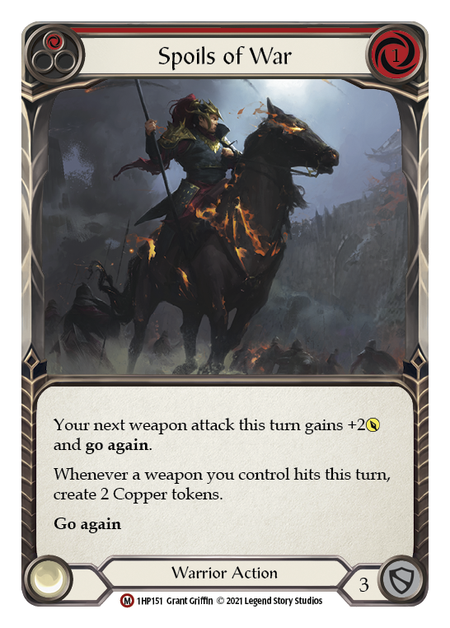
Consider, for a moment, the Kassai staple Spoils of War. While go again is a priority effect for Kassai, the 1-cost and lowly +2 to your next sword are miserable rates for the deck (Kassai is typically built to minimize costs on buffs, though Draw Swords is a notable exception). Comparing the card to Driving Blade does indicate the card is probably on-rate, but Driving Blade isn't exactly a competitive card. The reason Spoils is a non-negotiable inclusion is because of what accumulated Copper does for Blood on Her Hands later in the game; in a theoretical game where you side out BoHH, Spoils (and Outland Skirmish) would be terrible cards, and you'd side them out too.
In that way, Kassai is a lot like another Warrior known for a spike turn: Boltyn, who sacrifices value now by charging cards in exchange for power later. Lumina Ascension doesn't feel all that different from Blood on Her Hands, when you're on the receiving end of it; both cards fuel repeated weapon swings that can often end the game on the spot. The distinction between them is a matter of degrees: Boltyn invests much more in his signature closer, while Kassai is just as likely to kill you through steady value as with a flashy finisher.
This consistent gameplay - and the limited nature of her investment along the way toward a finisher - is the secret to Kassai's success into a wide and volatile field. While other top heroes are choosing lanes and hoping not to have their weaknesses exposed, Kassai is hewing closely to the fundamentals of 'good pitch, good block, good damage' and simply working her gameplan turn over turn. The result is a deck that has the latitude to make adjustments based on the opponent's preferences - even mid-game! Do they want to end the game quickly? Slow it down with a blocking posture and small but steady returns. Facing a late-game combo? Rely on your equipment to block and put all your cards into aggression. Do they like to block? Spread your damage across your two swords - and maybe a Cintari Sellsword ally - to make breakpoints awkward.
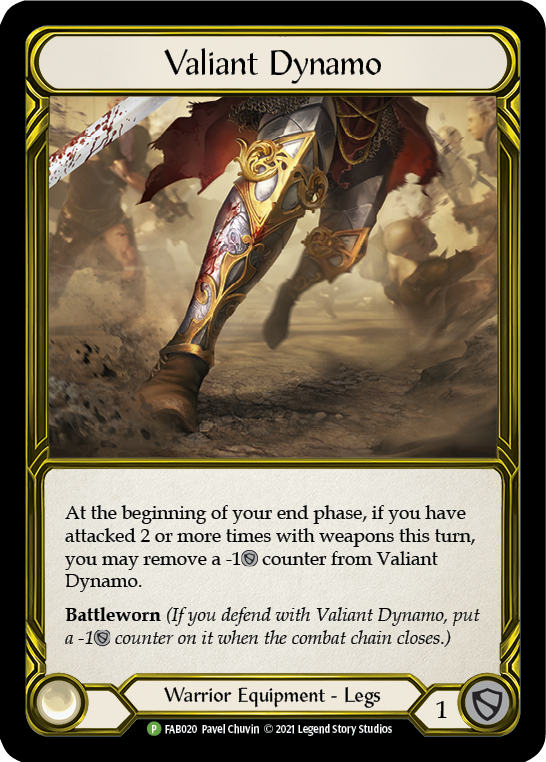
Speaking of breakpoints, Valiant Dynamo has to be mentioned in this era of daggers. These recursive boots give you a 1-block you'll probably be able to push forward every turn. Whether you use that to cover a dagger or to raise a single-card block to cover the standard 4 breakpoint, the Dynamo are one of the most compelling reasons to play Kassai right now. Your equipment suite is a key tool in giving you space to hold larger hands, as you can block fairly substantial hits without costing you cards. Knowing when to cash in on your chest, arms, and potentially head to fuel pivot turns or push for advantage is key.
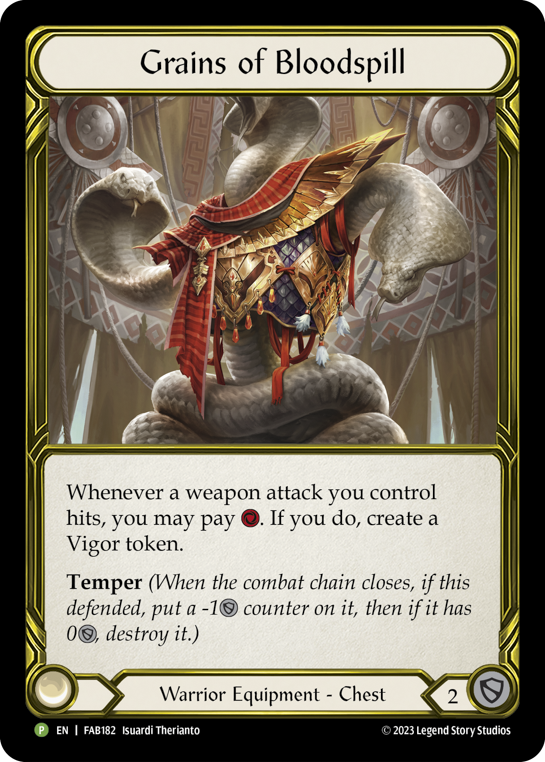
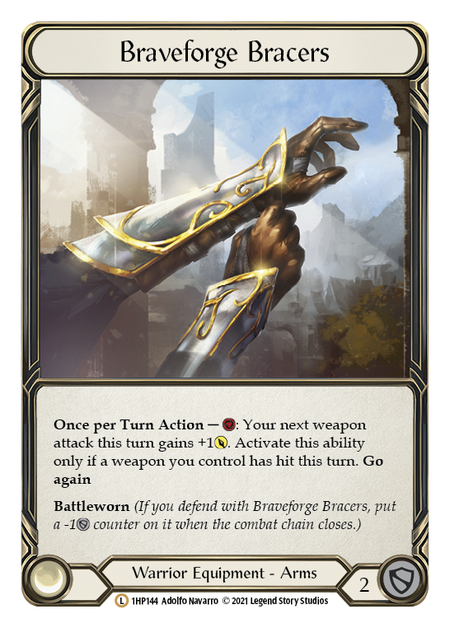
Grains of Bloodspill continues the common theme of 'essential equipment with recursive value'. With razor-thin margins of value and an overall gameplan of 'gains by inches', Grains lets you carry over your floating resources for the next turn, provided your weapons are hitting. With your standard equipment setup of Grains + Braveforge Bracers, you have the opportunity to spend up to 3 extra resources - mitigating the risk of stranding a card in your hand or resources in your pitch pile at the end of your turn. An additional benefit? The bluff: that card might just as easily be an attack reaction, for all your opponent knows.
Money Well Spent
We've talked about Copper, but we haven't addressed Gold yet - and for good reason. The role of Gold in this deck is significantly different than the role of Copper. We said earlier that Copper was a deferred value, and that accumulating it represented getting less value now in exchange for the big payoff of Blood on Her Hands. Yes, there are times that you can - and maybe even should - spend 4 resources on drawing a card (this is much more palatable when one of those 4 resources comes from a Vigor token created last turn). But if you're looking for a payoff for generating Copper, re-drawing a card for 4 resources ain't it.
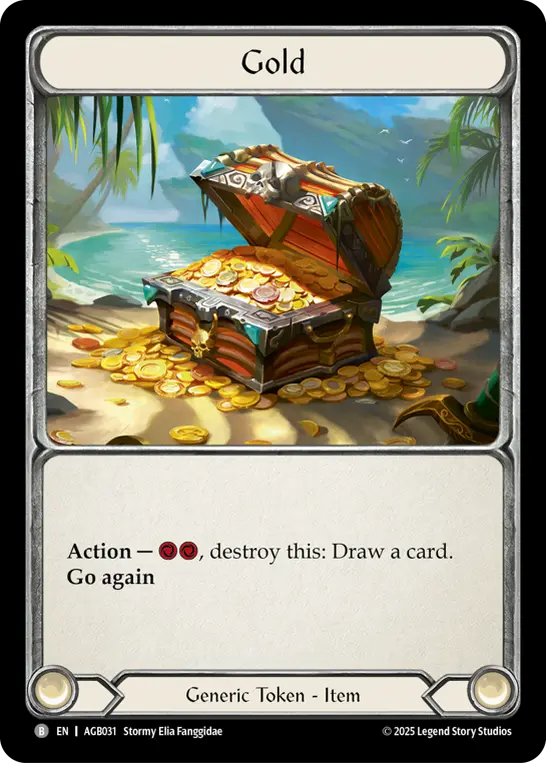
Gold, on the other hand, fits elegantly into Kassai's play patterns. Its most obvious application is Raise an Army (more on that later), and most opponents have that payoff in mind while making decisions. But pitching a blue or yellow to draw a card is well worth it: your swords are now free because you drew a card, paying for itself, and you've replaced a low-value card with another that's hopefully more playable. Card cycling plays a key role in making this deck's performance as consistent as possible; and when we find ourselves holding one blue too many, the option to re-draw that blue and net a floating resource is priceless.
Kassai is not a disruption deck, and her weapon attacks provide no on-hit threat. When I play heroes like Azalea (er, I suppose that's Marlynn now), I often repeat the mantra, "It's just damage, no blocks." There are many times when this suits us just fine: we have, after all, pushed all the value of our cards into damage, with the exception of coin creation. But when your opponent can do more with a full grip than we can, it's important to make the decision difficult. To do that, Kassai merely needs to banish 2 yellows and 2 reds.
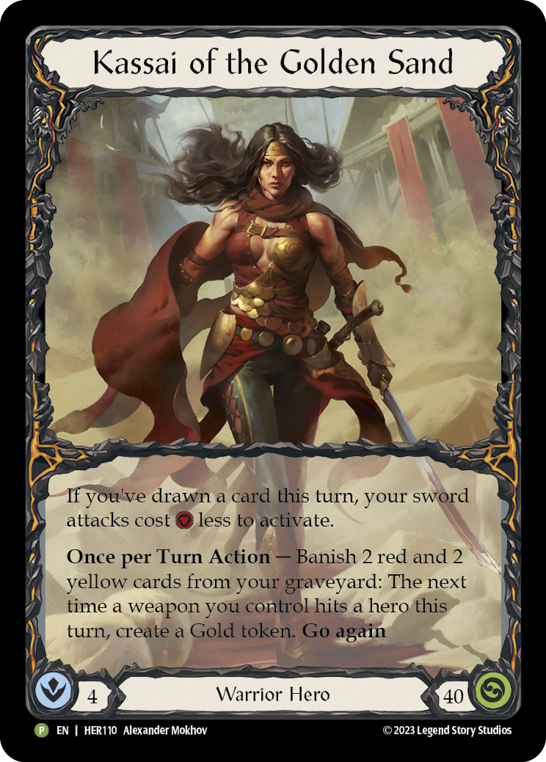
There's more benefit to threatening 'on-hit, Gold' twice in a turn than once, so where possible you're definitely going to want to start your turn with a Kassai activation. But if you need to spend an attack reaction to put enough yellows in your discard, don't hesitate to banish between sword swings. This can be an excellent way to make an opponent reconsider that paltry 2 from an anemic turn.
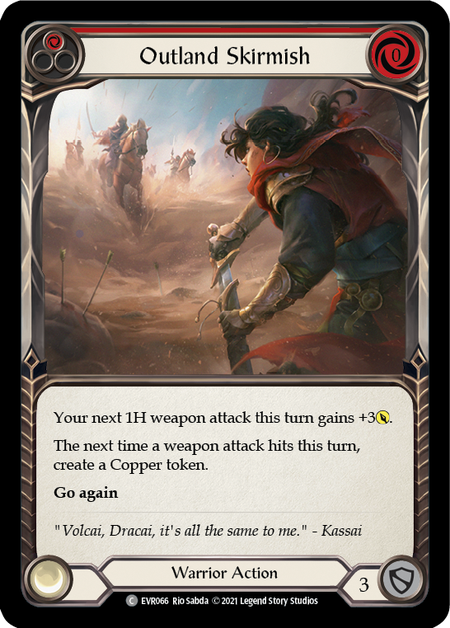
On a similar note, it's worth considering where you play your attack buffs. While there's optimization to be had in playing an Outland Skirmish on your first sword swing - it will offer 'on hit, Copper' to the second sword if the first one gets blocked out - there's also something to be said for bluffing an attack reaction and following up with a larger-than-anticipated second sword. Sometimes the difference between 8-into-2 and 5-into-5 is fairly irrelevant, and sometimes it's absolutely key.

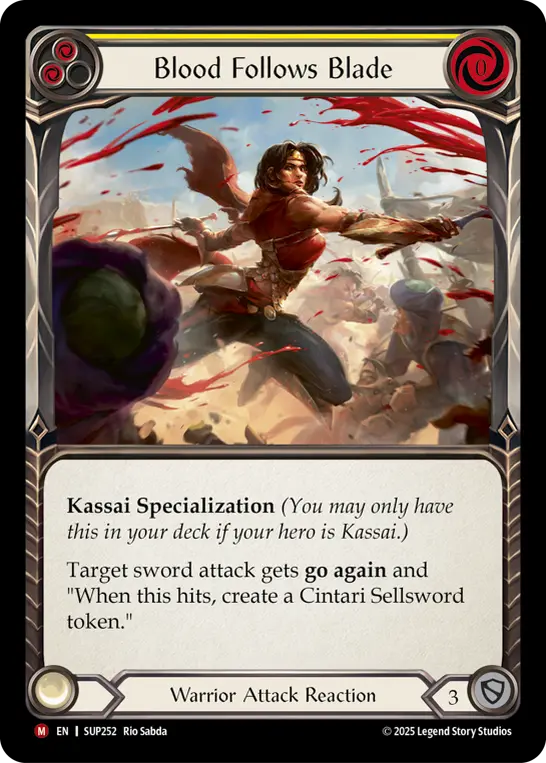
Blood Follows Blade is an extremely important card for how it uniquely distributes its damage. While there's always the risk that it will simply be a source of go again (and don't be afraid to use it that way), in many instances you'll have the resources floating after 2 sword swings to pay for your Sellsword to attack also. Weaving another 3 damage between your two swords is always unexpected, and because of conditioning around allies, that damage is likely to go unblocked. Depending on the opponent, they may be easily removed on the next turn (netting at least 5 value from their attack and the attack subsequently directed at removing them) or they may become a perennial thorn in the side.
It would be interesting to see a deck generalize a few of its attack reactions to allow targeting Warrior attacks of any type, rather than just weapons, so that these allies could pose larger and unexpected threats - but as they're inconsistent to create, it's not currently worth cutting into the deck's more efficient card choices just to hit the ally with an attack reaction. At present, the options here are all pretty uninspiring, as they present on-block effects rather than on-hit, and the chances of an ally being blocked by an attack action card (many of which would be better used to attack the ally next turn) are slim. Nonetheless, I'd keep an eye out for future cards that target Warrior attacks more generally, as it may be design space LSS explores in the future.
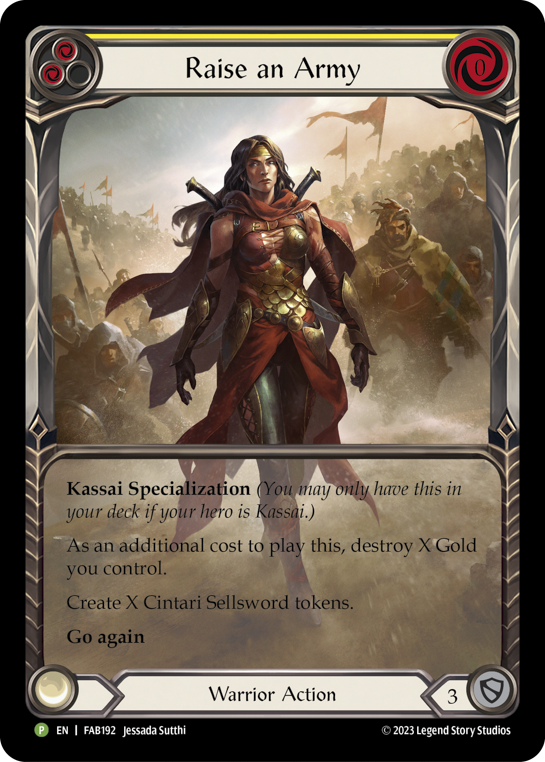
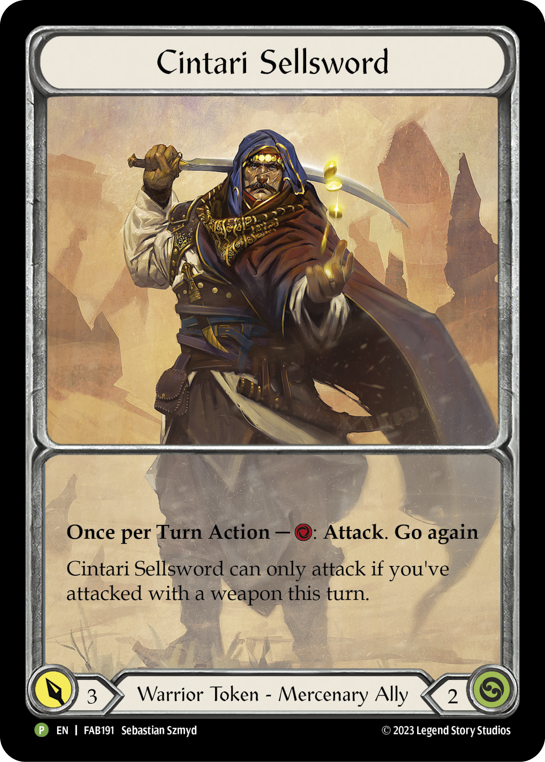
When it comes to Raise an Army, there are a few ways to play it, and the best use of the card is usually determined by the opponent you're facing.
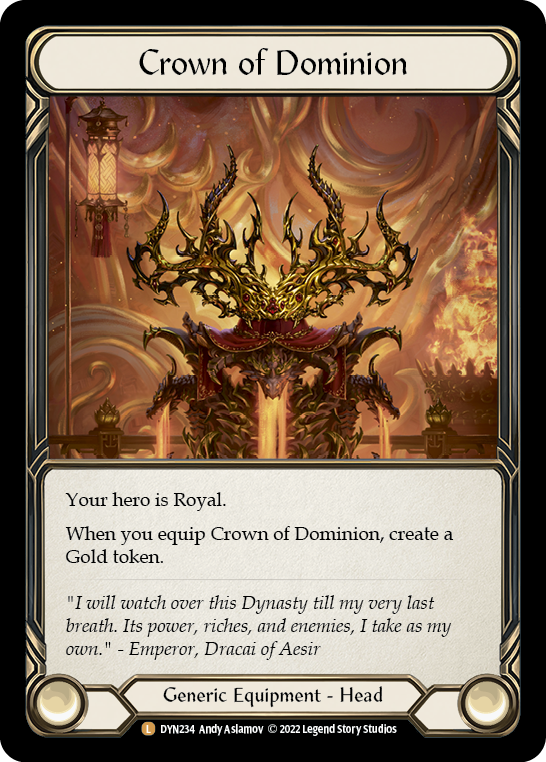
Against a hero whose play pattern involved one attack per turn - such as a Guardian, Earth hero, or Ranger - the prospect of a single ally represents repeatable damage turn after turn, until they decide to remove the ally at the cost of giving you full tempo next turn. In these instances, Raise an Army can be played out for even 1 Gold and you're likely to get excellent value out of it. In these matchups, it's not a bad idea to opt for Crown of Dominion, so that you can play out the first copy of Raise an Army you see.
Raise an Army should be played for 2 or more allies when facing a hero whose attack pattern is 1-2. Decks like Kayo, Ira, Prism, and Fang can easily remove a single ally while keeping pace, so if you include Raise in those matchups, you'll want to resolve it for a larger payoff.
Into wide aggro heroes, such as Dash I/O, Cindra, and Arakni, 5L!p3d, you'll most likely leave it in the sideboard; in those matchups, the Gold is much more valuable as a form of increasing the value of your cards through hand cycling.
Relentless Drive
No effect is as important to Kassai as go again, and you'll find that most Kassai lists triple down on this aspect. It's not unusual to find 30 cards that tack 'go again' onto a sword stapled to the core. But the reality of this consistency is that you'll often have at least one unnecessary card in any given hand. Kassai is a hero who can struggle to make use of a full grip (thus the high value placed on Grains of Bloodspill and, to a lesser extent, Braveforge Bracers at pitch outlets).
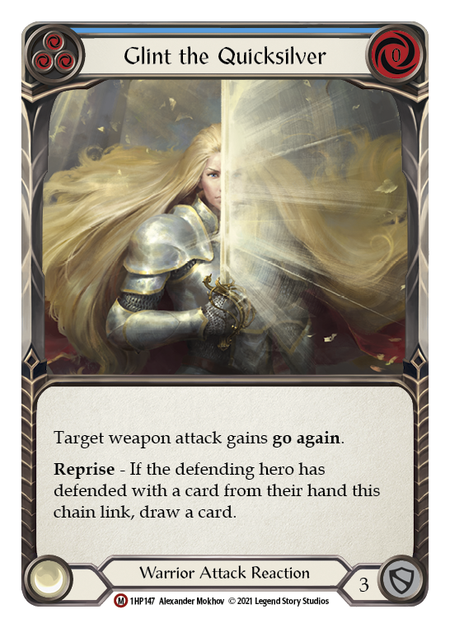
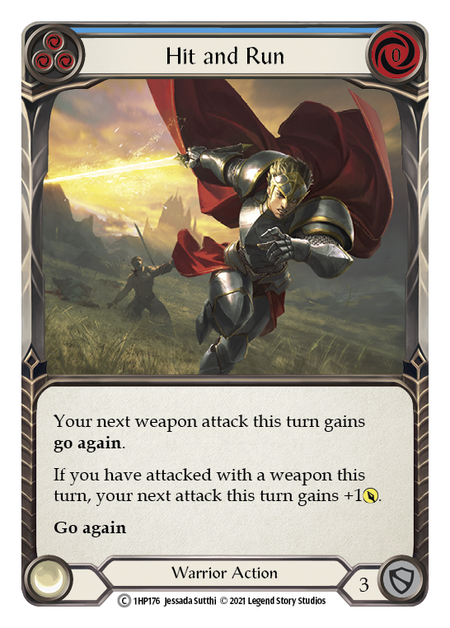
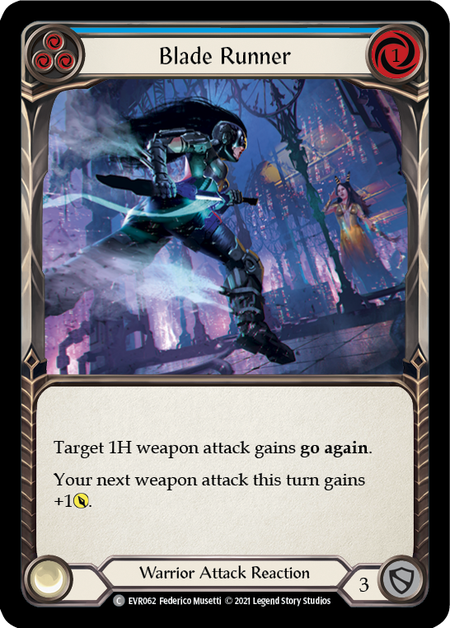
A popular solution to this is to meet your quota for blues through cards that grant go again. This allows them to be played out when needed, but otherwise to serve as fuel for your turns. Blade Runner, Trot Along, Glint the Quicksilver, and Hit and Run give you 12 blues that double as insurance that you'll be able to swing that second sword.
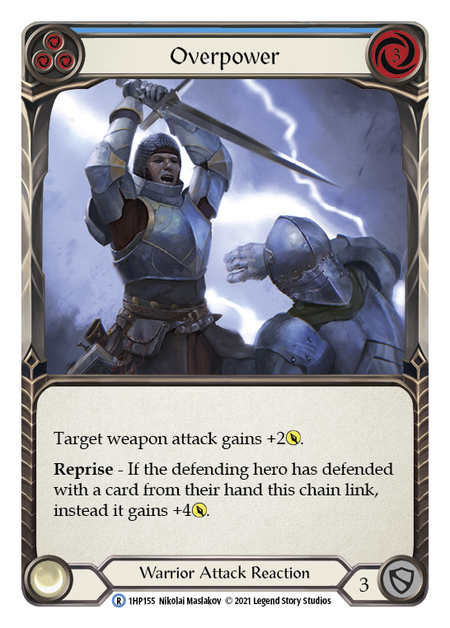
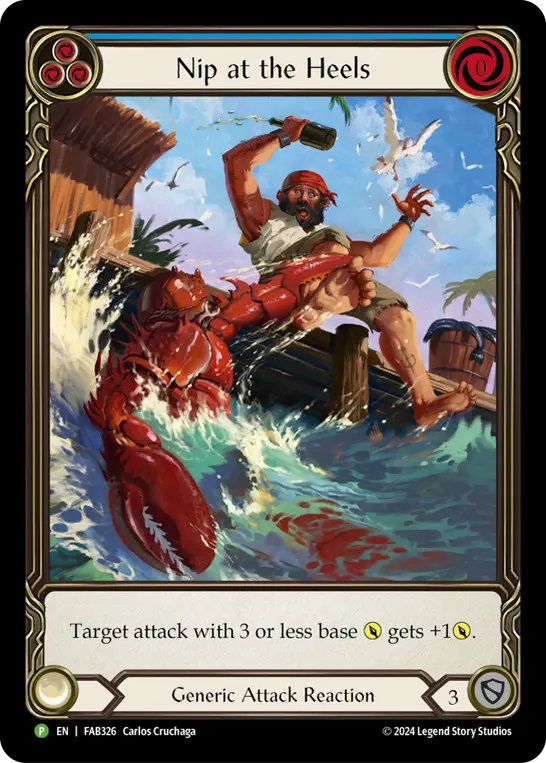
But when a game goes long, the redundancy of these blues can become an acute problem. It can be worthwhile to add a couple damage-modifying attack reactions to your blue base, just to ensure you have the gas you need in the endgame. I'm currently testing a single copy of Overpower (B), but even the +1 of Nip at the Heels can be enough to break a blocking stalemate.
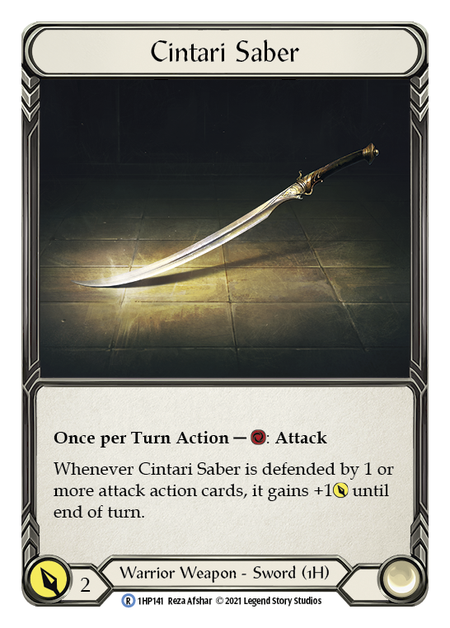
Don't be afraid to play out a Blood on Her Hands for less that maximum payoff. It's important to keep the Cintari Sabers rolling, and if BoHH is the only option you have for go again, it's probably worth using. Even with only 2 Copper to spend, a single blade with 'go again' and 'attack twice' can present a strong turn.
Decklist Recommendations
Kassai is a deck that allows for self-expression around a fundamental core. As such, there are many lists finding success today, and you're better off choosing one that feels right to you than taking a prescribed list from an authoritative source.
Christopher Iaali claims the highest honors this winter with a 1st place finish at Calling: Seattle. His list took a slightly more aggressive posture with only 13 blues and Sharpen Steel raising his damage output. You can watch his finals game here.
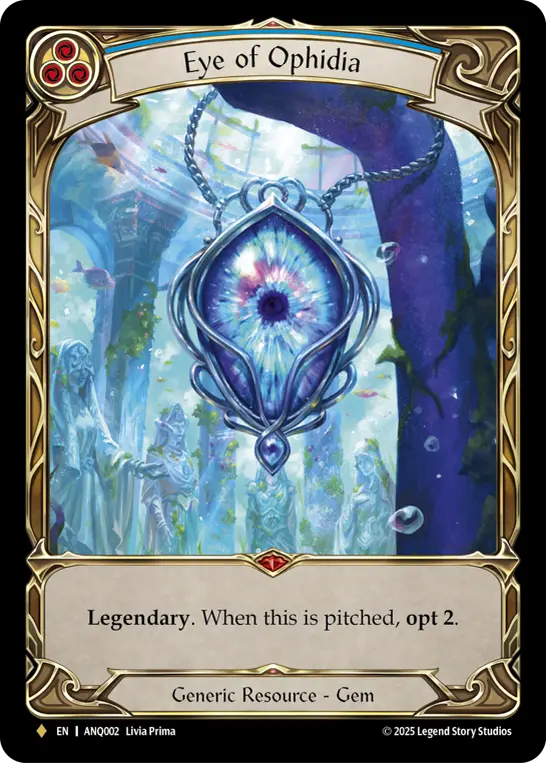
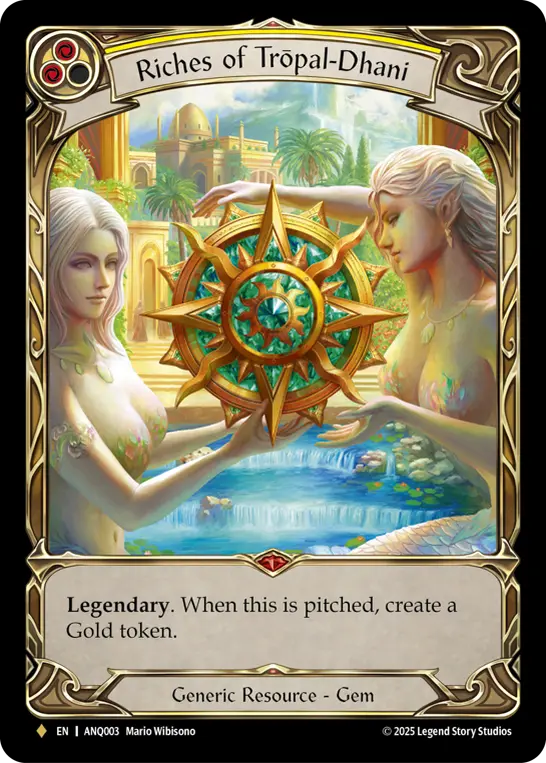
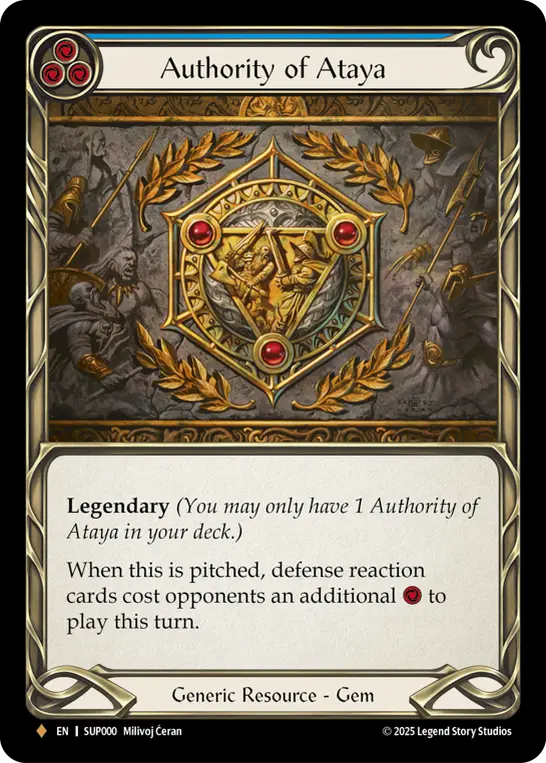
On the other end of the spectrum is Pudding Tam's 5th place list from Battle Hardened: Osaka this past October. Here, Pudding makes room for 18 blues, including Authority of Ataya. Fableds occupy a contentious place in Kassai decks, with players running anywhere from 1-3 gems. Among them, Riches of Tropal-Dhani undeniably has a place, and if you own it you should be playing it. The other two - the third being Eye of Ophidia - are a matter of personal taste.
At Calling: Hong Kong, Shoma Yamamura presented a unique take on Kassai featuring Fyendal's Spring Tunic. Shoma went to the Top 8 undefeated (I'll post his Round 4 here, rather than the unfortunate loss in the quarter-finals). I have a personal fondness of Shoma's method of deckbuilding, and have to admire the ways this list varies from other builds out there - including with a spicy 3-of Jagged Edge to counter Prism.
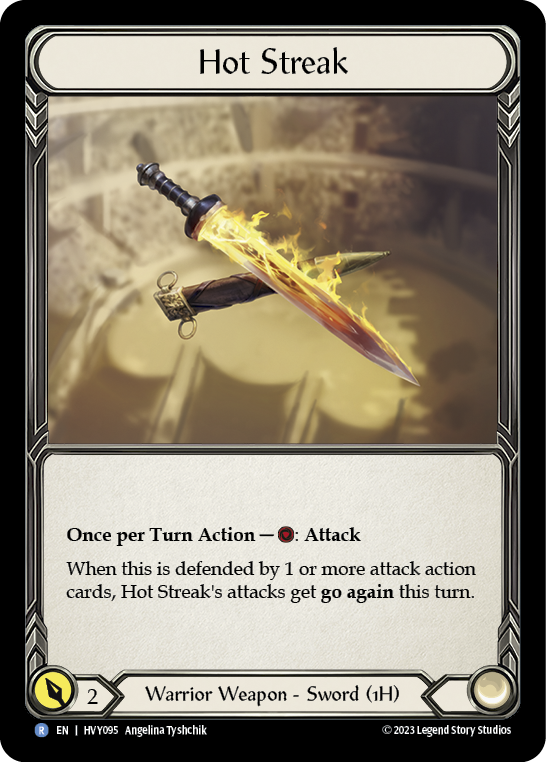
This list also brings to mind 2 other points of common difference: Hot Streak and Nourishing Emptiness. Some players prefer the differing effect of Hot Streak, though it's 'on block, go again' does little to alleviate the need for extensive go again effects. Rather, it gives significant incentive not to block, as there's potential their block is rendered impotent by a follow-up for equal damage.
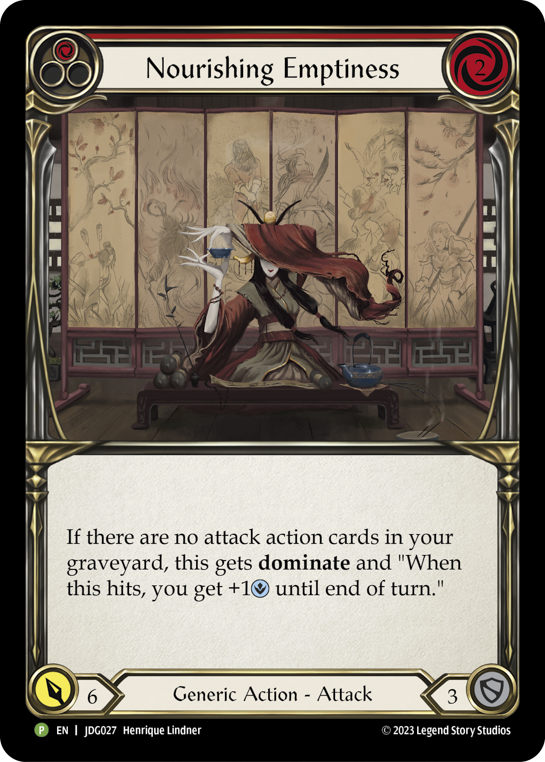
Nourishing Emptiness is a sub-par popper in today's meta, as Prism often runs cards that require a 7 or more to trigger phantasm. But it's role as a pattern breaker is still significant, as is the dominate and +1 intellect we can easily activate. Kassai's control of the discard pile means we can easily run 2 copies and get both online. The case against it states that Nourishing is off-theme and expensive, and that perspective is certainly valid as well.
Other cards you might want to consider:
- Seduce Secrets, which acts as card draw to make our weapons free while also granting information on what our tricky Assassin opponents might have planned for us.
- Sigil of Solace (R), which acts as protection against Wizards and dagger-throwing foes while bluffing an attack reaction in hand or arsenal.
- Provoke, which can pry a card out of the hand of an opponent who would rather play out a full grip while also activating our on-block effects.
- Kabuto of Imperial Authority, a must-play counter into local metas with heavy Warrior presence.
Kassai is not the tyrant of today's meta that some thought she might be as 2026 began. But she is an eminently respectable threat, and one that's largely resistant to the whims of an unpredictable meta. I personally brought her to two RTNs this year, and bubbled out of a Top 8 with a 4-X record that was good enough for 3rd place had the breakers gone my way. She was well represented at both, and many opponents sat down to face me bemoaning the matchup and how frequently they were finding themselves in it.
Because of this 'Tier 1.5' placement, Kassai is an ideal hero to invest your time and resources into. Unlike Kayo or the recently departed Florian, Kassai is not on the cusp of imminent LL, and you'll likely be able to play her for months, if not all of 2026. There's no better time to get on board than now. With two more weeks of Road to Nationals, Kassai might be the deck you've been looking for.