
I think Silver Age might revolutionize the future of Flesh and Blood.
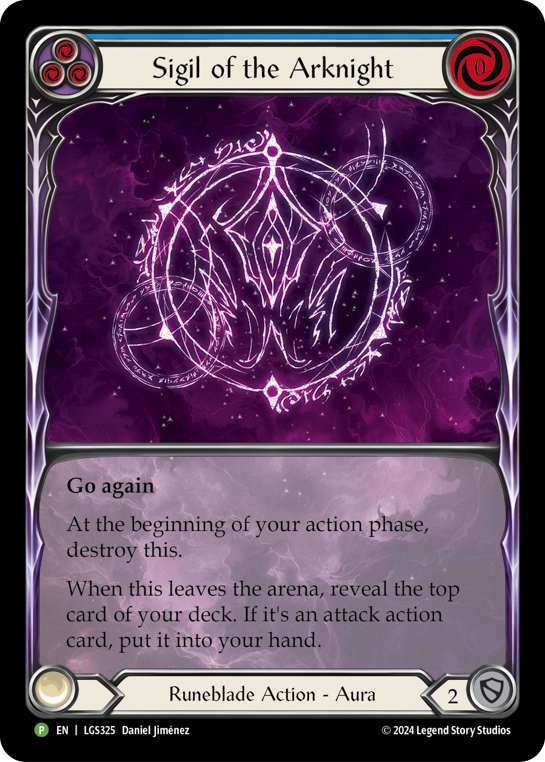
It was my third Sigil of the Arknight trigger of the night. I had been ridiculed for the inclusion, but continued to swear by its power. My previous two triggers had both missed on finding an attack action, so my opponent and I joked that this one was due to hit.
It was another miss.
We roared with laughter, and that's when I realized that this format was truly special.
While most of my interactions with modern card games are in the competitive scene, I’ve always been deeply passionate about the casual side of card games. I remember how I started playing card games very fondly: late nights with my dad after my mom had gone to bed, hanging with the other kids while my mom played volleyball, and even as the way I made my first friends in middle school. Even if I don't currently engage with the casual scene much, I recognize I would never be where I am, both socially and competitively, without such an engaging and fun baseline casual experience.
And I really think Flesh and Blood has finally found its baseline casual experience, one that will truly revolutionize the future of the game.
Why Silver Age?
Flesh and Blood has tried quite a few different ways to get into the casual scene, whether through Ultimate Pit Fight (a 4 player slugfest), Blitz (a more volatile and quick version of FAB), or the rumored PVE mode. However, all of these attempts have serious problems. UPF is directly competing with one of the single most successful card game casual experiences of the modern age in Magic's EDH/Commander, Blitz is still incredibly expensive (and can be especially hard to learn and grow through), and PVE... doesn’t exist.
But Silver Age is a unique and incredibly promising attempt at getting into the casual scene that I think will be incredibly successful for 5 core reasons.
- Price
- Simplicity
- Competitive Opportunities
- Player Passion
- Lack of Rotation
Decks for Dirt Cheap
One of many positive qualities about the format is the price. It is truly an understatement to say that price keeps players out of Flesh and Blood, with multiple $100 staples across the top decks in an increasingly turbulent economy. However, Silver Age offers an incredibly affordable solution, with top tier, meta decks for every hero being affordable at $10 or less, with almost entire decks comprised of bulk people give out for free.
This allows players - new and old alike - to get into the game at an easy, affordable level, letting them try new heroes on a whim, approach entirely new experiences with curiosity instead of hesitation, and easily advertise the experience to friends without having to caveat the problem of price. It is really hard to oversell how much price keeps the growth of card games down, and how important having a premier budget format is for the growth of the scene.
Only 3 Lines of Text
When designing cards, card game companies normally ramp up the complexity of cards as they get more rare so that when a new player opens a booster pack for the first time, the bulk of the cards are easy to parse, even with little game knowledge. This works incredibly in Silver Age’s favor, as the majority of commons and rares are single, simple lines of text that - even for new players - are incredibly easy to understand. This makes it a very friendly format to learn, as there aren't many complicated cards to understand, and most of the complexity is in the sequencing and hero powers, which are much more macro concepts for the complexity to reside.
As I mentioned in the financial section, an incredibly important part of game growth is simplicity in teaching. While Flesh and Blood is generally a relatively easy teach, it can easily grow out of hand as they try to parse through both their own cards and their opponent’s, plus trying to understand all of the different equipment and ways that card effects interact. While the simplicity of cards might seem like a minor deal on the surface, every card being simpler exponentially effects how complicated game states are to understand, and makes players both new and old alike much more likely to try new experiences and continue to re-engage with the hobby.
$20 Ticket to the World Tour
While not an important factor for every new player, there is a reason the marketing has centered around how much of the competitive season is going to focus around Silver Age in 2026. This gives casual players a way to look beyond Armory to engage with the hobby more. And with how fantastic Flesh and Blood continues to be as a competitive game, it's likely this pipeline creates even more lifestyle-enjoyers of the game from the casual crowd.
Having a more engaged average player base is an incredibly important part of the livelihood of a game and its longevity. While hundreds of players try the game every day, it is the players who make the hobby part of their life that keep games like this afloat through difficult and turbulent times. Having an easy hook to create more players interested in making this game their main hobby gives Legend Story Studios a stronger anchor to throw down to let them feel free to experiment and learn from mistakes to grow bigger and bigger as a company.
It's the Buzz of the Armory!
While casual enjoyers of the hobby can just find their own friends to try to get into it and enjoy it with them, it’s significantly easier to grow a player base from an existing, passionate one. Much of the current FAB community - myself included - is already excited about Silver Age. This makes it significantly more likely that, when a potentially interested player approaches a FAB player and asks to play, they will have a Silver Age deck for them and can immediately start their new hobby with games in the format they’re likely to play for a while.
There's also something infectious about a group of people laughing and enjoying a hobby casually in a big scene - which as I have detailed, is something Silver Age really encourages. Not that a competitive scene is necessarily uninviting to new players, but seeing a casual, fun crowd is important for completely new players to feel like they are welcome in the scene without having to be the very best from day 1, which they are unlikely to be.
Heroes Don't Rotate
For newer players - and sometimes even competitive players - keeping track of rotation and a changing hero pool can be difficult. While Silver Age still has hero churn through the ban system, it is both unlikely a casual player’s hero will be banned and decently easy to explain to them that their hero will be back, so that when they are attached to a certain hero they can feel invested and not like they’re going to lose their hero on any given week.
While I already talked about why investment is important in card games, it is also important that players feel they can safely identify with a deck or a hero, which Silver Age deeply invites. Whatever your favorite hero is, it's likely they will be legal in the format the majority of the time and, even if they are a sub-par option, a particular hero temporarily vacating the format could give any hero in a class its time in the sun.
The New Age is Coming
As made clear by this article, I am incredibly excited for Silver Age. This format looks new, exciting, and best of all, like an important change of pace from how Flesh and Blood has been for the past few years. I am deeply passionate and will be writing a lot about this format, including more Aurora content, to no one’s surprise. But most importantly, I am so joyful to see how, even at my small scale of experience, it has brought so many more people into the hobby, including my partner and several of my friend’s partners. And seeing so many people get to engage with this hobby not only as an outlet for growth and as a way to hang out with new friends, but also as a way to bond with old ones? This could truly be the start of something special.